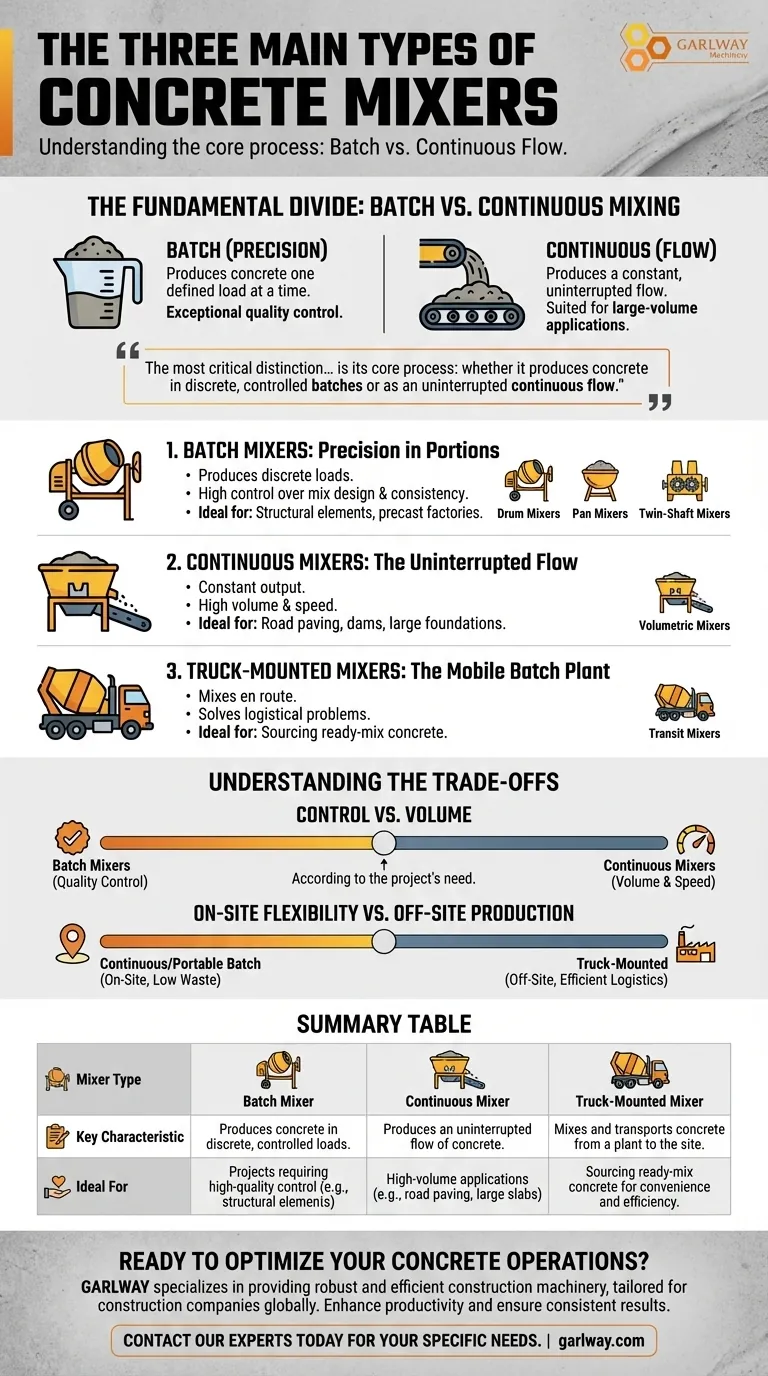
At a high level, the three main classifications for concrete mixers are batch mixers, continuous mixers, and truck-mounted mixers. Batch mixers produce concrete one defined load at a time, making them ideal for projects requiring high-quality control. Continuous mixers produce a constant, uninterrupted flow of concrete, suited for large-volume applications. Truck-mounted mixers are a specialized category for transporting and mixing concrete en route to a job site.
The most critical distinction in concrete mixing technology is not about the equipment's size or shape, but its core process: whether it produces concrete in discrete, controlled batches or as an uninterrupted continuous flow. Understanding this difference is key to matching the right mixer to your project's demands.
The Fundamental Divide: Batch vs. Continuous Mixing
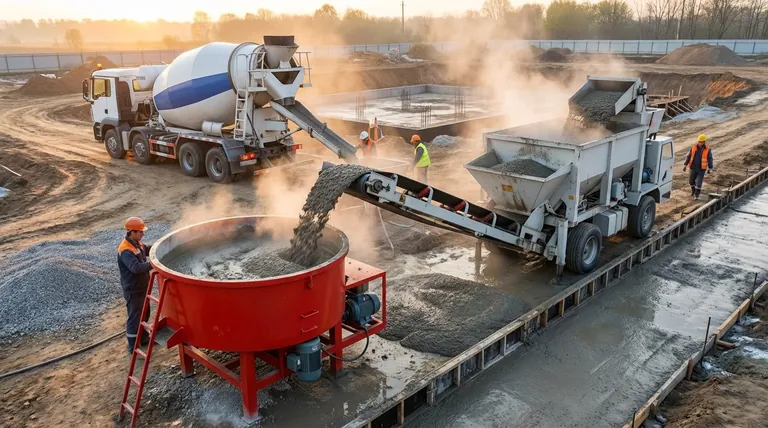
The entire world of concrete mixers can be fundamentally divided into two operational principles. The choice between them hinges on whether your priority is precision for a single recipe or sheer volume for a massive pour.
Batch Mixers: Precision in Portions
A batch mixer is the most common type, designed to produce concrete one specific volume at a time. All ingredients (cement, aggregate, sand, and water) are loaded into the mixer, mixed for a set duration, and then the entire batch is discharged.
This method provides exceptional control over the mix design and consistency from one batch to the next.
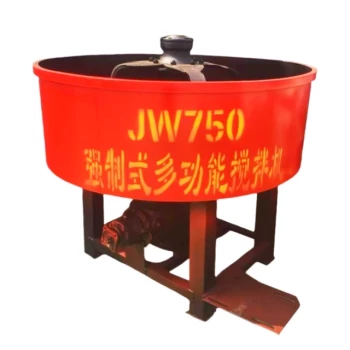
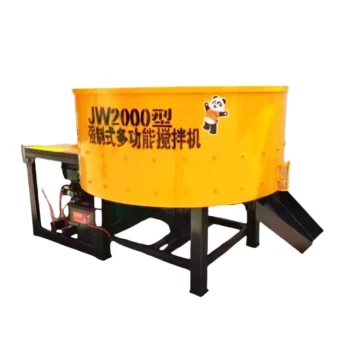
Common types of batch mixers include drum mixers (the familiar tilting or reversing drum), pan mixers (with vertical paddles in a flat pan), and twin-shaft mixers (known for aggressive, fast mixing), each suited for different mix complexities.
Continuous Mixers: The Uninterrupted Flow
A continuous mixer operates without interruption. Raw materials are continuously fed into the machine at one end and mixed concrete is constantly discharged at the other.
These are workhorses for projects requiring enormous volumes of concrete in a short time, such as road paving, dam construction, or large foundations.
The most common type is the volumetric mixer, which carries unmixed materials in separate compartments and mixes them on-site to produce the exact amount needed.
The Third Category: Mobility and Delivery
While truck-mounted mixers are technically a form of batch mixer, their unique function in the supply chain makes them a distinct and critical category. They solve the logistical problem of getting fresh concrete from a plant to a job site.
Truck-Mounted Mixers: The Mobile Batch Plant
These mixers, also known as transit mixers, are mounted on a truck chassis. They are loaded with a pre-measured batch of ingredients at a central plant and then mix the concrete during transportation.
The rotating drum agitates the materials to ensure the concrete is perfectly mixed and ready to pour upon arrival. This is the backbone of the ready-mix concrete industry.
Understanding the Trade-offs
Choosing a mixer isn't just about type; it's about understanding the inherent compromises between quality control, speed, and logistics.
Control vs. Volume
Batch mixers offer superior quality control. Because each batch is a discrete event, you can guarantee the water-to-cement ratio and overall consistency for structural elements.
Continuous mixers prioritize volume and speed. While modern volumetric mixers are highly accurate, their primary advantage is producing a massive, uninterrupted supply, which is essential for large-scale slab or paving work.
On-Site Flexibility vs. Off-Site Production
Continuous mixers and smaller portable batch mixers provide excellent on-site flexibility. You can produce concrete as needed, eliminating waste and the risk of a batch hardening before it can be placed.
Truck-mounted mixers represent an off-site production model. This is incredibly efficient but requires precise scheduling and coordination between the concrete plant and the construction site to manage delivery and pour times.
Initial Cost and Scale
The scale of your project dictates the cost-benefit analysis. Small, portable drum mixers are cost-effective for minor repairs or small slabs. Large stationary batching plants are a major investment for precast factories or massive construction sites. Continuous mixers are specialized equipment for high-volume contractors.
Making the Right Choice for Your Project
Your project's specific goals will determine the ideal mixing solution.
- If your primary focus is consistent quality for structural elements: A batch mixer is the standard for its precise control over the mix design.
- If your primary focus is high-volume output for large pours like paving: A continuous mixer offers the speed and uninterrupted flow necessary for large-scale work.
- If your primary focus is convenience and sourcing from a supplier: A truck-mounted mixer delivering ready-mix concrete is the most efficient logistical solution.
Ultimately, selecting the correct concrete mixer is a strategic decision that balances the demands of quality, volume, and site logistics.
Summary Table:
| Mixer Type | Key Characteristic | Ideal For |
|---|---|---|
| Batch Mixer | Produces concrete in discrete, controlled loads | Projects requiring high-quality control (e.g., structural elements) |
| Continuous Mixer | Produces an uninterrupted flow of concrete | High-volume applications (e.g., road paving, large slabs) |
| Truck-Mounted Mixer | Mixes and transports concrete from a plant to the site | Sourcing ready-mix concrete for convenience and efficiency |
Ready to Optimize Your Concrete Operations?
Choosing the right mixer is crucial for your project's success, balancing quality control, output volume, and site logistics.
GARLWAY specializes in providing robust and efficient construction machinery, including a range of concrete mixers and batching plants tailored for construction companies and contractors globally. We help you enhance productivity and ensure consistent results.
Let's discuss your specific needs: Contact our experts today to find the perfect concrete mixing solution for your next project.
Visual Guide
Related Products
- Portable Concrete Mixer Machine Equipment for Mixing Concrete
- Construction Products Concrete Plant Machine Mixing Concrete Mixer
- Portable Electric Concrete Mixer Machine for Cement Mixing
- JZC400 Mobile Small Concrete Mixer Cement Mixer Machine
- Hydraulic Concrete Mixer Machine Cement Mixing Equipment for Mixture Concrete
People Also Ask
- Why is it necessary to use a portable concrete mixer? Gain Total Control & Efficiency
- How much concrete can you pour with a portable mixer? Find the Perfect Fit for Your Project
- What types of projects are portable concrete mixers suitable for? Ideal for DIY & Small-Scale Construction
- How much does a portable concrete mixer hold? A Guide to Choosing the Right Capacity
- What types of portable concrete mixers exist? Find the Perfect Mixer for Your Project