
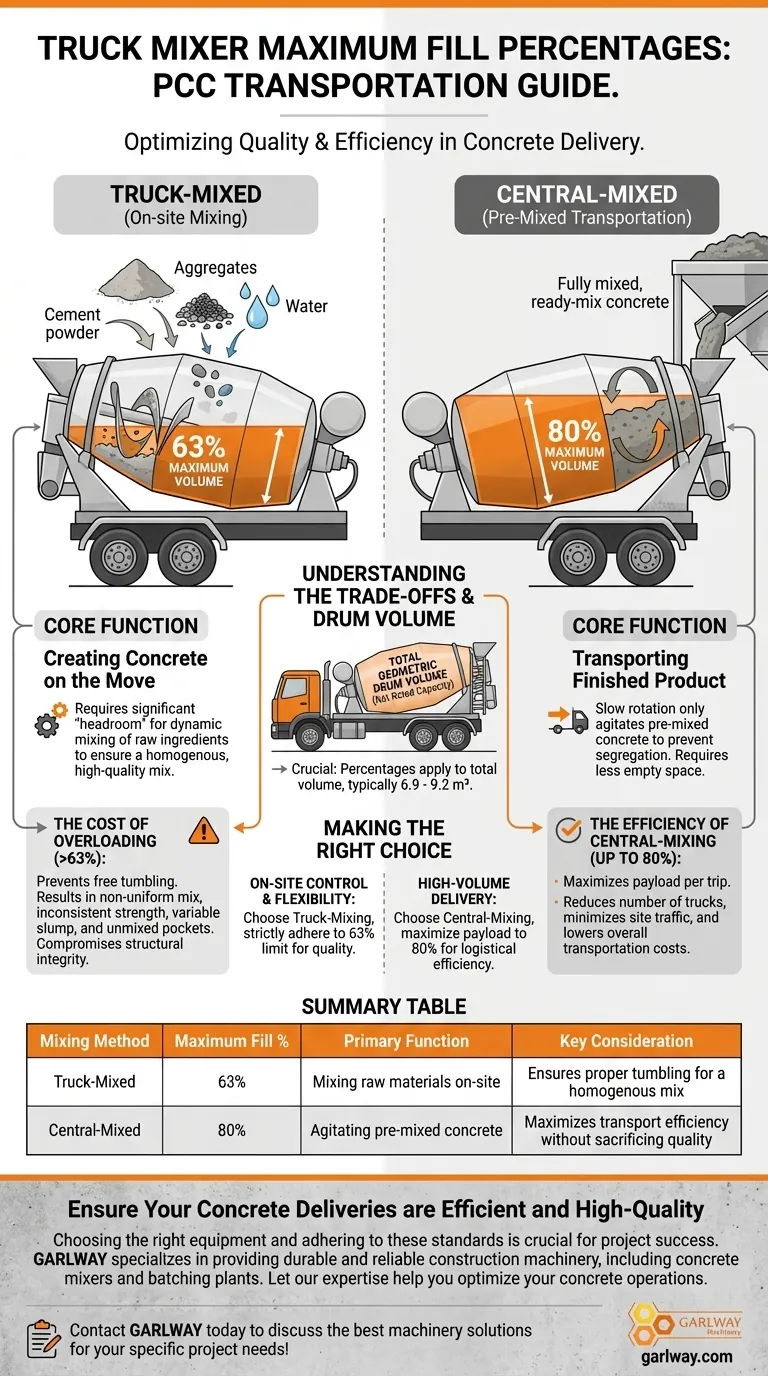
The maximum fill percentage for a truck mixer depends entirely on its function for a specific batch of Portland Cement Concrete (PCC). For concrete mixed in the truck itself (truck-mixed), the drum can only be filled to a maximum of 63% of its total volume. If the truck is simply transporting already-prepared concrete from a plant (central-mixed), that limit increases to 80%.
The core reason for these different limits is quality control. The lower 63% limit for truck-mixing is essential to provide the physical space needed for raw materials to properly tumble and combine into a homogenous, high-quality concrete mix.
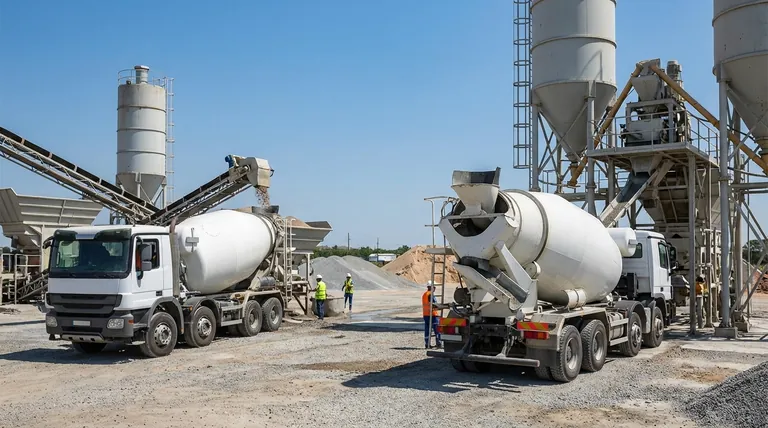
The Core Principle: Mixing vs. Agitating
The two fill percentages are not arbitrary; they reflect the two distinct roles a mixer truck can play. The truck is either a mobile mixing plant or a transportation vessel, and the volume limit changes accordingly.
Truck-Mixing: Creating Concrete on the Move
When a truck is used for truck-mixing, all the raw ingredients—cement, aggregates, and water—are loaded directly into the drum.
The truck's internal helical blades must lift, tumble, and fold these separate materials together to create a uniform concrete. This process requires significant empty space, or "headroom," within the drum.
The 63% maximum fill ensures there is enough volume for this dynamic action to occur effectively. Without this space, the materials cannot blend properly, leading to a poor-quality, inconsistent final product.
Central-Mixing: Transporting a Finished Product
In a central-mix operation, the concrete is fully mixed to specification at a stationary plant before being loaded into the truck.
Here, the truck's role changes from mixing to simple agitation. The slow rotation of the drum is only meant to keep the concrete's components from segregating during transit.
Since intense mixing is not required, less empty space is needed. The 80% maximum fill allows for significantly more concrete to be hauled per trip, maximizing transportation efficiency.
Understanding the Trade-offs
Choosing a method and adhering to its fill limit has direct consequences for project quality and logistics. Ignoring these standards introduces significant risk.
The Cost of Overloading
Exceeding the 63% limit for a truck-mixed batch is a critical mistake.
Overfilling the drum prevents the materials from tumbling freely. This results in a non-uniform mix with inconsistent strength, variable slump, and unmixed pockets of aggregate or cement. Such concrete can compromise the structural integrity of the final placement.
The Efficiency of Central-Mixing
The primary advantage of central-mixing is logistical.
The ability to fill a drum to 80% capacity means more cubic meters of concrete can be delivered per truck, per trip. For large-scale projects, this reduces the number of trucks required, minimizes traffic at the job site, and lowers overall transportation costs.
The Importance of Drum Volume
It is crucial to remember that these percentages are based on the total geometric volume of the drum, not just the manufacturer's rated mixing capacity.
A typical truck mixer might have a drum volume between 6.9 and 9.2 cubic meters. Applying the correct percentage to the correct total volume is essential for accurate batching and compliance.
Making the Right Choice for Your Goal
Your project's requirements will determine the best approach. Use these limits as a fundamental rule for ensuring quality control.
- If your primary focus is on-site mix control and flexibility: Truck-mixing is a valid choice, but you must strictly adhere to the 63% volume limit to guarantee a quality, homogenous product.
- If your primary focus is high-volume delivery for a large pour: Central-mixing is the superior logistical choice, allowing you to maximize each truck's payload up to the 80% limit without sacrificing quality.
Ultimately, understanding why these limits exist is fundamental to ensuring both the quality of your concrete and the efficiency of your operation.
Summary Table:
| Mixing Method | Maximum Fill Percentage | Primary Function | Key Consideration |
|---|---|---|---|
| Truck-Mixed | 63% | Mixing raw materials on-site | Ensures proper tumbling for a homogenous mix |
| Central-Mixed | 80% | Agitating pre-mixed concrete | Maximizes transport efficiency without sacrificing quality |
Ensure Your Concrete Deliveries are Efficient and High-Quality
Choosing the right equipment and adhering to these standards is crucial for project success. GARLWAY specializes in providing durable and reliable construction machinery, including concrete mixers and batching plants, for construction companies and contractors worldwide.
Let our expertise help you optimize your concrete operations. Contact GARLWAY today to discuss the best machinery solutions for your specific project needs!
Visual Guide
Related Products
- HZS180 Ready Mix Concrete Plant for Foundations with Sand and Cement
- HZS75 Concrete Batching Plant Cement Mixer Price Concrete Mixer Bunnings Mixing Plant
- HZS120 Ready Mix Concrete Batching Plant Commercial Mud Cement Mixer
- HZS35 Small Cement Concrete Mixing Batch Plant
- Mini Cement Mortar Mixer Truck for Construction
People Also Ask
- What types of construction materials can a Concrete Batch Plant produce? Precision-Mixed Concrete & Mortar
- What types of concrete can a batching plant produce? Versatile Mixes for Any Construction Project
- What types of admixtures are used in concrete batching plants? Enhance Performance & Durability
- Why buy concrete batch plant parts only from the manufacturer? Protect Your Investment and Maximize Uptime
- What types of projects are concrete batching plants commonly used for? Essential for Large-Scale Construction





