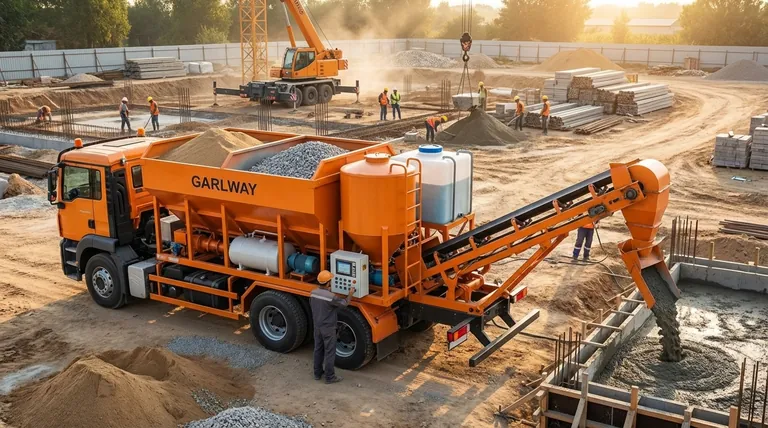
At its core, a volumetric mixer is a mobile concrete batch plant. Its primary components are separate storage bins for aggregates (sand and stone) and cement, a tank for water, a conveyor belt system to transport the dry materials, a mixing auger where they are combined, and a digital control system to manage the entire process.
A volumetric mixer isn't just a container; it's a sophisticated system of components designed for one purpose: to precisely measure and combine raw materials at the job site, creating fresh concrete of any specific mix design on demand.
The Anatomy of a Mobile Batch Plant
Understanding how a volumetric mixer works is a matter of understanding how each component handles a specific stage of the concrete production process, from storage to mixing.
Material Storage: The Foundation of the Mix
The entire system begins with the separate containment of raw materials. This separation is the key to its flexibility.
The truck or trailer chassis holds several dedicated compartments:
- Aggregate Bins: Two large, open-top bins hold the sand and stone. These bins feature adjustable gates at the bottom that control the flow of material onto the conveyor belt.
- Cement Bin: An enclosed, water-tight bin holds the cement powder or other cementitious materials. Being enclosed protects the powder from moisture and contamination. It is equipped with a precise meter to measure the amount being dispensed.
- Water Tank: A large tank, typically located behind the truck's cab, holds the water required for the mix.
- Admixture Systems: Most modern mixers also include tanks and calibrated pumps for chemical admixtures, which modify the concrete's properties (e.g., setting time, strength).
The Material Transport System
Once the mix is initiated, the dry materials must be moved from storage to the mixing point.
A long conveyor belt runs underneath the aggregate and cement bins. When activated, this belt pulls the sand, stone, and cement from their respective bins at a controlled, measured rate.
The Mixing Chamber: Where Concrete is Made
This is the final and most critical stage, where individual ingredients become concrete.
The mixing auger is a large, corkscrew-like device located at the rear of the unit. As the dry materials fall off the end of the conveyor belt, they enter the auger. At the same time, a precise amount of water and any required admixtures are injected. The auger's powerful, continuous rotation thoroughly blends all the components into a homogenous concrete mixture as they travel down its length.
The Control Center: The Brain of the Operation
Tying everything together is a sophisticated electronic system that ensures precision.
A digital control panel allows a single operator to input the specific mix design required. This system automatically adjusts the speed of the conveyor belt and the flow rates of the cement, water, and admixtures to produce that exact mix. Modern controls often include wireless remotes, allowing the operator to start, stop, and adjust the pour from a distance.
Understanding the Operational Trade-offs
While the component-based design offers significant advantages, it also introduces unique operational considerations compared to a traditional drum mixer.
Calibration is Critical
The accuracy of the entire system depends on the precise calibration of the material gates and meters. If the gates are not set correctly, the ratio of sand, stone, and cement will be wrong, compromising the quality and strength of the final product. Regular checks and calibration are essential.
Increased Mechanical Complexity
A volumetric mixer has more moving parts than a simple ready-mix truck. The conveyor belt, hydraulic motors, auger, and electronic sensors all require regular maintenance. This complexity means there are more potential points of failure that can halt production.
Operator Skill Requirement
While highly automated, operating a volumetric mixer effectively requires more technical skill than operating a traditional truck. The operator must understand not only the concrete mix designs but also the mechanical and electronic systems of the mixer itself to troubleshoot issues and ensure proper calibration.
How These Components Deliver Value
The specific components of a volumetric mixer directly translate to distinct advantages for different project goals.
- If your primary focus is mix precision and quality control: The separate, metered bins and digital controls give you complete authority over the mix design for every batch.
- If your primary focus is eliminating waste and cost: The system only mixes what you need, preventing over-ordering and the disposal costs associated with "hot loads" from a traditional ready-mix truck.
- If your primary focus is operational flexibility: The ability to change mix designs on-the-fly without returning to the plant makes it ideal for projects with varied concrete requirements.
Understanding these components reveals that a volumetric mixer is less like a truck and more like a highly precise, mobile manufacturing plant.
Summary Table:
| Component | Function | Key Feature |
|---|---|---|
| Aggregate Bins | Store sand and stone | Adjustable gates for material flow control |
| Cement Bin | Store cement powder | Enclosed, water-tight with a precise meter |
| Water Tank | Hold mix water | Sized for project needs |
| Conveyor Belt | Transport dry materials | Controlled, measured rate |
| Mixing Auger | Combine and blend materials | Continuous rotation for homogenous mix |
| Digital Control Panel | Manage the entire process | Input mix design, automatic adjustments |
Ready to Take Control of Your Concrete Production?
GARLWAY volumetric mixers put the power of a mobile batch plant directly on your job site. Our machines are engineered for precision, flexibility, and cost-efficiency, empowering construction companies and contractors to:
- Eliminate Waste: Mix only the concrete you need, when you need it.
- Ensure Quality: Maintain complete control over every mix design with digital accuracy.
- Boost Productivity: Change mixes on-the-fly without returning to a central plant.
Contact GARLWAY today to discuss how our winches, concrete mixers, and batching plants can optimize your operations.
Get a Custom Quote for Your Project
Visual Guide

Related Products
- Harbor Freight JS1500 On Site Concrete Mixing Volumetric Cement Mixer
- Belle Cement Mixer JS2000 Volumetric Concrete Mixer for Harbor Freight
- JS1000 Volumetric Concrete Mortar Mixer for Sale Skid Steer Cement Mixer
- Portable Concrete Mixer Machine Equipment for Mixing Concrete
- JDC350 Small Cement Concrete Mortar Mixer
People Also Ask
- What is the basic working principle of volumetric concrete mixers? On-Demand Mixing for Zero Waste
- How does a volumetric concrete mixer contribute to sustainability? Reduce Waste, Water, and Emissions On-Site
- What is a volumetric concrete mixer? A Mobile Concrete Batch Plant for On-Demand Mixing
- What is the predicted future for volumetric concrete mixers? Growth Driven by On-Demand Efficiency
- How does volumetric concrete compare to ready-mix concrete? Choose the Right Method for Your Project