
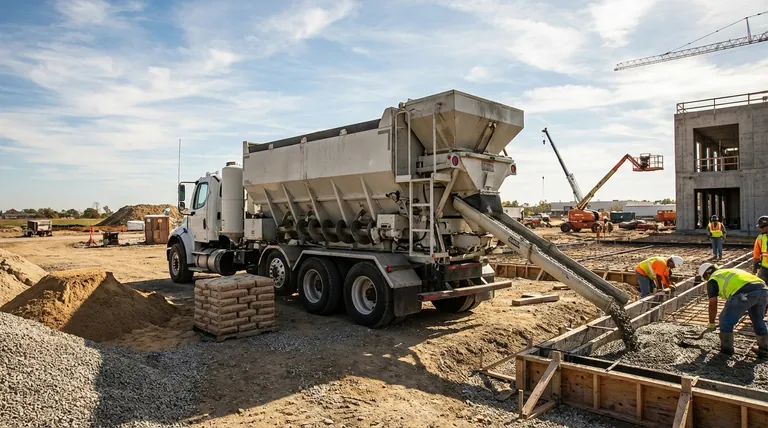
Conceptually, a volumetric concrete mixer is a complete mobile batch plant on wheels. Unlike a traditional barrel mixer that transports pre-mixed concrete, a volumetric mixer carries all the raw ingredients—sand, stone, cement, water, and chemical admixtures—in separate compartments. It then combines and mixes these materials on the job site to produce fresh concrete exactly when and where it is needed.
The fundamental shift offered by a volumetric mixer is moving the point of concrete production from a distant, centralized plant directly to the pour site. This grants unprecedented control over the freshness, quantity, and specific design of the concrete, effectively turning delivery into on-demand manufacturing.
How a Volumetric Mixer Functions
Separate Storage for Raw Materials
The chassis of a volumetric mixer is equipped with individual bins and tanks for each component. Aggregates (sand and stone) are stored in one large compartment, cement powder in another, and water and admixtures in their own dedicated tanks.
Precision Volumetric Proportioning
The machine gets its name from its method of measurement. Instead of weighing materials like a traditional plant, it proportions them by volume. Calibrated gates and meters dispense precise amounts of each ingredient onto a conveyor belt or into an auger.
On-Demand, Continuous Mixing
The materials are combined in a mixing auger at the back of the truck only moments before being discharged. This process ensures the concrete is as fresh as possible and can run continuously as long as the raw material bins are supplied.
The Core Advantages of On-Site Production
Elimination of Material Waste
You produce the exact amount of concrete required for the job. This completely avoids the cost and environmental impact of disposing of leftover concrete from an over-ordered barrel truck.
Guaranteed Concrete Freshness
Because mixing occurs on-site, there is zero travel time for the wet concrete. This eliminates the risk of a "hot load," where concrete begins to harden in transit, ensuring maximum workability and strength.
Unmatched Mix Design Flexibility
The operator can make immediate, precise adjustments to the mix design. If site conditions change or a different type of concrete is needed for a separate part of the project, the mix can be altered on the fly without ordering a new truck.
Understanding the Trade-offs
Higher Initial Investment
Volumetric mixers are complex machines that are more expensive to purchase than traditional transit mixers. They are a significant capital investment for any operator.
Requirement for Skilled Personnel
The driver of a volumetric mixer is also a highly skilled plant operator. They are responsible for calibrating the machine, ensuring the accuracy of the mix design, and maintaining quality control, which requires specialized training.
On-Site Logistics
These units are large and require adequate space on the job site to operate and potentially be reloaded with raw materials for very large pours.
Key Applications and Use Cases
Remote and Infrastructure Projects
Their self-contained nature makes them perfect for projects far from a central batch plant, such as roads, bridges, and utility work in rural areas.
Time-Sensitive and Critical Repairs
Volumetric mixers excel in applications using fast-setting cements for urgent repairs on highways, bridge decks, and airport runways where minimizing downtime is critical.
Specialized Concrete Production
Modern mixers can be equipped with systems to add color, multiple admixtures, or reinforcing fibers. They can also be configured to produce specialized materials like shotcrete, gunite, or pervious concrete on demand.
Making the Right Choice for Your Goal
- If your primary focus is flexibility and waste reduction: The volumetric mixer's ability to produce exact quantities and multiple mix designs on a single trip is the superior choice.
- If your primary focus is executing critical repairs or working in remote locations: The on-demand, on-site production of a volumetric mixer is often the only viable method.
- If your primary focus is high-volume, standardized pours near a batch plant: Traditional barrel mixers may offer a more straightforward and economical solution for simple logistics.
Ultimately, the volumetric mixer transforms concrete from a delivered commodity into a precise, on-site engineered material.
Summary Table:
| Feature | Volumetric Mixer | Traditional Mixer |
|---|---|---|
| Mixing Location | On-site, at the pour location | Centralized batch plant |
| Concrete Freshness | Maximum (mixed on-demand) | Risk of hardening in transit |
| Material Waste | Eliminated (produce exact amount) | Common (over-ordering) |
| Mix Flexibility | High (adjustable on the fly) | Low (fixed per delivery) |
| Ideal For | Remote sites, critical repairs, specialized mixes | High-volume, standardized pours near a plant |
Ready to gain unparalleled control over your concrete pours?
GARLWAY specializes in providing robust construction machinery, including advanced volumetric concrete mixers, for construction companies and contractors globally. Our solutions empower you to:
- Eliminate material waste and associated costs by producing only the concrete you need.
- Ensure maximum concrete strength and workability with fresh, on-site mixing.
- Execute complex projects with flexibility, from remote infrastructure to urgent repairs.
Transform your project efficiency and profitability. Contact GARLWAY today to discuss how our volumetric mixers can meet your specific needs!
Visual Guide

Related Products
- Belle Cement Mixer JS2000 Volumetric Concrete Mixer for Harbor Freight
- JS1000 Volumetric Concrete Mortar Mixer for Sale Skid Steer Cement Mixer
- Harbor Freight JS1500 On Site Concrete Mixing Volumetric Cement Mixer
- Portable Concrete Mixer Machine Equipment for Mixing Concrete
- HZS25 Best Cement Mixer for Quick Mix Concrete at Bunnings
People Also Ask
- What is a volumetric concrete mixer? A Mobile Concrete Batch Plant for On-Demand Mixing
- What is the predicted future for volumetric concrete mixers? Growth Driven by On-Demand Efficiency
- How does a volumetric concrete mixer contribute to sustainability? Reduce Waste, Water, and Emissions On-Site
- How does volumetric concrete compare to ready-mix concrete? Choose the Right Method for Your Project
- What types of concrete can be produced with volumetric mixers? Achieve On-Demand Mixing for Any Project




