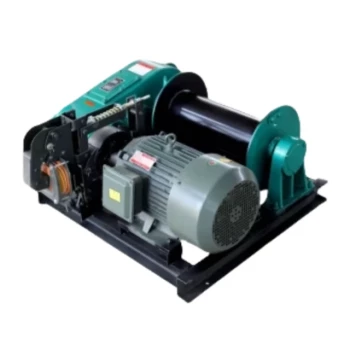
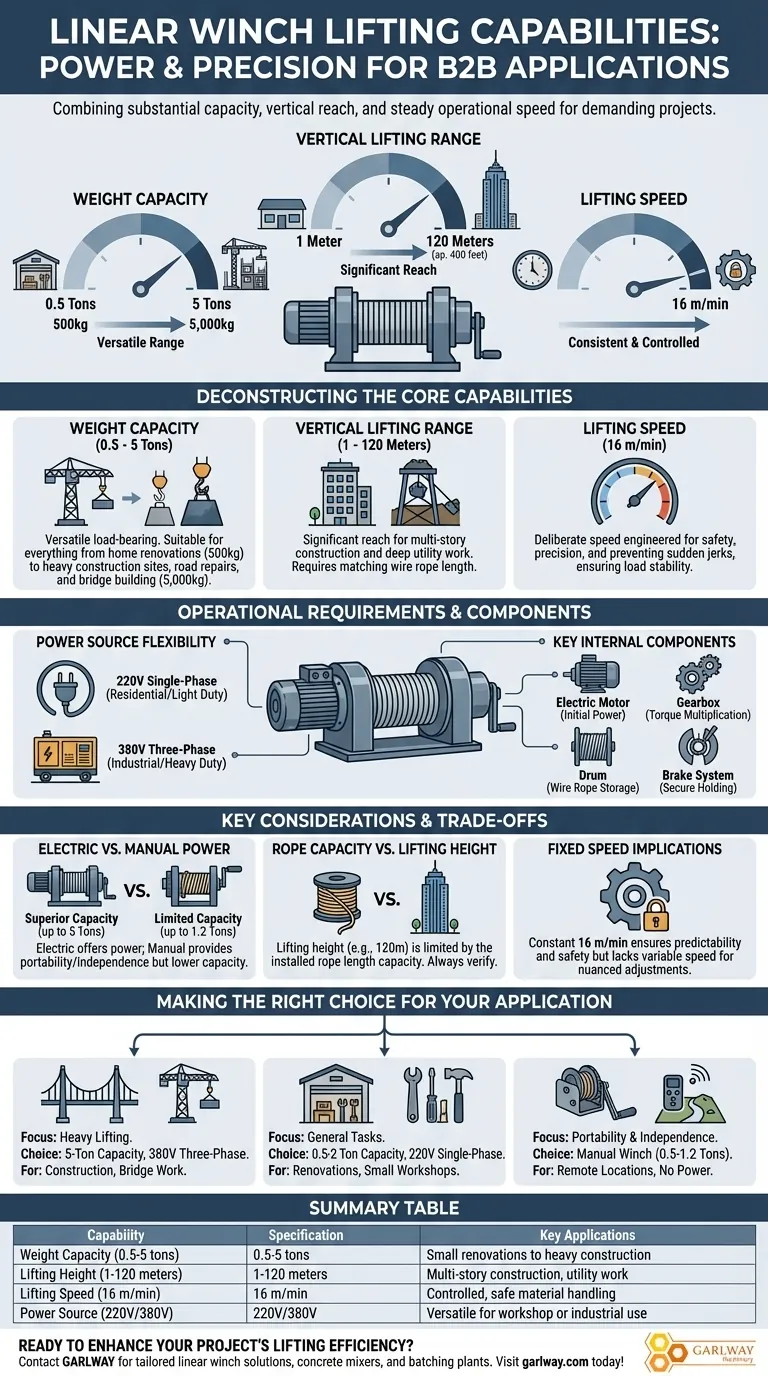
A linear winch offers a precise and powerful set of lifting capabilities designed for a wide range of applications. It can handle loads between 0.5 and 5 tons, lift them to a significant height of 1 to 120 meters, and operates at a consistent, controlled speed of 16 meters per minute.
The true capability of a linear winch lies not just in its raw strength but in its combination of substantial capacity, vertical reach, and steady operational speed, making it a reliable tool for demanding projects that require both power and precision.
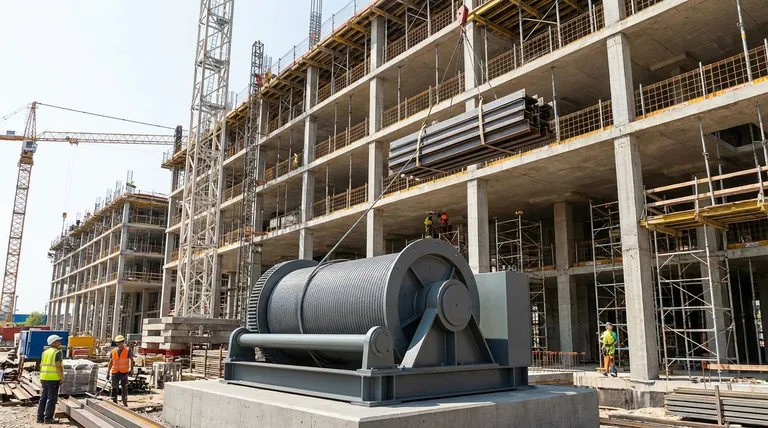
Deconstructing the Core Capabilities
To fully grasp if a linear winch is right for your needs, it's essential to understand what each of its core specifications means in a practical context.
Weight Capacity (0.5 to 5 Tons)
The load-bearing capacity, ranging from 500 kg to 5,000 kg, defines the winch's primary function. This wide range makes it highly versatile.
At the lower end, it's suitable for smaller tasks like home renovations or vehicle towing. At the upper end, it can handle heavy materials on construction sites, assist in road repairs, or aid in bridge building.
Vertical Lifting Range (1 to 120 Meters)
A maximum height of 120 meters (nearly 400 feet) gives this winch significant reach for vertical applications.
This capability is critical for multi-story construction projects, utility work in deep shafts, or any scenario where materials must be moved over a substantial vertical distance safely and efficiently.
Lifting Speed (16 m/min)
The winch operates at a fixed speed of 16 meters per minute.
This deliberate speed is engineered for safety and control, not for rapid transit. It ensures that heavy loads can be positioned precisely without sudden jerks, which is crucial for preventing accidents and damage to materials.
Understanding the Operational Requirements
A winch's capabilities are directly tied to its power source and mechanical design. Understanding these elements is key to deploying it effectively.
Power Source Flexibility
The linear winch can be configured for two standard power sources: 220V single-phase or 380V three-phase electricity.
A 220V setup is common in residential areas and smaller workshops, offering convenience for lighter-duty applications. The 380V three-phase option delivers more robust and stable power, making it the standard for industrial sites and heavy construction projects.
Key Internal Components
Several components work in concert to deliver the winch's lifting power.
- The electric motor provides the initial power.
- A gearbox multiplies the motor's torque to handle heavy loads.
- The drum stores the wire rope.
- A critical brake system ensures the load is held securely when the motor is not active.
Key Considerations and Trade-offs
While powerful, a linear winch is not the universal solution for every lifting task. Understanding its limitations is just as important as knowing its strengths.
Electric vs. Manual Power
Compared to a manual winch, which typically tops out at around 1.2 tons, the electric linear winch offers vastly superior lifting capacity.
The trade-off is its dependency on a power source. For remote locations or situations requiring maximum portability without electricity, a manual winch may be the only viable, albeit less powerful, option.
Rope Capacity vs. Lifting Height
The specified 120-meter lifting height is only achievable if the winch drum is fitted with a wire rope of at least that length.
The rope capacity—the total length of rope the drum can hold—is a separate specification. Always ensure the installed rope length meets or exceeds your project's maximum height requirement.
Fixed Speed Implications
The constant speed of 16 m/min ensures predictability and safety. However, it lacks the variable speed control found in more advanced (and expensive) hoisting systems. For operations that require nuanced, on-the-fly speed adjustments, this winch may be too rigid.
Making the Right Choice for Your Application
To select the correct equipment, match the winch’s capabilities directly to your project's primary goal.
- If your primary focus is heavy industrial lifting: The 5-ton capacity and the 380V three-phase power option make it a robust and reliable choice for construction or bridge work.
- If your primary focus is general workshop or renovation tasks: The lower end of the capacity range (0.5 to 2 tons) paired with a 220V single-phase setup provides ample power without requiring industrial infrastructure.
- If your primary focus is portability and power independence: A manual winch is the better alternative, but you must work within its much lower weight limit of 300 kg to 1.2 tons.
Understanding these core parameters ensures you select a winch that provides the right balance of power, precision, and practicality for your project's success.
Summary Table:
| Capability | Specification | Key Applications |
|---|---|---|
| Weight Capacity | 0.5 to 5 tons | Small renovations to heavy construction |
| Lifting Height | 1 to 120 meters | Multi-story construction, utility work |
| Lifting Speed | 16 meters/minute | Controlled, safe material handling |
| Power Source | 220V/380V options | Versatile for workshop or industrial use |
Ready to enhance your project's lifting efficiency? As GARLWAY specializes in construction machinery, including winches, concrete mixers, and batching plants, we can provide the ideal linear winch solution for your construction company or contracting needs. Our equipment delivers the power, precision, and reliability you require. Contact us today to discuss your specific requirements and get a tailored recommendation!
Visual Guide
Related Products
- Small Electric Winch 120V and 240V for Compact Applications
- Electric and Hydraulic Winch for Heavy Duty Applications
- Hydraulic Winding Engine Harbor Freight Winch
- Warn Winch Windlass Boat Trailer Winch
- Portable Small Trailer Winch
People Also Ask
- What makes electric winches suitable for off-road use? Key Features for Reliable Vehicle Recovery
- What are the common applications of electric winches? Power Your Lifting & Pulling Tasks
- What are the common uses of an electric winch? A Guide to Safe and Efficient Heavy Lifting
- What are the uses of electric winches in mining and tunneling? Enhance Safety and Efficiency Underground
- How do electric winches contribute to energy savings? Maximize Efficiency and Lower Costs