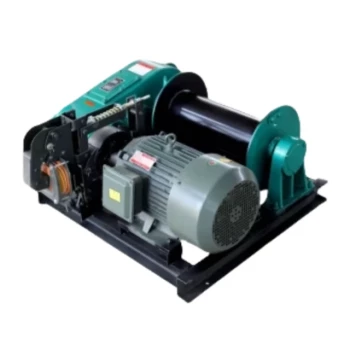
Absolutely, yes. Lubricating your winch is a critical and non-negotiable part of routine maintenance. The lubricant applied at the factory is only intended for initial storage and the very early stages of use. To ensure long-term performance, reliability, and safety, you must regularly lubricate both the winch cable and its internal moving parts.
Failing to lubricate a winch is not a shortcut; it's a direct path to reduced performance, premature wear, and potential failure under load. Proper lubrication of both the wire rope and internal gears is an essential part of a maintenance routine that ensures your winch will work when you need it most.
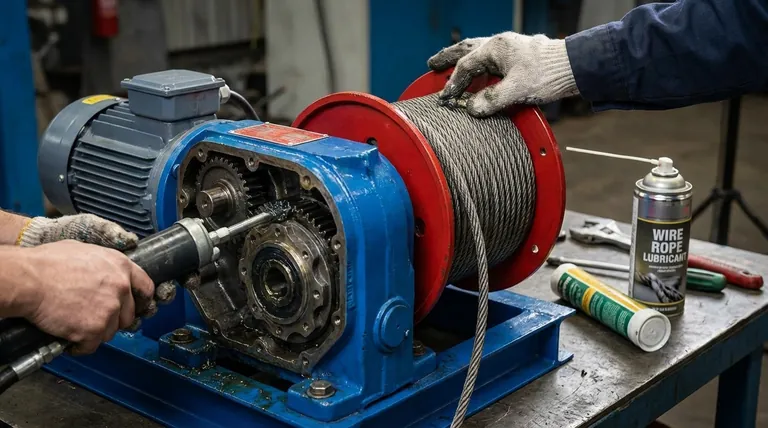
Why Lubrication is Non-Negotiable
A winch is a mechanical system operating under immense force, often in harsh conditions. Lubrication isn't just a suggestion; it's the primary defense against mechanical failure.
Preventing Corrosion and Wear
The most immediate benefit of lubrication is protection. A proper lubricant creates a barrier against moisture, dirt, and grit, which prevents rust and corrosion from taking hold.
Internally, it reduces the friction between gears and other moving components, which is the primary cause of wear and tear.
Ensuring Smooth Operation
A dry or poorly lubricated winch will operate sluggishly. The clutch may become difficult to engage, and the gears can bind under load.
Proper lubrication ensures all components move freely, providing the smooth and predictable performance necessary for safe and effective recovery operations.
Extending Component Lifespan
Factory-applied grease is a starting point, not a long-term solution. It will break down, wash away, or become contaminated over time.
By replenishing lubricants, you are directly extending the service life of every component, from the individual strands of the wire rope to the gears deep inside the housing.
The Two Critical Areas for Lubrication
Simply spraying lubricant on the outside of the winch is not enough. Effective maintenance requires targeting two distinct systems with the right type of product.
The Winch Cable (Wire Rope)
The steel cable on your winch is a machine in itself, composed of many small wires twisted into strands. It requires a penetrating wire rope lubricant.
This type of lubricant is designed to seep deep into the core of the rope, lubricating the strands as they rub against each other under tension. This prevents internal fraying and rust.
Internal Gears and Moving Parts
The gearbox contains the components that multiply the motor's power. These parts require a heavy-duty grease, such as marine-grade grease, that can withstand high pressure.
This process often requires partial disassembly of the winch housing to access the gear train, a task that should be performed annually for most users.
Common Pitfalls to Avoid
Applying lubricant seems simple, but several common mistakes can undermine your efforts or even cause damage.
Using the Wrong Lubricant
Never use standard engine oil or a simple spray like WD-40 on your winch cable. These products are too thin and can attract dust and grit, creating an abrasive paste that accelerates wear.
Always use a purpose-built wire rope lubricant for the cable and a high-quality grease for the gears.
Neglecting the Full System
Lubrication is just one part of a complete maintenance check. A well-oiled winch with frayed electrical connections or a faulty brake is still a liability.
Your routine should also include inspecting electrical connections for tightness and corrosion, checking the brake system, and testing the motor's operation.
Forgetting Associated Hardware
The fairlead, whether it's a roller or hawse type, also requires attention. Rollers on a roller fairlead should be inspected and lubricated to ensure they spin freely, preventing unnecessary abrasion on your cable.
How to Apply This to Your Winch Maintenance
Your maintenance schedule should match your usage pattern. A systematic approach ensures nothing is overlooked.
- If your primary focus is occasional use and reliability: Perform a full internal inspection and re-greasing of the gears annually. Lubricate the wire rope every six months or after any exposure to water or mud.
- If your primary focus is heavy-duty or frequent use: Lubricate your wire rope after every significant use, especially in wet or dirty conditions. Plan for an internal gear inspection and re-greasing at least twice a year.
- If you are preparing the winch for long-term storage: Clean and lubricate both the cable and the internal gears thoroughly before storing it to prevent parts from seizing due to corrosion.
Consistent maintenance transforms your winch from a potential liability into a reliable and powerful tool.
Summary Table:
| Lubrication Area | Recommended Product | Key Benefit |
|---|---|---|
| Winch Cable (Wire Rope) | Penetrating Wire Rope Lubricant | Prevents internal rust & fraying |
| Internal Gears & Parts | Heavy-Duty Marine Grease | Reduces friction & wear under high load |
| Fairlead (Rollers) | General Purpose Grease | Ensures smooth cable spooling |
Ensure your equipment is always job-ready. Proper maintenance is key to the longevity and reliability of your construction machinery. GARLWAY specializes in durable winches, concrete mixers, and batching plants designed for the demands of construction companies and contractors. Our experts can help you establish the right maintenance routines to protect your investment.
Contact GARLWAY today for expert advice and reliable machinery that works as hard as you do.
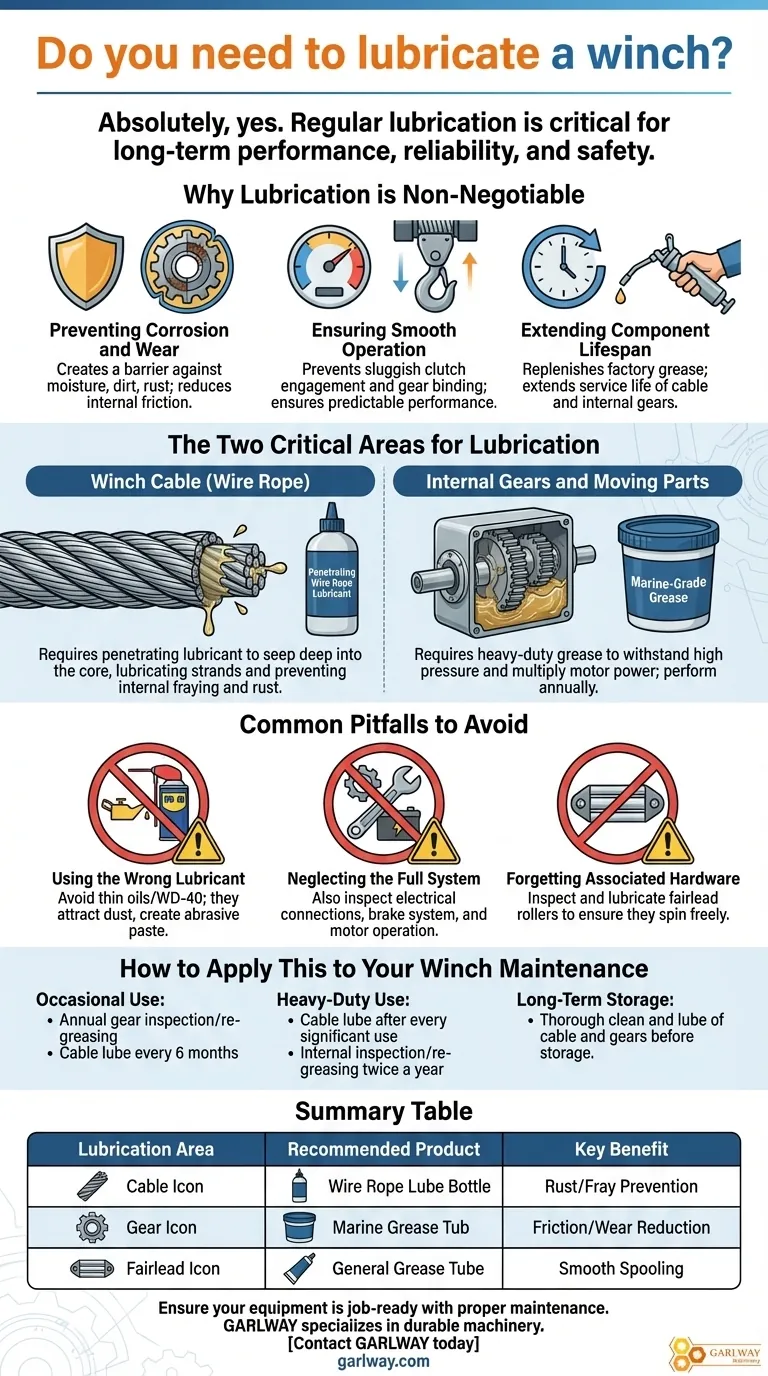
Visual Guide
Related Products
- Warn Winch Windlass Boat Trailer Winch
- Electric and Hydraulic Winch for Heavy Duty Applications
- Small Electric Winch 120V and 240V for Compact Applications
- 12000 lb Electric Boat Trailer Winch with Windlass Anchor Warn
- Quick Windlass Portable Winch for Truck and Boat Best Boat Winch
People Also Ask
- What are the main components of a boat trailer winch? A Guide to Safe & Efficient Boat Loading
- What factors should be considered when choosing a boat trailer winch? Ensure Safe and Effortless Boat Loading
- What is the purpose of boat trailer winches? Safely and Efficiently Load Your Boat
- What are the two main types of boat trailer winches? Manual vs. Electric Explained
- How often should a boat trailer winch be replaced? Your Guide to Safety and Longevity