The defining features of an RCC batching plant for water conservancy projects are its capacity to handle very large aggregates and its high-volume production output. These plants are engineered specifically to process aggregate materials with particle sizes up to 15cm and can produce up to 6 cubic meters of concrete in a single batch, meeting the extreme demands of mass concrete works.
At its core, an RCC batching plant isn't just a concrete mixer; it's a high-throughput industrial system designed for a single purpose: producing massive quantities of consistent, low-slump Roller-Compacted Concrete with maximum efficiency and cost-effectiveness.
The Core Challenge: Mass Concrete for Water Conservancy
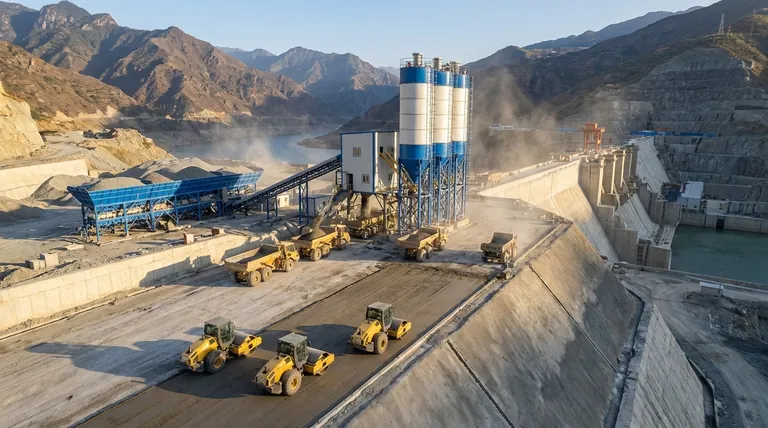
Water conservancy projects, such as dams, levees, and large spillways, require placing enormous volumes of concrete. The primary material used is Roller-Compacted Concrete (RCC), a very dry, zero-slump mix that is placed in layers and compacted with vibratory rollers, much like asphalt.
This unique application creates engineering demands that standard batching plants cannot meet. The entire system must be optimized for continuous, high-volume production of a very specific and challenging concrete mix.
Key Features of a Specialized RCC Batching Plant
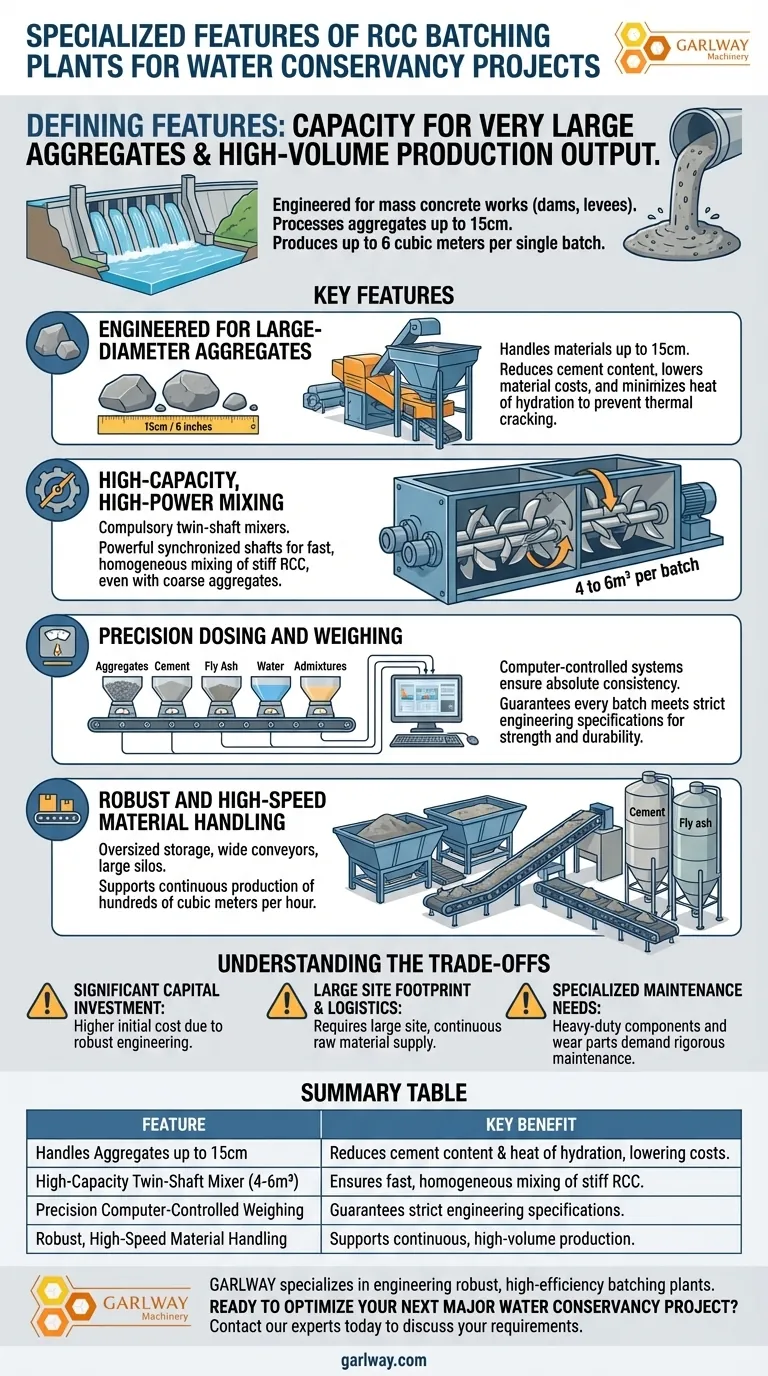
Engineered for Large-Diameter Aggregates
The most significant feature is the plant's ability to handle aggregates up to 15cm (approximately 6 inches) in diameter. Standard plants typically cannot process materials larger than 6-8cm.
The use of large aggregates is critical for reducing the overall cement content in the mix. This lowers material costs and, more importantly, reduces the heat of hydration—a crucial factor in preventing thermal cracking in massive concrete structures.
High-Capacity, High-Power Mixing
To meet production targets, these plants are built around exceptionally large mixers, often with a capacity of 4 to 6 cubic meters per batch.
These are almost always compulsory twin-shaft mixers. Their powerful, synchronized shafts generate a forced mixing action that is essential for evenly coating the large, coarse aggregates and producing a homogeneous, stiff RCC mix in a short cycle time.
Precision Dosing and Weighing
Producing "high-grade concrete" requires absolute consistency. RCC plants feature highly accurate, computer-controlled weighing systems for all components: aggregates, cement, fly ash, water, and admixtures.
This precision ensures that every single batch meets the strict engineering specifications for strength, density, and durability required for critical infrastructure.
Robust and High-Speed Material Handling
A plant producing hundreds of cubic meters of concrete per hour requires an equally robust material feed system.
This includes oversized aggregate storage bins, wide and durable conveyor belts, and large-capacity cement and fly ash silos. The entire logistics chain is designed to feed the mixer without interruption, ensuring continuous production.
Understanding the Trade-offs
While essential for their specific application, these specialized plants come with practical considerations that make them unsuitable for general-purpose use.
Significant Capital Investment
RCC batching plants are larger, more powerful, and more complex than standard concrete plants. This robust engineering results in a substantially higher initial purchase and installation cost.
Large Site Footprint and Logistics
The sheer size of the equipment—from the aggregate bins to the mixer tower—demands a large, well-prepared site. The logistical challenge of supplying the plant with a continuous stream of raw materials (thousands of tons per day) is also a major operational factor.
Specialized Maintenance Needs
The heavy-duty components, particularly the powerful twin-shaft mixer and its wear parts, require a rigorous and specialized maintenance program. Downtime on a mass concrete project is extremely costly, making reliability and proactive maintenance paramount.
Making the Right Choice for Your Goal
- If your primary focus is a mass concrete project like a dam or large foundation: The specialized RCC batching plant is the only tool that can efficiently and economically meet the technical requirements for volume, speed, and mix design.
- If your primary focus is cost reduction on a mass concrete project: The ability to use large, locally sourced aggregates significantly reduces cement demand, directly translating into major material cost savings over the project's lifecycle.
- If your primary focus is general construction or standard structural concrete: A conventional batching plant is far more practical, cost-effective, and versatile for the wider range of mix designs and smaller volumes required.
Ultimately, selecting the right batching plant is about precisely matching the equipment's capabilities to the unique engineering demands of the project.
Summary Table:
| Feature | Key Benefit |
|---|---|
| Handles Aggregates up to 15cm | Reduces cement content & heat of hydration, lowering costs and preventing cracks. |
| High-Capacity Twin-Shaft Mixer (4-6m³) | Ensures fast, homogeneous mixing of stiff RCC for consistent quality. |
| Precision Computer-Controlled Weighing | Guarantees every batch meets strict engineering specifications for strength and durability. |
| Robust, High-Speed Material Handling | Supports continuous, high-volume production (hundreds of cubic meters per hour). |
Ready to optimize your next major water conservancy project?
GARLWAY specializes in engineering robust, high-efficiency batching plants for the most demanding construction applications. Our RCC plants are designed to help construction companies and contractors globally achieve maximum production output and significant cost savings on mass concrete projects like dams and spillways.
Contact our experts today to discuss your project's specific requirements and discover how our solutions can deliver superior value and performance.
Visual Guide
Related Products
- HZS120 Ready Mix Concrete Batching Plant Commercial Mud Cement Mixer
- HZS35 Small Cement Concrete Mixing Batch Plant
- HZS75 Concrete Batching Plant Cement Mixer Price Concrete Mixer Bunnings Mixing Plant
- HZS180 Ready Mix Concrete Plant for Foundations with Sand and Cement
- Commercial Electric Concrete Mixer Machine HZS 50 Small Batch Plant for Sale
People Also Ask
- What is a ready mix concrete batching plant? The Engine of Modern Construction
- What is the name of the machine used in ready mix? Unpacking the Complete Concrete System
- What is the core component of a concrete batching plant? The Mixer Unit Defines Your Concrete Quality
- What are the types of concrete mixers used in batching plants? Choose the Right Mixer for Your Project
- What are the advantages and disadvantages of concrete batching plants? Maximize Quality & Efficiency