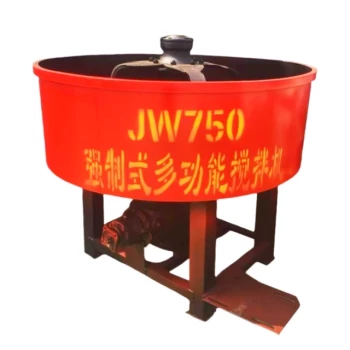
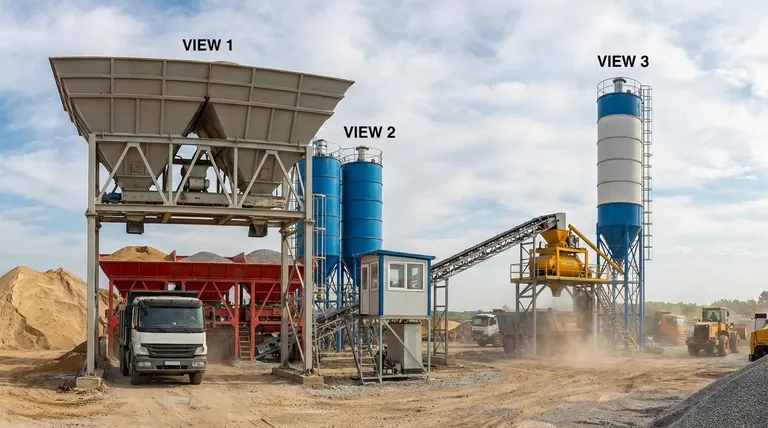
At its core, a concrete batching plant combines several key components to precisely measure and blend raw materials into high-quality concrete. The main components are the aggregate storage and feeding system, cement silos, conveyors for moving materials, dedicated weighing systems for each ingredient, a central mixer, and a sophisticated control system to automate the entire process.
A concrete batching plant is not merely a collection of machinery; it is an integrated system designed for one purpose: creating a perfectly consistent concrete mix, batch after batch. The critical insight is to view it through its five primary functions: material storage, conveyance, weighing, mixing, and control.
The Core Systems of a Concrete Batching Plant
To truly understand how a plant operates, it's best to group its components by their function within the production process. Each system plays a distinct and critical role.
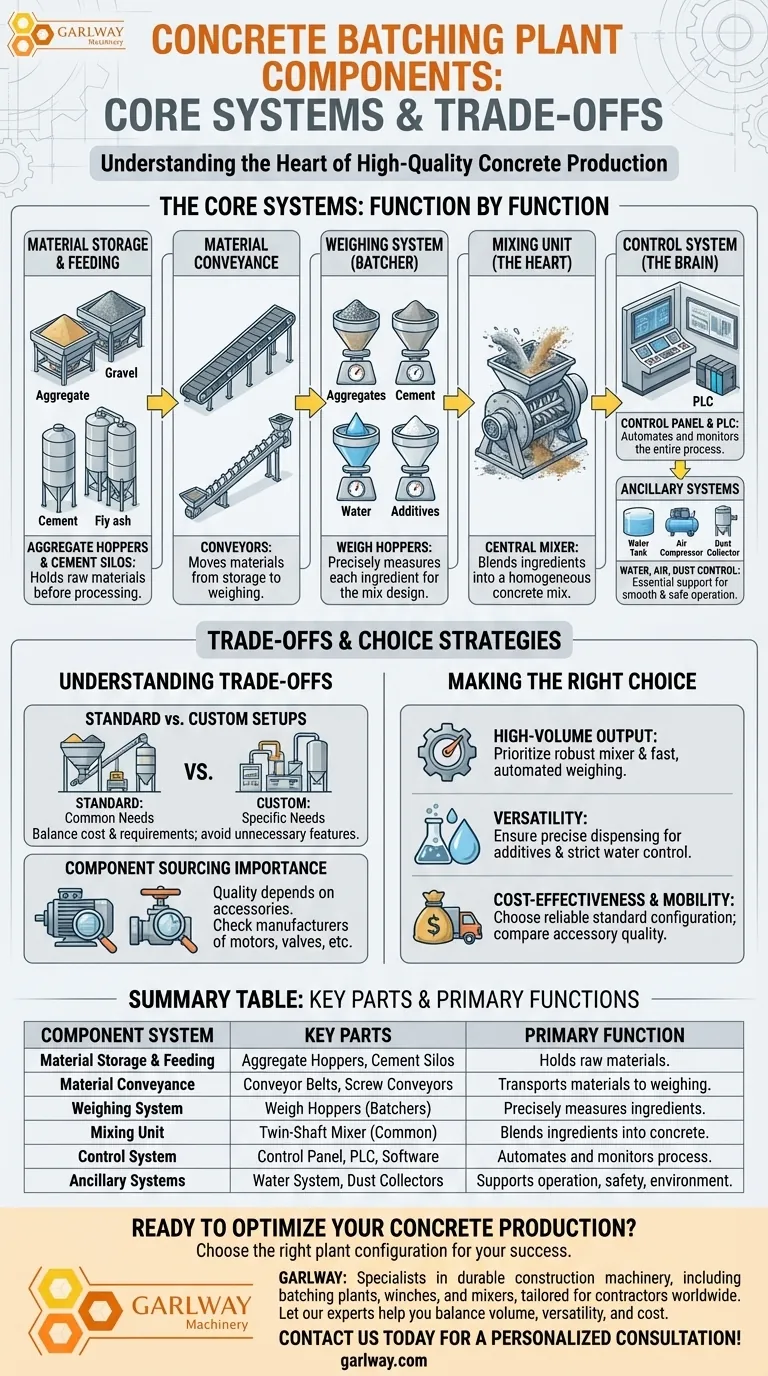
Material Storage & Feeding
This is the starting point where all raw ingredients are held before being processed.
The primary storage units are aggregate hoppers or bunkers, which hold sand, gravel, and crushed stone. For cement and other powders like fly ash, tall cement silos are used to keep the material dry and ready for use.
Material Conveyance
This system is responsible for moving the raw materials from storage to the next stage.
Aggregate transfer conveyors, typically long conveyor belts, transport the aggregates from the hoppers to the weighing system. For cement, a screw conveyor is used to move the fine powder from the silo with precision.
The Weighing System (The Batcher)
This is arguably the most critical system for ensuring concrete quality, as it guarantees the correct proportions for the mix design.
Separate weighing hoppers (or batchers) are used for each material: one for aggregates, one for cement, one for water, and often another for chemical additives. This separation ensures extreme accuracy.
The Mixing Unit (The Heart of the Plant)
Once weighed, all ingredients are discharged into the central concrete mixer.
This unit is the heart of the operation, vigorously blending the cement, aggregates, water, and additives to create a homogeneous and durable concrete mix. A common and efficient type is the twin-shaft mixer.
The Control System (The Brain)
The entire process is automated and managed by a central control system.
Located in a control room, this system uses a PLC (Programmable Logic Controller) and specialized software. The operator can input mix designs, start and stop production, and monitor every component from a single control panel.
Ancillary & Support Systems
Several other components are essential for the plant to function smoothly and safely.
These include a water tank and delivery system, an air compressor to power pneumatic valves and gates, and dust collectors to control air quality and reduce waste.
Understanding the Trade-offs in Plant Configuration
Choosing a concrete batching plant involves more than just knowing the components; it requires understanding the economic and operational trade-offs.
Standard vs. Custom Setups
Manufacturers offer standard product configurations based on common needs. While custom requirements can be accommodated, they often increase costs.
It is crucial to assess your actual project needs and avoid specifying unnecessary features or capacities that lead to economic waste. The goal is to find the configuration that fits your demand, not the biggest or best available.
The Importance of Component Sourcing
When comparing prices from different manufacturers, do not just look at the brand on the plant. Pay close attention to the configuration list.
The quality and reliability of a plant often depend on its accessories—the motors, valves, and control system components. Inquiring about the manufacturers of these sub-components can reveal significant differences in overall plant quality.
Making the Right Choice for Your Needs
Your project goals should dictate your priorities when evaluating a plant's components.
- If your primary focus is high-volume, consistent output: Prioritize a plant with a robust, high-speed mixer and a highly accurate, fully automated weighing and control system.
- If your primary focus is versatility for specialized mixes: Ensure the plant has precise weighing and dispensing systems for multiple chemical additives and meticulous water control.
- If your primary focus is cost-effectiveness and mobility: Look for a well-engineered standard configuration from a reputable supplier and carefully compare the quality of the underlying accessories.
Ultimately, understanding how these components function as a single, cohesive system empowers you to select a plant that delivers quality, efficiency, and value.
Summary Table:
| Component System | Key Parts | Primary Function |
|---|---|---|
| Material Storage & Feeding | Aggregate Hoppers, Cement Silos | Holds raw materials like sand, gravel, and cement. |
| Material Conveyance | Conveyor Belts, Screw Conveyors | Transports materials from storage to the weighing area. |
| Weighing System | Weigh Hoppers (Batchers) | Precisely measures each ingredient for the mix design. |
| Mixing Unit | Twin-Shaft Mixer (Common Type) | Blends all ingredients into a homogeneous concrete mix. |
| Control System | Control Panel, PLC, Software | Automates and monitors the entire batching process. |
| Ancillary Systems | Water System, Dust Collectors | Supports plant operation, safety, and environmental control. |
Ready to optimize your concrete production?
Understanding the components is the first step. Choosing the right plant configuration is what drives your project's success. At GARLWAY, we specialize in providing durable and efficient construction machinery, including concrete batching plants, winches, and mixers, tailored for construction companies and contractors worldwide.
Let our experts help you select a plant that perfectly balances your needs for volume, versatility, and cost-effectiveness. Contact us today for a personalized consultation and quote!
Visual Guide
Related Products
- HZS120 Ready Mix Concrete Batching Plant Commercial Mud Cement Mixer
- HZS35 Small Cement Concrete Mixing Batch Plant
- HZS75 Concrete Batching Plant Cement Mixer Price Concrete Mixer Bunnings Mixing Plant
- HZS180 Ready Mix Concrete Plant for Foundations with Sand and Cement
- Commercial Electric Concrete Mixer Machine HZS 50 Small Batch Plant for Sale
People Also Ask
- What is a ready mix concrete batching plant? The Engine of Modern Construction
- What is the name of the machine used in ready mix? Unpacking the Complete Concrete System
- What is the core component of a concrete batching plant? The Mixer Unit Defines Your Concrete Quality
- What are the types of concrete mixers used in batching plants? Choose the Right Mixer for Your Project
- What are the advantages and disadvantages of concrete batching plants? Maximize Quality & Efficiency