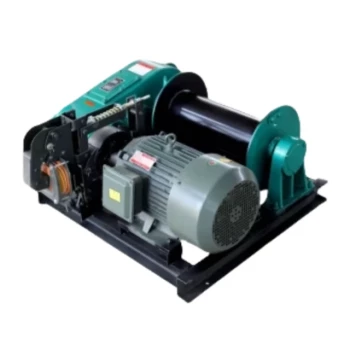
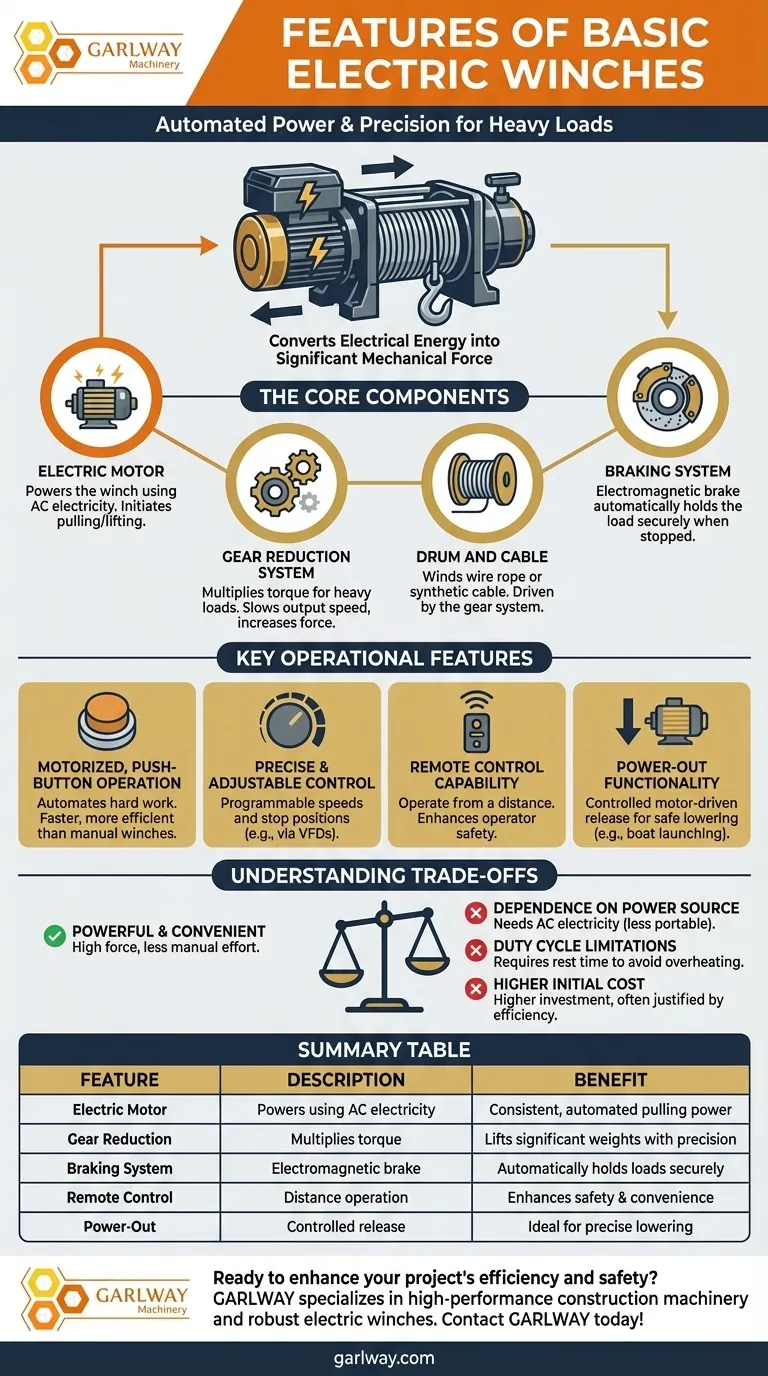
At their core, basic electric winches are systems that use an electric motor to pull, lift, or position heavy loads. Key features include a motor that provides the power, a gear reduction system to multiply force, a drum to wind the cable, an integrated braking system for safety, and the ability to be operated via remote control.
The fundamental advantage of an electric winch is its ability to convert electrical energy into significant mechanical force with precision and control, automating difficult tasks while often being more compact, cleaner, and easier to install than alternatives.
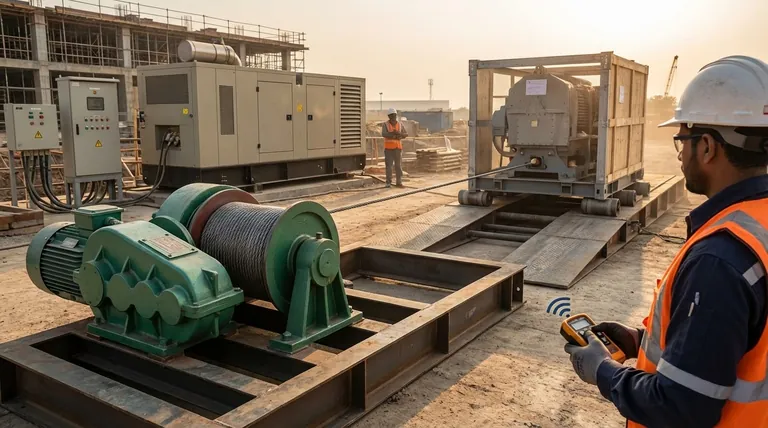
The Core Components of an Electric Winch
To understand how an electric winch works, it helps to break it down into its essential parts. Each component plays a critical role in its performance and safety.
The Electric Motor
The motor is the heart of the winch. It's typically an AC electric motor that draws power from an electrical source to initiate the pulling or lifting process.
The Gear Reduction System
The motor's raw speed is not enough to pull heavy loads. A gear reducer, often a three-stage enclosed system, is used to slow the output speed and dramatically multiply the torque, providing the immense pulling power the winch is known for.
The Drum and Cable
The drum is the spool that the wire rope or synthetic cable winds onto. The gear system drives this drum, which performs the actual work of pulling the load in.
The Braking System
For safety and control, a reliable brake is non-negotiable. Electric winches commonly use an electromagnetic brake, which automatically engages to hold the load securely when the motor is not active.
Key Operational Features and Benefits
The design of an electric winch delivers several features that translate directly into practical benefits for the operator.
Motorized, Push-Button Operation
The most obvious feature is the automation of hard work. This motorized operation requires far less manual effort than a manual winch and enables significantly faster and more efficient completion of tasks.
Precise and Adjustable Control
Modern electric winches offer superior control. Features like variable frequency drives (VFDs) allow for programmable speeds and precise stop positions, accommodating tasks that require either slow, careful movement or fast operation.
Remote Control Capability
Many electric winches can be operated from a distance using a remote control. This greatly enhances operator safety by allowing them to stand clear of the load and the winch line during operation.
Power-Out Functionality
Some models include a power-out option. Instead of letting the cable free-spool, this feature uses the motor in reverse to provide a controlled release of the load, which is ideal for tasks like launching a heavy boat on a steep ramp.
Understanding the Trade-offs
While powerful and convenient, electric winches have specific limitations that are important to understand.
Dependence on a Power Source
The most significant constraint is the need for a reliable source of AC electricity. This makes them perfectly suited for workshops, industrial sites, and offshore platforms but less practical for remote, off-grid field applications without a generator.
Duty Cycle Limitations
Electric motors generate heat and cannot run continuously under load without risking damage from overheating. You must be aware of the winch's specified duty cycle—the ratio of its run time to its required rest time—to ensure its longevity.
Higher Initial Cost
Compared to a simple manual winch, an electric winch represents a higher upfront investment due to its motor, gearing, and electrical components. However, this cost is often justified by its power, speed, and reduced labor requirements.
Making the Right Choice for Your Goal
Selecting the right features depends entirely on your intended application.
- If your primary focus is industrial lifting or manufacturing: An electric winch with a variable frequency drive provides the programmable control and precision you need.
- If your primary focus is vehicle recovery or general pulling: A basic, robust electric winch with remote control offers the necessary power, safety, and convenience.
- If your primary focus is controlled lowering or launching: Ensure the winch explicitly includes a "power-out" feature for safe, motor-driven load release.
Ultimately, understanding these core features empowers you to select an electric winch that precisely matches the power, control, and efficiency your task demands.
Summary Table:
| Feature | Description | Benefit |
|---|---|---|
| Electric Motor | Powers the winch using AC electricity | Provides consistent, automated pulling power |
| Gear Reduction System | Multiplies torque for heavy loads | Enables lifting of significant weights with precision |
| Braking System | Electromagnetic brake for safety | Automatically holds loads securely when stopped |
| Remote Control | Allows operation from a distance | Enhances operator safety and convenience |
| Power-Out Function | Controlled release of loads | Ideal for precise lowering tasks like boat launching |
Ready to enhance your project's efficiency and safety? GARLWAY specializes in high-performance construction machinery, including robust electric winches designed for demanding industrial and construction applications. Our winches deliver reliable power, precise control, and built-in safety features to help construction companies and contractors globally tackle heavy lifting with confidence. Contact GARLWAY today to find the perfect winch solution for your needs!
Visual Guide
Related Products
- Electric 120V Boat Winch by Badlands
- Small Electric Winch 120V and 240V for Compact Applications
- Electric and Hydraulic Winch for Heavy Duty Applications
- 12000 lb Electric Boat Trailer Winch with Windlass Anchor Warn
- Electric Hoist Winch Boat Anchor Windlass for Marine Applications
People Also Ask
- How do electric boat winches work? Unlock Effortless Launching & Retrieval
- How much current does an electric boat winch draw? Plan Your Electrical System for Peak Performance
- Can I run a winch straight from a battery? Essential Power Setup for Safe Operation
- What are the types of electric winches available? Choose the Right Winch for Your Job
- What are the uses of electric winches in mining and tunneling? Enhance Safety and Efficiency Underground