
The primary drawbacks of a steel winch rope are its significant weight, its tendency to develop rust, and its potential to form dangerous sharp burrs from broken wire strands. These factors create considerable handling and safety challenges that demand constant user vigilance.
While steel winch rope offers exceptional durability and abrasion resistance, its significant weight and potential for developing sharp burrs create practical handling and safety challenges that have been largely solved by modern synthetic alternatives.
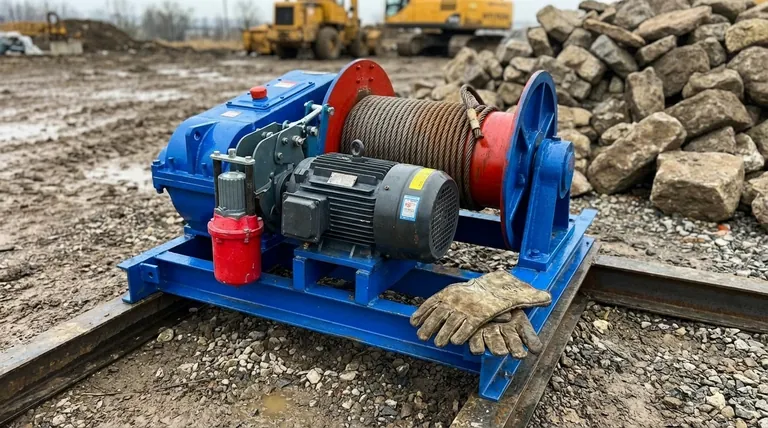
The Practical Challenges of Steel Rope
While proven over decades, steel winch rope presents several inherent disadvantages that are critical to understand before use, especially in recovery situations.
The Burden of Weight
A steel winch line is extremely heavy. This added weight, permanently spooled on the front of your vehicle, can negatively affect your front suspension's performance over time.
More immediately, deploying and re-spooling a heavy steel cable, especially uphill or through difficult terrain, is physically demanding and can add significant time and effort to a recovery.
The Danger of Burrs and Kinks
As a steel rope is used, individual wire strands can break, creating sharp, needle-like burrs (often called "jaggers"). These burrs can easily tear through flesh, which is why heavy leather gloves are non-negotiable when handling steel cable.
Furthermore, steel rope is prone to kinking. A kink creates a permanent weak spot in the line, significantly reducing its breaking strength and rendering it unsafe for heavy loads.
The Inevitability of Corrosion
Steel is made of iron and will rust when exposed to moisture. This isn't just a cosmetic issue; rust weakens the cable from the inside out, compromising its integrity.
To combat this, a steel rope requires regular maintenance, including cleaning and lubrication, to prevent corrosion from taking hold and shortening its effective service life.
Understanding the Trade-offs
The disadvantages of steel rope only tell half the story. It remains a viable option because of its unique strengths, which are important to weigh against its cons.
Unmatched Abrasion Resistance
The single greatest advantage of steel is its superior resistance to abrasion. It excels in environments with sharp rocks, dense brush, or abrasive mud and sand that could easily cut or damage a synthetic line.
This makes it a reliable choice for utility work, logging, or recoveries where the line is likely to be dragged over harsh surfaces.
Excellent Durability and UV Stability
Unlike synthetic ropes, steel cable is not susceptible to degradation from ultraviolet (UV) light. It can withstand years of sun exposure without losing strength.
When properly maintained, a steel cable has an extremely long service life, making it a cost-effective choice for those who prioritize raw durability over handling convenience.
The Critical Safety Difference: Stored Energy
The most significant safety concern with steel rope is the massive amount of kinetic energy it stores under load. If the line breaks, it will snap back with violent, potentially lethal force.
This is a stark contrast to synthetic rope, which stores far less energy and tends to fall to the ground if it fails, making it an inherently safer option in a recovery scenario.
Making the Right Choice for Your Goal
Ultimately, the choice between steel and synthetic depends entirely on your specific application and priorities.
- If your primary focus is utility work or highly abrasive environments: The durability and abrasion resistance of steel rope make it the more reliable choice, provided you adhere to strict safety protocols.
- If your primary focus is recreational off-roading and safety: A synthetic rope is the superior option due to its lighter weight, easier handling, and significantly lower risk in the event of a line failure.
Understanding these fundamental differences empowers you to choose the winch line that best aligns with your work, your environment, and your tolerance for risk.
Summary Table:
| Disadvantage | Key Impact |
|---|---|
| Heavy Weight | Affects vehicle suspension; difficult to handle |
| Sharp Burrs | High risk of injury; requires heavy gloves |
| Rust & Corrosion | Weakens rope integrity; requires regular maintenance |
| Stored Energy Risk | Dangerous snap-back if line fails |
| Kinking | Creates permanent weak spots |
Upgrade your winch setup with GARLWAY's high-performance synthetic ropes. Designed for construction companies and contractors, our winch lines offer superior safety, lighter weight, and easier handling—without sacrificing durability. Contact us today to find the perfect winch solution for your heavy-duty needs!
Visual Guide

Related Products
- Best 18000 Pound Drum Anchor Trailer Winch
- Warn Winch Windlass Boat Trailer Winch
- Quick Windlass Portable Winch for Truck and Boat Best Boat Winch
- Portable Small Trailer Winch
- Heavy Duty Electric Boat Winch Windlass Anchor
People Also Ask
- In what scenarios is a winch particularly useful for trailers? Load Heavy Items Safely & Efficiently
- How do you install a trailer winch? A Step-by-Step Guide for a Safe & Secure Setup
- What should be considered when mounting a winch on a trailer? Ensure a Safe, Aligned Installation
- What are the considerations for equipping a trailer with a winch for hauling a car? A Guide to Safe and Efficient Vehicle Loading
- What are the main types of trailer winches? Choose the Right Power Source for Your Load


