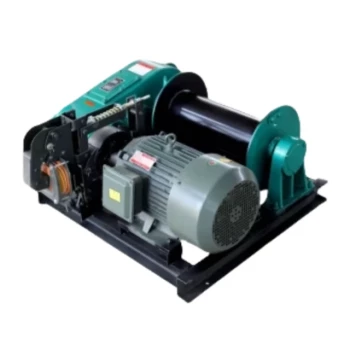
At its core, an electric winch is a compact system designed to convert electrical power into immense pulling force. It achieves this through a series of integrated components: an electric motor, a gearbox (or reducer), a drum, a cable, and a braking system, all secured to a central frame. These parts work in sequence to pull heavy loads safely and efficiently.
Understanding how a winch's components interact is more important than just knowing their names. The relationship between the motor, gearbox, and drum is what defines the winch's power, speed, and suitability for a specific task.
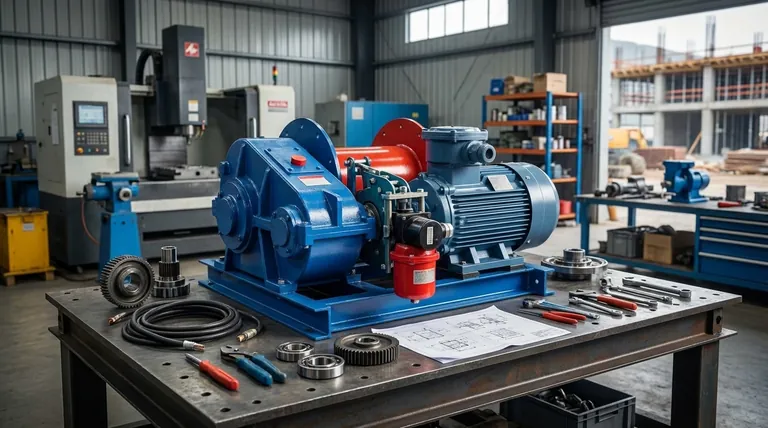
The Core Powertrain: From Electricity to Force
The primary job of a winch is to generate pulling power. This is accomplished by the powertrain, a sequence of components that create and multiply force.
The Electric Motor
The motor is the heart of the winch. It converts electrical energy, typically from a vehicle's battery or another power source, into the initial rotational force that drives the entire system.
The Gearbox (Reducer)
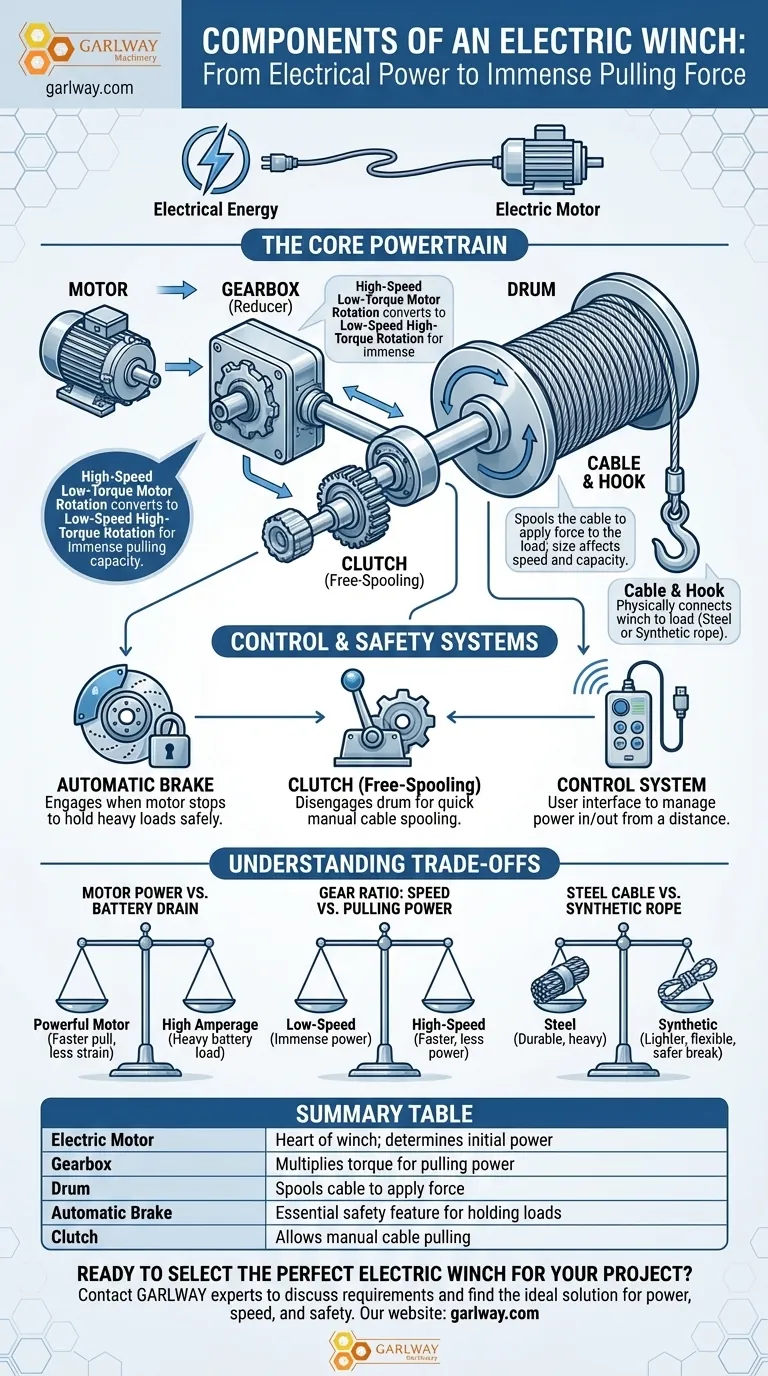
The gearbox is arguably the most critical component for generating power. It takes the high-speed, low-torque rotation from the motor and uses a series of gears to convert it into low-speed, high-torque rotation. This process is what gives a winch its incredible pulling capacity.
The Drum
The drum is the spool that the cable winds onto. As it is turned by the gearbox, it pulls the cable in, applying the multiplied force to the load. The drum's size can influence both the winding speed and the total length of cable the winch can hold.
The Cable and Hook
The cable, also known as wire rope, is what physically connects the winch to the object being pulled. It is typically made of high-strength steel or a lighter synthetic rope. A heavy-duty hook is attached to the end of the cable to secure it to the load.
Control and Safety Systems
Power is useless without control and safety. These components ensure the winch operates predictably and securely, preventing accidents and equipment damage.
The Automatic Brake
The braking system is a crucial safety feature. It automatically engages the moment the motor stops, preventing the drum from unwinding and releasing the load. This is essential for holding a heavy object in place.
The Clutch (Free-Spooling)
The clutch allows the drum to be disengaged from the gearbox. This "free-spool" mode lets you pull the cable out by hand quickly, which is much faster than using the motor to unspool it.
The Control System
This is the user interface, typically a wired or wireless remote. The controls allow the operator to manage the winch's operation—powering in and out—from a safe distance.
Understanding the Trade-offs
Choosing or using a winch involves balancing competing factors. Understanding the trade-offs inherent in its design is key to making an informed decision.
Motor Power vs. Battery Drain
A more powerful motor can pull a load faster and with less strain, but it also draws significantly more amperage. This can put a heavy load on the vehicle's battery and electrical system, especially during long, difficult pulls.
Gear Ratio: Speed vs. Pulling Power
The gearbox ratio determines the winch's core characteristics. A low-speed gear train (with a high numerical ratio, e.g., 265:1) offers immense pulling power but is slow. A high-speed gear train (with a lower numerical ratio) works much faster but has a lower maximum pulling capacity.
Steel Cable vs. Synthetic Rope
Steel cable is extremely durable and resistant to abrasion but is heavy and can store dangerous kinetic energy if it snaps. Synthetic rope is much lighter, flexible, and safer if it breaks, but it is more vulnerable to abrasion and UV damage.
Making the Right Choice for Your Goal
By understanding the components, you can select a winch that directly aligns with your needs.
- If your primary focus is maximum pulling power for heavy recovery: Prioritize a winch with a proven motor and a low-speed, high-torque planetary gearbox.
- If your primary focus is speed for lighter tasks or competitive use: Look for a winch with a higher-speed gear ratio and consider a synthetic rope to reduce weight.
- If your primary focus is safety and ease of use: Ensure the winch has a reliable automatic brake, and choose the cable type (steel or synthetic) whose safety protocols you understand best.
Ultimately, knowing how a winch's parts function together empowers you to operate it more effectively and choose the perfect tool for the job.
Summary Table:
| Component | Primary Function | Key Characteristic |
|---|---|---|
| Electric Motor | Converts electrical power into rotational force | Heart of the winch; determines initial power |
| Gearbox (Reducer) | Multiplies motor torque into pulling power | Critical for generating high-torque, low-speed rotation |
| Drum | Spools the cable to apply force to the load | Size affects cable capacity and winding speed |
| Automatic Brake | Locks the drum when motor stops | Essential safety feature for holding loads |
| Clutch | Disengages gearbox for free-spooling | Allows cable to be pulled out manually, quickly |
Ready to Select the Perfect Electric Winch for Your Project?
Understanding the components is the first step. Let GARLWAY, a specialist in construction machinery, help you take the next one. We offer a range of durable and powerful electric winches, along with concrete mixers and batching plants, designed to meet the demanding needs of construction companies and contractors globally.
Contact our experts today to discuss your specific requirements and find the ideal winch solution that delivers the power, speed, and safety you need.
Visual Guide
Related Products
- Small Electric Winch 120V and 240V for Compact Applications
- Electric Hoist Winch Boat Anchor Windlass for Marine Applications
- Heavy Duty Electric Boat Winch Windlass Anchor
- Electric 120V Boat Winch by Badlands
- Electric and Hydraulic Winch for Heavy Duty Applications
People Also Ask
- What makes electric winches suitable for off-road use? Key Features for Reliable Vehicle Recovery
- What are the common applications of electric winches? Power Your Lifting & Pulling Tasks
- What are the common uses of an electric winch? A Guide to Safe and Efficient Heavy Lifting
- What are the uses of electric winches in mining and tunneling? Enhance Safety and Efficiency Underground
- How do electric winches contribute to energy savings? Maximize Efficiency and Lower Costs