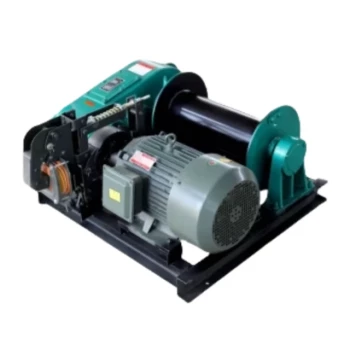
In the marine industry, electric winches are the workhorses for three primary and critical operations: anchoring, mooring, and towing. They also play a vital role in cargo and material handling, both on vessels and in dockyards, providing the controlled power necessary to manage immense loads safely and efficiently.
The core function of an electric winch in a marine setting is not just to pull, but to provide precise, reliable power in an environment that is constantly working to corrode and destroy mechanical equipment. Their design is a direct response to the demands of safety and operational efficiency at sea.
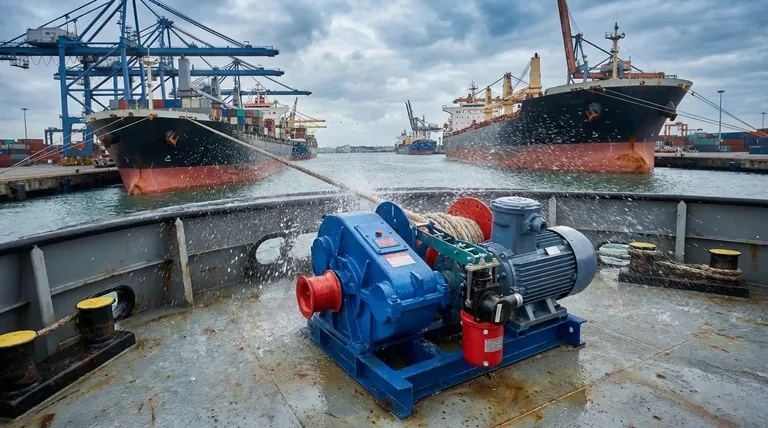
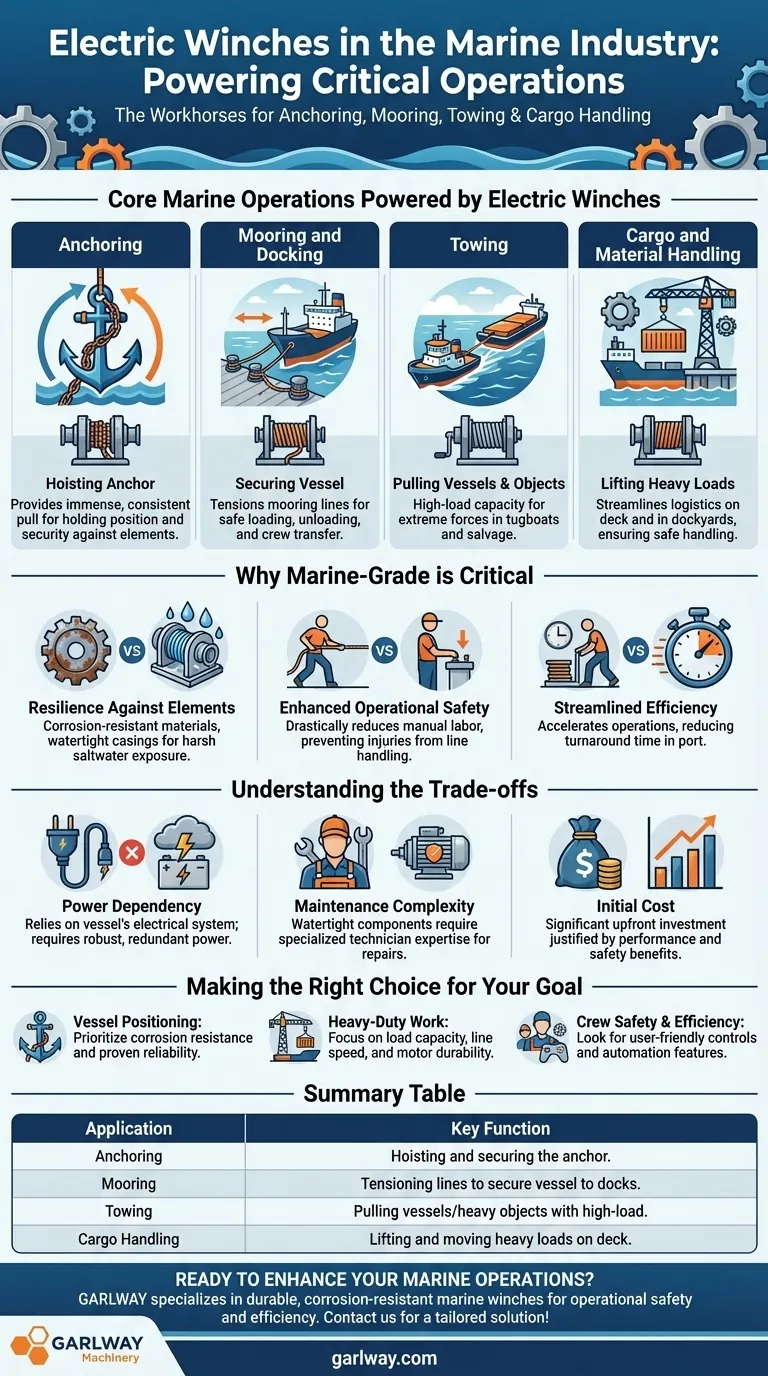
Core Marine Operations Powered by Electric Winches
Electric winches are integrated into the very fabric of a vessel's daily function. They handle tasks that would be impossible or dangerously impractical to perform manually, ensuring the security and operational capability of the ship.
Anchoring
An electric winch, often called a windlass in this context, is used for hoisting the anchor. This task requires immense and consistent pulling power to lift the heavy anchor and chain from the seabed, often against the resistance of wind and current.
Their reliability is paramount for holding a vessel's position securely.
Mooring and Docking
When a vessel needs to be secured to a pier, dock, or another ship, mooring winches are used. They tension the mooring lines, pulling the vessel into place and holding it fast against environmental forces.
This allows for safe and stable loading, unloading, and crew transfer.
Towing
Towing winches are designed for the extreme forces involved in pulling another vessel or a large object like a barge. These are among the most powerful winches, built for high-load capacity and endurance during extended operations.
They are fundamental to tugboats, salvage operations, and offshore support vessels.
Cargo and Material Handling
On deck, electric winches are used to lift and move heavy cargo and equipment. In dockyards, they are essential for loading and unloading materials from ships, positioning them for transport by land or sea.
This function streamlines the logistics of maritime commerce and ensures the safe handling of valuable goods.
Why Electric Winches are Critical in a Marine Setting
Standard industrial winches are not suitable for life at sea. Marine-grade electric winches possess specific traits that make them essential for maritime work, transforming operational efficiency and safety.
Resilience Against the Elements
Marine electric winches are built from corrosion-resistant materials like high-grade stainless steel. Their motors and electrical components are housed in watertight casings to protect them from constant exposure to saltwater spray and moisture.
This robust construction ensures longevity and reliable function in one of the world's harshest operating environments.
Enhanced Operational Safety
By providing immense, controlled power at the push of a button, electric winches drastically reduce manual labor and the associated risks of injury. They allow operators to manage heavy loads from a safe distance, preventing accidents related to line handling and equipment strain.
Streamlined Efficiency
The speed and power of electric winches significantly accelerate operations like docking and anchoring. What would take a great deal of time and manpower with manual systems can be accomplished in minutes, reducing turnaround time in port and improving overall productivity.
Understanding the Trade-offs
While highly beneficial, the decision to use electric winches involves acknowledging their specific requirements and potential points of failure.
Power Dependency
An electric winch is entirely dependent on the vessel's electrical power system. A power failure during a critical operation like anchoring in a storm can create a hazardous situation.
This necessitates robust and often redundant power sources on any vessel that relies on them.
Maintenance Complexity
The watertight motors and sealed electrical components, while durable, require specialized maintenance. Unlike a simple mechanical winch, troubleshooting electrical faults can be complex and may require a technician with specific expertise.
Initial Cost
High-quality, marine-grade electric winches represent a significant upfront investment compared to manual or hydraulic alternatives. The cost is justified by their performance and safety benefits, but it remains a key consideration in vessel outfitting.
Making the Right Choice for Your Goal
The ideal electric winch is determined by its intended application. Focusing on the primary operational need will clarify the most important features.
- If your primary focus is vessel positioning (anchoring and mooring): Prioritize winches with exceptional corrosion resistance and proven reliability.
- If your primary focus is heavy-duty work (towing and cargo): Load capacity, line speed, and the durability of the motor under sustained use are your most critical metrics.
- If your primary focus is improving crew safety and efficiency: Look for models with user-friendly controls and features that minimize the need for manual line handling.
Ultimately, choosing the right electric winch is a foundational decision for ensuring safe, efficient, and reliable marine operations.
Summary Table:
| Application | Key Function |
|---|---|
| Anchoring | Hoisting and securing the anchor using a windlass. |
| Mooring | Tensioning lines to secure the vessel to docks or other ships. |
| Towing | Pulling other vessels or heavy objects with high-load capacity. |
| Cargo Handling | Lifting and moving heavy loads on deck and in dockyards. |
Ready to enhance your marine operations with reliable, high-performance winches? GARLWAY specializes in construction and marine machinery, offering durable electric winches designed for the harsh marine environment. Our solutions provide corrosion resistance, operational safety, and streamlined efficiency for construction companies and contractors worldwide. Contact us today to discuss your specific needs and get a tailored solution!
Visual Guide
Related Products
- Electric 120V Boat Winch by Badlands
- Electric and Hydraulic Winch for Heavy Duty Applications
- Small Electric Winch 120V and 240V for Compact Applications
- 12000 lb Electric Boat Trailer Winch with Windlass Anchor Warn
- Electric Hoist Winch Boat Anchor Windlass for Marine Applications
People Also Ask
- How do electric boat winches work? Unlock Effortless Launching & Retrieval
- How much current does an electric boat winch draw? Plan Your Electrical System for Peak Performance
- Can I run a winch straight from a battery? Essential Power Setup for Safe Operation
- What are the types of electric winches available? Choose the Right Winch for Your Job
- What are the uses of electric winches in mining and tunneling? Enhance Safety and Efficiency Underground