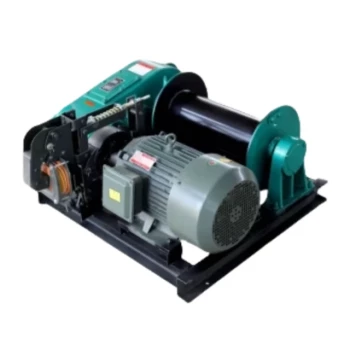
At its core, an electric winch has one primary purpose: to convert electrical energy into powerful mechanical force for moving heavy objects. It achieves this through a motor and gear system that winds a steel cable or synthetic rope around a drum, allowing a single person to lift, pull, or tow loads that would otherwise be impossible to manage.
The fundamental function of an electric winch is to act as a force multiplier. It uses a compact motor and a reduction gearbox to generate immense pulling power, enabling the safe and controlled movement of heavy loads vertically, horizontally, or up an incline.

The Core Principle: How a Winch Generates Force
To understand its functions, you must first understand its simple yet powerful design. An electric winch is not just one part, but a system of components working together.
The Electric Motor
The process begins with the electric motor. Typically powered by a 12-volt DC source like a vehicle battery, the motor provides the initial rotational energy for the system.
The Gearbox
This is the heart of the winch's power. The gearbox takes the high-speed, low-power rotation from the motor and converts it into low-speed, high-torque (pulling power) force. This gear reduction is what allows a small motor to pull thousands of pounds.
The Drum and Cable
The final stage is the drum, which is turned by the gearbox. As the drum rotates, it winds the wire rope or synthetic line, pulling in whatever load is attached to the end of it.
Deconstructing the Primary Functions
While the mechanism is singular, its application can be broken down into three distinct functions based on the direction of the force applied.
Vertical Lifting
This is the function of hoisting a heavy object straight up, working directly against gravity. This is common in construction, manufacturing, and shipping environments where materials must be lifted to different levels.
Horizontal Pulling
This is the most common function, especially in off-road and recovery situations. The winch is used to drag a heavy load—like a stuck vehicle or heavy equipment—across a horizontal surface.
Incline Pulling
This function is a hybrid of lifting and pulling. It involves moving a load up a slope, such as pulling a boat onto a trailer or moving equipment up a ramp. This requires overcoming both gravity and friction.
Understanding the Key Features and Trade-offs
Not all winches are created equal. Their design features dictate their best use cases and potential limitations.
Power Source and Duty Cycle
Most vehicle-mounted winches run on 12V DC power, which is convenient but depends on the vehicle's battery. Industrial winches may use AC power and are often designed for continuous, heavy-duty use without overheating.
Line Control: Power-In vs. Power-Out
Nearly all electric winches feature a "power-in" setting to reel the cable in under load. However, most use a "freewheel" clutch to let the line out, relying on gravity or manual pulling. A true "power-out" function, which uses the motor to control the release of the line, is a less common feature that provides superior control when lowering a heavy load.
Capacity Ratings
A winch's capacity determines the maximum load it can safely pull. This rating is crucial for safety and performance, as exceeding it can damage the winch, the cable, and create a dangerous situation.
Remote Operation
Modern winches often include wired or wireless remote controls. This is a critical safety feature that allows the operator to stand clear of the cable and load during operation, providing a better vantage point and protection from a potential line snap.
Making the Right Choice for Your Task
Selecting a winch depends entirely on the job you need it to do.
- If your primary focus is vehicle recovery: You need a winch with a pulling capacity rated at least 1.5 times your vehicle's gross weight and a durable 12V motor.
- If your primary focus is industrial lifting: You need a heavy-duty winch specifically rated for vertical hoisting, offering precise speed control and designed for a continuous duty cycle.
- If your primary focus is loading a boat or equipment: Look for a winch with sufficient incline pulling power and consider a model with a "power-out" feature for safer, more controlled unloading.
Ultimately, understanding a winch's core functions empowers you to select the right tool to apply force safely and efficiently.
Summary Table:
| Function | Description | Common Use Case |
|---|---|---|
| Vertical Lifting | Hoists loads straight up against gravity. | Construction, manufacturing, shipping. |
| Horizontal Pulling | Drags loads across a flat surface. | Vehicle recovery, moving equipment. |
| Incline Pulling | Moves loads up a slope. | Loading boats onto trailers, ramp work. |
Need a reliable winch for your construction or contracting project?
GARLWAY specializes in high-performance construction machinery, including durable electric winches designed for heavy-duty lifting, pulling, and towing. Our winches provide the power and control you need to get the job done safely and efficiently.
Contact GARLWAY today to find the perfect winch solution for your specific needs!
Visual Guide

Related Products
- Electric 120V Boat Winch by Badlands
- Small Electric Winch 120V and 240V for Compact Applications
- Electric and Hydraulic Winch for Heavy Duty Applications
- 12000 lb Electric Boat Trailer Winch with Windlass Anchor Warn
- Electric Hoist Winch Boat Anchor Windlass for Marine Applications
People Also Ask
- How do electric boat winches work? Unlock Effortless Launching & Retrieval
- How much current does an electric boat winch draw? Plan Your Electrical System for Peak Performance
- Can I run a winch straight from a battery? Essential Power Setup for Safe Operation
- What are the types of electric winches available? Choose the Right Winch for Your Job
- What are the uses of electric winches in mining and tunneling? Enhance Safety and Efficiency Underground