
Yes, you can absolutely retrofit a windlass onto a boat. This is a common and valuable upgrade for many boat owners. The key to a successful installation is careful planning, verifying the compatibility with your boat's structure, and understanding the proper operational procedures once it's installed.
A successful windlass retrofit depends on two things: confirming your boat's deck and chain locker can accommodate the unit, and understanding that the windlass is for lifting the anchor—not for bearing the boat's load while at anchor.
Key Considerations Before Installation
Before purchasing or installing a windlass, a thorough assessment of your boat is critical. This initial planning prevents costly mistakes and ensures the system functions safely and reliably for years to come.
Structural Integrity of the Deck
A windlass is subjected to significant forces, especially when breaking an anchor free from the seabed. You must confirm that the deck area where you plan to mount it is strong enough to handle these loads without flexing or damage.
Chain Locker and Rode Fall
The anchor rode (the line or chain connecting the anchor to the boat) needs a place to go. Ensure you have adequate space in your chain locker directly beneath the proposed windlass location for the rode to drop and stack correctly.
Verifying the Physical Fit
Most manufacturers provide mounting templates with their windlasses. Use this template on your deck to check for a proper fit and to identify any potential obstructions or challenges before you begin drilling holes.
The True Role of a Windlass
Understanding what a windlass is—and what it isn't—is fundamental to preventing damage to your new equipment and your boat. Misuse is the most common cause of premature windlass failure.
A Lifting Machine, Not a Mooring Point
The primary job of a windlass is to retrieve the anchor and rode. It is not designed to hold the full weight and strain of the boat while at anchor.
Preventing Catastrophic Damage
Leaving the boat's weight on the windlass, especially in wind or waves, creates intense shock-loading. This can severely damage the windlass's internal components, including the chainwheel, gears, and mainshaft, leading to a critical failure.
Reducing Wear on Your Boat
When used correctly for anchor handling, a windlass provides a controlled and even pull. This minimizes strain on your anchor rode and cleats and prevents damage to your deck that can occur during manual retrieval.
Common Pitfalls to Avoid
Retrofitting a windlass is more than just a mechanical installation; it involves understanding the entire anchoring system. Avoiding these common errors will ensure safety and longevity.
Never Rely on the Windlass at Anchor
This is the most critical rule. Once the anchor is set and you have paid out the proper amount of rode, the load must be transferred off the windlass.
For Rope Rode: Use a Cleat
If you use a rope rode, you must secure the line to a sturdy deck cleat. This takes all the tension off the windlass components, allowing the cleat and the boat's structure to handle the load as intended.
For All-Chain Rode: Use a Snubber
With an all-chain rode, you must use a snubber. This is a shorter length of nylon rope with a chain hook on one end. The hook attaches to the anchor chain, and the other end of the snubber is secured to a cleat, creating a slack loop of chain to the windlass and transferring the load to the cleat.
When in Doubt, Consult a Professional
While many owners can perform a straightforward installation, don't hesitate to seek professional advice. A marine technician can assess your boat's structural and electrical systems to ensure a safe and robust setup, especially for more complex installations.
Making the Right Choice for Your Goal
- If your primary focus is a straightforward DIY installation: Prioritize verifying the fit with a template, ensuring you have a clear and deep chain fall, and confirming the deck is reinforced.
- If your primary focus is long-term reliability and safety: Emphasize correctly sizing the windlass for your boat and ground tackle, and rigorously commit to always using a cleat or snubber to take the load off the windlass at anchor.
A properly installed and operated windlass transforms your anchoring experience, making it safer, easier, and more enjoyable.
Summary Table:
| Key Consideration | Why It Matters |
|---|---|
| Deck Structural Integrity | Must withstand the high forces of anchor retrieval. |
| Chain Locker Space | Ensures the rode can drop and stack correctly without jamming. |
| Correct Usage (Cleat/Snubber) | Prevents damage; the windlass is for retrieval, not holding the boat. |
Upgrade your boat's anchoring system with confidence.
At GARLWAY, we specialize in robust marine equipment designed for performance and durability. Our range of winches and windlasses are engineered to meet the demanding needs of commercial and recreational boaters globally.
Let our experts help you select the perfect windlass for your retrofit project, ensuring a safe and efficient installation.
Contact GARLWAY today for a consultation and discover how we can enhance your vessel's capabilities.
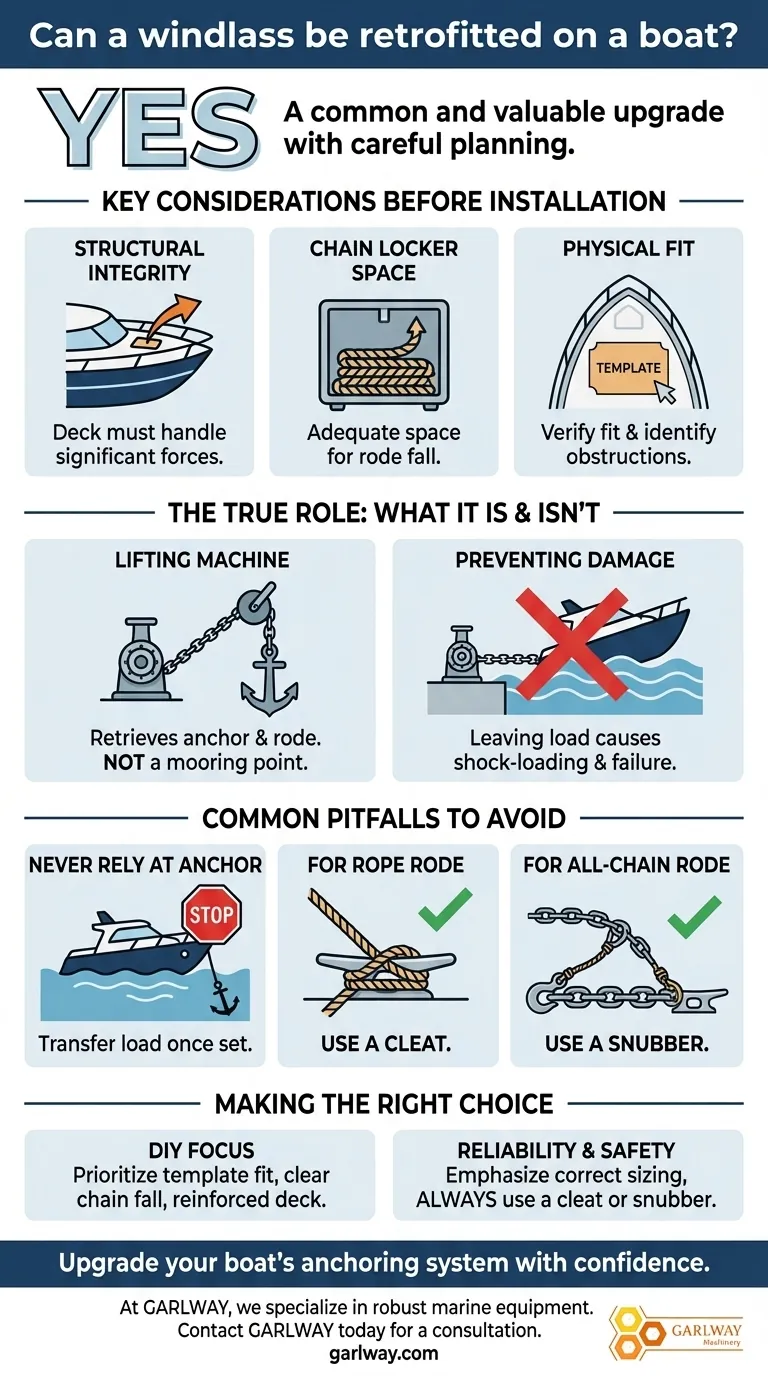
Visual Guide
Related Products
- Warn Winch Windlass Boat Trailer Winch
- Quick Windlass Portable Winch for Truck and Boat Best Boat Winch
- Electric Hoist Winch Boat Anchor Windlass for Marine Applications
- Heavy Duty Electric Boat Winch Windlass Anchor
- 12000 lb Electric Boat Trailer Winch with Windlass Anchor Warn
People Also Ask
- What are the main components of a boat trailer winch? A Guide to Safe & Efficient Boat Loading
- What factors should be considered when choosing a boat trailer winch? Ensure Safe and Effortless Boat Loading
- What is the purpose of boat trailer winches? Safely and Efficiently Load Your Boat
- What are the two main types of boat trailer winches? Manual vs. Electric Explained
- How often should a boat trailer winch be replaced? Your Guide to Safety and Longevity


