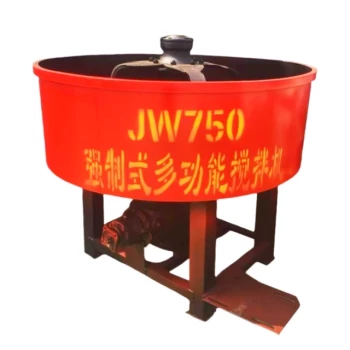
At their core, concrete batch plants are defined by three primary characteristics: high-volume productivity, the versatility to produce different types of concrete, and a sophisticated level of automation for precision and reliability. These industrial systems are the backbone of modern construction, designed to deliver consistent, high-quality concrete at scale.
The essential takeaway is that a concrete batch plant is not merely a large mixer. It is an automated, reliable, and highly productive system engineered to meet the demanding specifications of major construction, road engineering, and precast manufacturing projects.
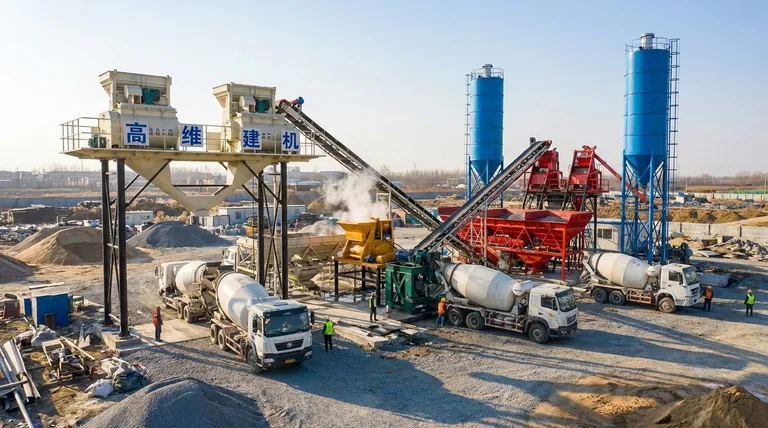
The Core Operational Pillars
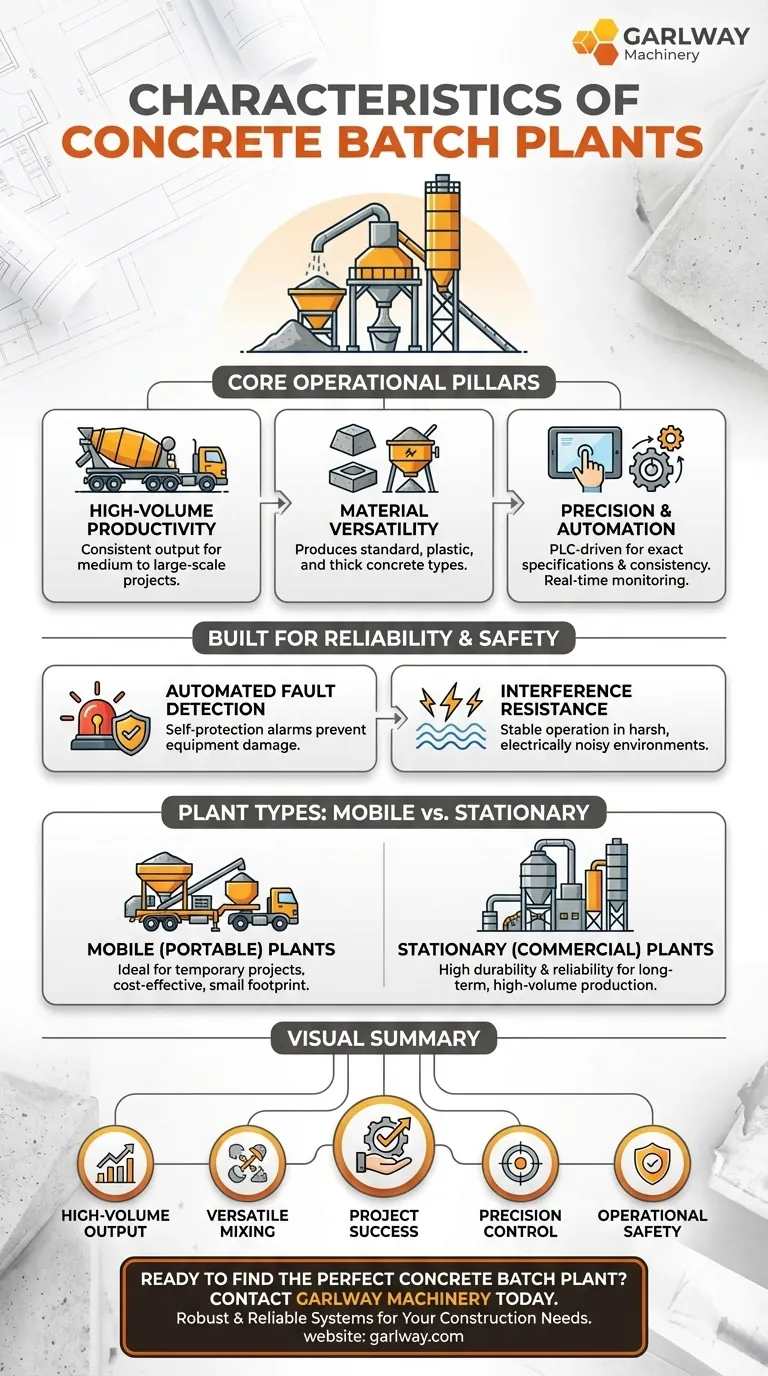
A concrete batch plant's value is built on a foundation of key operational capabilities that ensure both quantity and quality.
High-Volume Production
These plants are engineered for high output. Their primary purpose is to produce large quantities of concrete efficiently, making them indispensable for medium to large-scale projects where consistent supply is critical.
Material Versatility
Modern plants are not limited to a single formula. They can be programmed to produce various kinds of concrete, from standard mixes to more specialized types like plastic concrete and thick concrete, meeting the specific engineering requirements of a project.
Precision and Automation
The brain of the plant is its control system, typically a PLC (Programmable Logic Controller) or a touch-screen interface. This allows for fully automated operation based on preset parameters, ensuring every batch meets the exact same specifications for consistency.
Real-Time Monitoring and Control
Operators have full visibility into the plant's status. Integrated communication systems provide real-time monitoring and alerts, and while automation is key, a manual override capability is always included to allow for adjustments or intervention.
Built for Reliability and Safety
In demanding construction environments, uptime and safety are paramount. These plants are designed with robust systems to prevent failure and protect operators.
Automated Fault Detection
The control system includes self-protection alarms that automatically trigger during any operational abnormality or fault. This immediate feedback helps prevent damage to the equipment and ensures the safety of the site.
Interference Resistance
The electronic and mechanical components are designed with high anti-interference capabilities. This ensures the plant can operate reliably and stably even in the electrically noisy and harsh environments typical of construction sites.
Understanding the Trade-offs: Plant Types
Not all batch plants are the same. The right choice depends entirely on the context of the project, with clear distinctions between permanent and temporary needs.
Mobile (Portable) Plants
These plants are designed for flexibility. They are ideal for temporary projects or a series of smaller jobs in different locations. Their cost-effectiveness and smaller footprint make them perfect for sites with height restrictions or lower overall production demands.
Stationary (Commercial) Plants
While not explicitly named "stationary" in all contexts, these are the larger, more permanent installations. Commercial concrete batching plants have higher requirements for durability, reliability, and safety than their mobile counterparts. They are built for long-term, high-volume production at a single location, such as a precast factory or a major civil engineering project.
How to Apply This to Your Project
Choosing the correct plant configuration is a critical decision that directly impacts project efficiency and budget.
- If your primary focus is large-scale, continuous production for a single, long-term project: A stationary commercial plant offers the required durability, reliability, and high output.
- If your primary focus is flexibility across multiple temporary job sites: A mobile plant provides the necessary portability and cost-effectiveness for short-term needs.
- If your primary focus is producing specialized precast elements: Prioritize a plant with precise automation controls to ensure the repeatable, high-tolerance quality required for manufactured goods.
Ultimately, understanding these core characteristics empowers you to select a concrete batching plant that serves as a reliable foundation for your project's success.
Summary Table:
| Characteristic | Key Feature | Benefit |
|---|---|---|
| Production Capacity | High-Volume Output | Essential for medium to large-scale construction projects |
| Material Flexibility | Versatile Mixing | Produces standard, plastic, and thick concrete types |
| Control & Precision | PLC/Touch-Screen Automation | Ensures batch consistency and reduces human error |
| Operational Safety | Automated Fault Detection | Protects equipment and enhances site safety |
| Project Adaptability | Mobile vs. Stationary Designs | Choose based on project duration and location needs |
Ready to find the perfect concrete batch plant for your project? At GARLWAY, we specialize in construction machinery, offering robust and reliable concrete batching plants, winches, and mixers tailored for construction companies and contractors worldwide. Our automated systems ensure high-volume production and precise quality control for your most demanding projects. Contact us today to discuss your specific needs and let us help you build a stronger foundation for success!
Visual Guide
Related Products
- HZS120 Ready Mix Concrete Batching Plant Commercial Mud Cement Mixer
- HZS35 Small Cement Concrete Mixing Batch Plant
- HZS75 Concrete Batching Plant Cement Mixer Price Concrete Mixer Bunnings Mixing Plant
- Commercial Electric Concrete Mixer Machine HZS 50 Small Batch Plant for Sale
- HZS180 Ready Mix Concrete Plant for Foundations with Sand and Cement
People Also Ask
- What is a ready mix concrete batching plant? The Engine of Modern Construction
- What is the name of the machine used in ready mix? Unpacking the Complete Concrete System
- What is the core component of a concrete batching plant? The Mixer Unit Defines Your Concrete Quality
- What are the types of concrete mixers used in batching plants? Choose the Right Mixer for Your Project
- What are the advantages and disadvantages of concrete batching plants? Maximize Quality & Efficiency