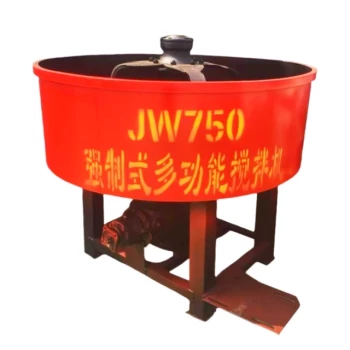
In short, batch mixers are primarily used in small to medium-sized construction projects where precise control over the mix and batch-to-batch consistency are critical. Their applications range from residential building and repair work to commercial construction and the production of ready-mix concrete, where each load must meet exact specifications.
The decision to use a batch mixer is fundamentally about prioritizing quality control over sheer volume. They excel in any scenario where the integrity and precise recipe of each individual batch cannot be compromised.
The Core Principle: Control Over Quantity
The defining characteristic of a batch mixer is its process: it mixes a single, finite quantity of material at one time. This deliberate, contained process is the source of its primary advantages and dictates its ideal applications.
Why Batch Processing Matters
A batch mixer is loaded with all ingredients for a specific recipe, mixed thoroughly, and then completely discharged. This ensures that every bit of material in a given batch receives the same treatment, leading to a highly uniform and predictable final product.
Ensuring Mix Consistency
Because each batch is a discrete event, it can be tested and verified for quality before being used. This makes batch mixers indispensable for projects with strict quality assurance requirements, as any deviation can be caught and corrected on a small scale before it impacts the larger project.
Flexibility for Different Recipes
This one-at-a-time process allows for exceptional flexibility. You can produce a batch of one specific mix design, and immediately follow it with a batch of a completely different recipe. This is difficult or impossible to achieve with a continuous mixing system.
Key Applications in Practice
The principle of controlled, consistent mixing makes these units highly versatile for specific scales of work. They are the most common type of mixer found in the construction industry.
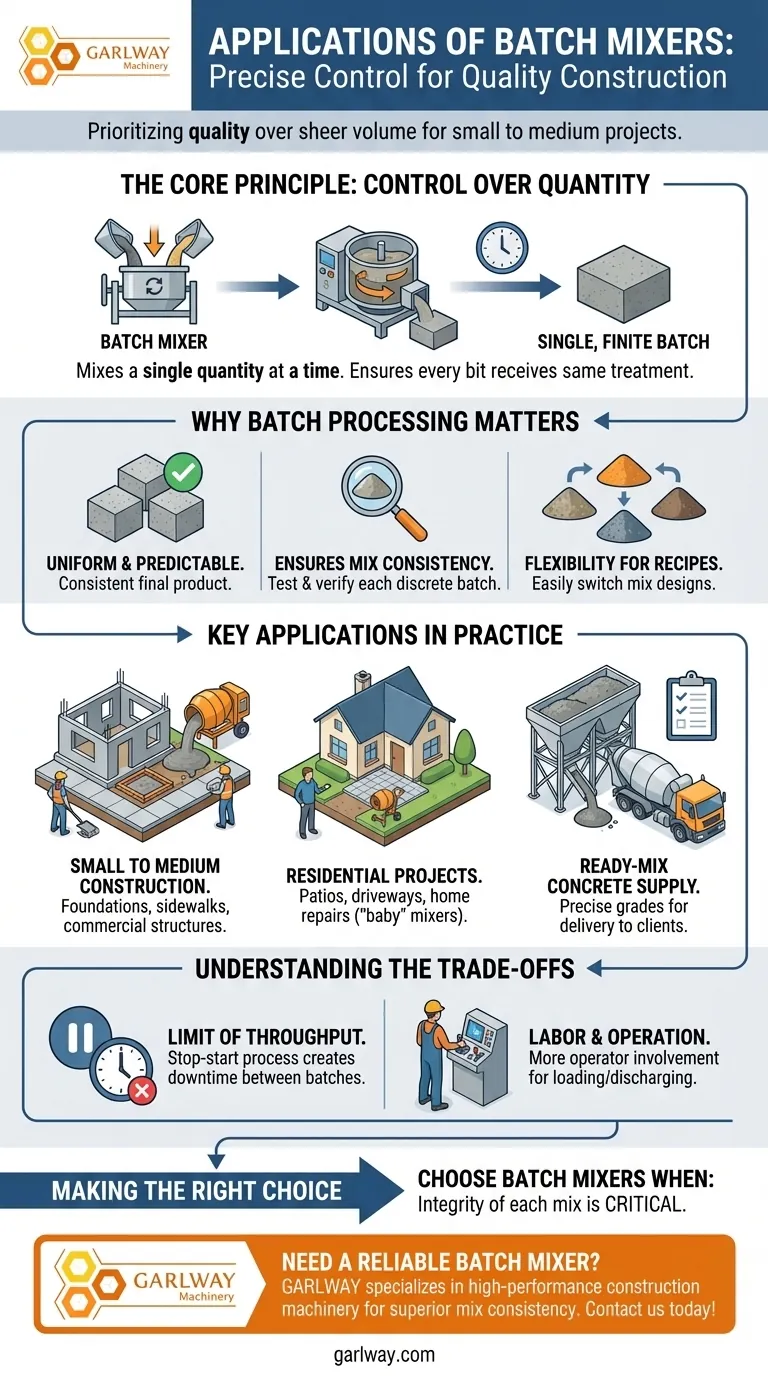
Small to Medium-Sized Construction
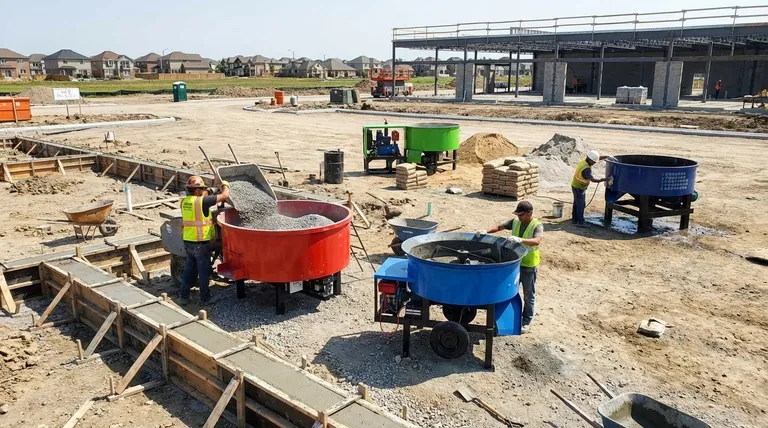
This is the most common application. Batch mixers are ideal for projects where large, continuous pours of concrete are not necessary. This includes building foundations, sidewalks, and structural elements for smaller commercial buildings.
Residential Projects
Portable batch mixers, sometimes called "baby" mixers, are sufficient for residential jobs. Their smaller capacity (up to two cubic yards) is perfect for creating patios, driveways, or concrete pads for home extensions and repairs.
Ready-Mix Concrete Supply
Ready-mix concrete plants rely on large-scale batch mixers. They receive an order for a specific grade of concrete, use the mixer to produce that exact recipe, and discharge the entire batch into a transit truck for delivery. This guarantees the client receives precisely what they ordered.
Understanding the Trade-offs
While powerful, batch mixers are not the solution for every scenario. Their primary strength—the batch process—is also the source of their main limitation.
The Limit of Throughput
The process is not continuous. There is inherent downtime between batches as the mixer is emptied, cleaned (if necessary), and reloaded. This stop-start nature makes it less efficient for massive projects requiring uninterrupted material flow, such as paving long stretches of highway or constructing a large dam.
Labor and Operation
Compared to a fully automated continuous system, a batching process often requires more direct operator involvement for loading and discharging each cycle. This can have an impact on labor planning and operational efficiency on very large-scale jobs.
Making the Right Choice for Your Project
Selecting the right mixer depends entirely on the priorities of your specific application.
- If your primary focus is quality control and recipe precision: A batch mixer is the definitive choice due to its unmatched per-batch consistency and verifiability.
- If your primary focus is a small or medium-sized construction job: The flexibility, control, and scalability of a standard or portable batch mixer is perfectly suited for your needs.
- If your primary focus is massive, uninterrupted material output: You should evaluate a continuous mixer, as the stop-start nature of a batch mixer may create a production bottleneck.
Ultimately, a batch mixer is the superior tool when the integrity of each individual mix is more critical than the sheer volume of production.
Summary Table:
| Application | Key Benefit | Ideal For |
|---|---|---|
| Small to Medium Construction | Precise batch-to-batch consistency | Foundations, sidewalks, commercial buildings |
| Residential Projects | Flexibility and control | Patios, driveways, home repairs |
| Ready-Mix Concrete Supply | Guaranteed recipe accuracy | Supplying specific concrete grades to clients |
Need a reliable batch mixer for your next project?
GARLWAY specializes in providing high-performance construction machinery, including durable and efficient batch mixers, for construction companies and contractors worldwide. We understand that precision and quality are non-negotiable. Let us help you achieve superior mix consistency and project success.
Contact GARLWAY today to discuss your specific needs and get a quote!
Visual Guide
Related Products
- Commercial Electric Concrete Mixer Machine HZS 50 Small Batch Plant for Sale
- HZS25 Best Cement Mixer for Quick Mix Concrete at Bunnings
- Portable Concrete Mixer Machine Equipment for Mixing Concrete
- HZS120 Ready Mix Concrete Batching Plant Commercial Mud Cement Mixer
- HZS75 Concrete Batching Plant Cement Mixer Price Concrete Mixer Bunnings Mixing Plant
People Also Ask
- What are the types of concrete mixers used in batching plants? Choose the Right Mixer for Your Project
- What is the core component of a concrete batching plant? The Mixer Unit Defines Your Concrete Quality
- Why is proper maintenance important for a concrete batch mix plant? Maximize Uptime & Profitability
- Why buy concrete batch plant parts only from the manufacturer? Protect Your Investment and Maximize Uptime
- What are the two main types of concrete batch mixers? Choose the Right Mixer for Your Project