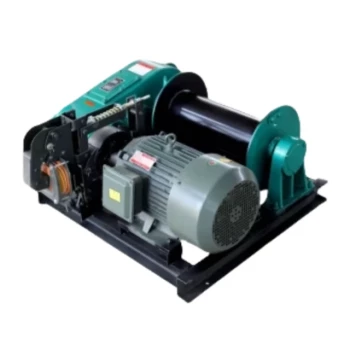
The primary alternatives to a winch for loading a car onto a trailer are using a manual hand-cranked device called a come-along, or using the tow vehicle itself to pull the car onto the disconnected trailer with a rope or strap. Both methods are significantly more labor-intensive and introduce risks that a winch is specifically designed to mitigate.
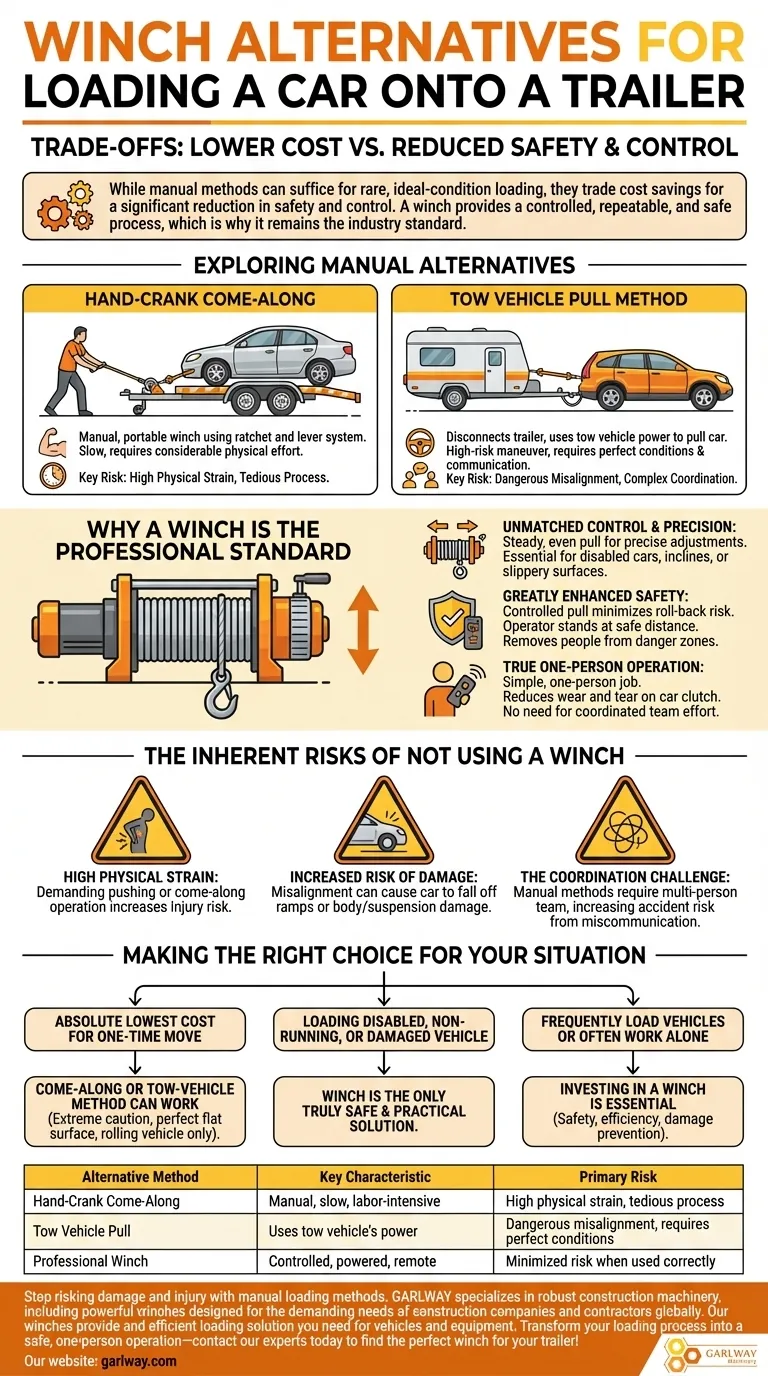
While manual methods can suffice for rare, ideal-condition loading, they trade cost savings for a significant reduction in safety and control. A winch provides a controlled, repeatable, and safe process, which is why it remains the industry standard for vehicle loading.
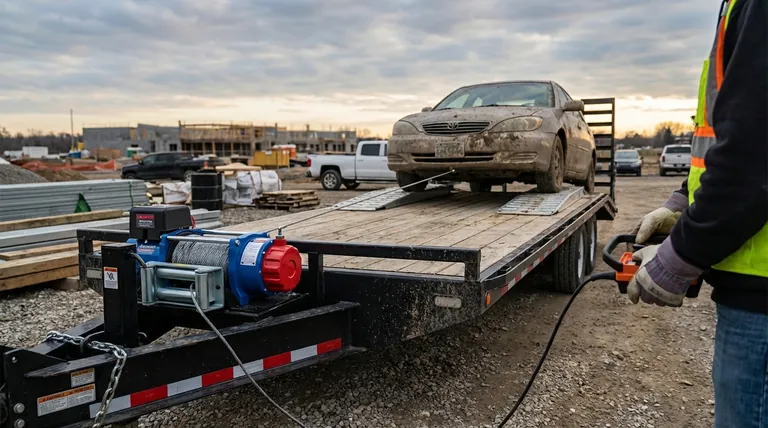
Exploring the Manual Alternatives
The two most common non-winch methods rely on either human power or the power of the tow vehicle.
The Hand-Crank Come-Along
A come-along, or power puller, is essentially a manual, portable winch. It uses a ratchet and lever system to slowly pull the cable or strap.
This method is slow and requires considerable physical effort. While it offers more control than pushing, it is a tedious process for the weight of a full vehicle.
The Tow Vehicle Pull Method
This technique involves disconnecting the trailer from the tow vehicle. The tow vehicle is then driven around to the front of the trailer to pull the car on with a tow strap.
This is a high-risk maneuver. It requires precise alignment, a perfectly flat surface, and excellent communication if a second person is steering the car being loaded. Any misalignment can cause the car or trailer to shift dangerously.
Why a Winch is the Professional Standard
Understanding why winches are so common reveals the shortcomings of the alternatives. A winch is not just about convenience; it is a tool purpose-built for control and safety.
Unmatched Control and Precision
A winch provides a steady, even pull. This allows for precise adjustments and prevents the sudden movements that can cause damage to the car or trailer.
This control is critical when loading a disabled car with locked wheels or steering, or when working on an incline or a wet, slippery surface.
Greatly Enhanced Safety
By providing a controlled pull, a winch minimizes the risk of the vehicle rolling back unexpectedly. It allows the operator to stand at a safe distance, often using a remote.
Manual pushing or complex tow-vehicle maneuvers put people in harm's way. A winch removes the need for people to be physically pushing or positioned between heavy equipment.
True One-Person Operation
A properly installed winch makes loading a vehicle a simple, one-person job. This is a significant advantage over manual methods that almost always require a coordinated team effort.
It also reduces wear and tear on the clutch of the car being loaded, as there is no need to try and feather the clutch up the ramps.
The Inherent Risks of Not Using a Winch
Choosing a manual alternative means accepting a series of trade-offs that directly impact safety and the risk of damage.
High Physical Strain
Both pushing a car and operating a come-along for several hundred pounds of pulling force is physically demanding. This increases the risk of personal injury.
Increased Risk of Damage
Without the precise, straight-line pull of a winch, misalignment is common. This can lead to a car falling off the ramps, or damage to the car's bodywork, suspension, or transmission.
The Coordination Challenge
Manual methods require at least two people: one to steer the car being loaded and others to push or operate the tow vehicle. Any miscommunication can lead to an accident.
Making the Right Choice for Your Situation
Your decision should be based on your specific needs, the condition of the vehicle you are loading, and your tolerance for risk.
- If your primary focus is the absolute lowest cost for a one-time move: A come-along or the tow-vehicle method can work, but only with extreme caution on a perfectly flat surface with a rolling vehicle.
- If you are loading a disabled, non-running, or damaged vehicle: A winch is the only truly safe and practical solution. The alternatives are simply too risky and difficult.
- If you frequently load vehicles or often work alone: Investing in a winch is essential for safety, efficiency, and preventing damage to the vehicles involved.
Ultimately, a winch is a specialized tool that transforms a high-risk, multi-person task into a safe and predictable one-person operation.
Summary Table:
| Alternative Method | Key Characteristic | Primary Risk |
|---|---|---|
| Hand-Crank Come-Along | Manual, slow, labor-intensive | High physical strain, tedious process |
| Tow Vehicle Pull | Uses tow vehicle's power for pulling | Dangerous misalignment, requires perfect conditions |
| Professional Winch | Controlled, powered, remote operation | Minimized risk when used correctly |
Stop risking damage and injury with manual loading methods. GARLWAY specializes in robust construction machinery, including powerful winches designed for the demanding needs of construction companies and contractors globally. Our winches provide the controlled, safe, and efficient loading solution you need for vehicles and equipment. Transform your loading process into a safe, one-person operation—contact our experts today to find the perfect winch for your trailer!
Visual Guide
Related Products
- Warn Winch Windlass Boat Trailer Winch
- Electric and Hydraulic Winch for Heavy Duty Applications
- Small Electric Winch 120V and 240V for Compact Applications
- Quick Windlass Portable Winch for Truck and Boat Best Boat Winch
- Hydraulic Winding Engine Harbor Freight Winch
People Also Ask
- What are the main components of a boat trailer winch? A Guide to Safe & Efficient Boat Loading
- What factors should be considered when choosing a boat trailer winch? Ensure Safe and Effortless Boat Loading
- What is the purpose of boat trailer winches? Safely and Efficiently Load Your Boat
- What are the two main types of boat trailer winches? Manual vs. Electric Explained
- How often should a boat trailer winch be replaced? Your Guide to Safety and Longevity