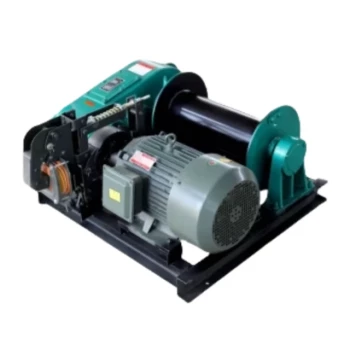
At its core, an electric winch's versatility stems from a powerful combination of scalable design, precise operational control, and superior reach. Unlike more specialized lifting equipment, electric winches are engineered to adapt to a wide range of load capacities, lifting heights, and spatial constraints, making them a flexible solution across countless industries.
The true versatility of an electric winch lies not just in its ability to lift, but in its capacity to be easily reconfigured for different weights, speeds, and locations, a feat that more rigid systems cannot match.
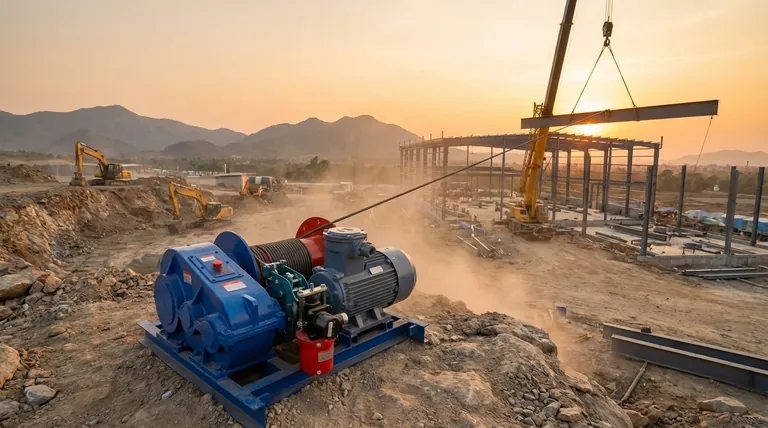
The Core Pillars of Winch Versatility
An electric winch is more than just a motor and a drum. Several key design principles work in concert to deliver its signature adaptability.
Scalable Load Capacity
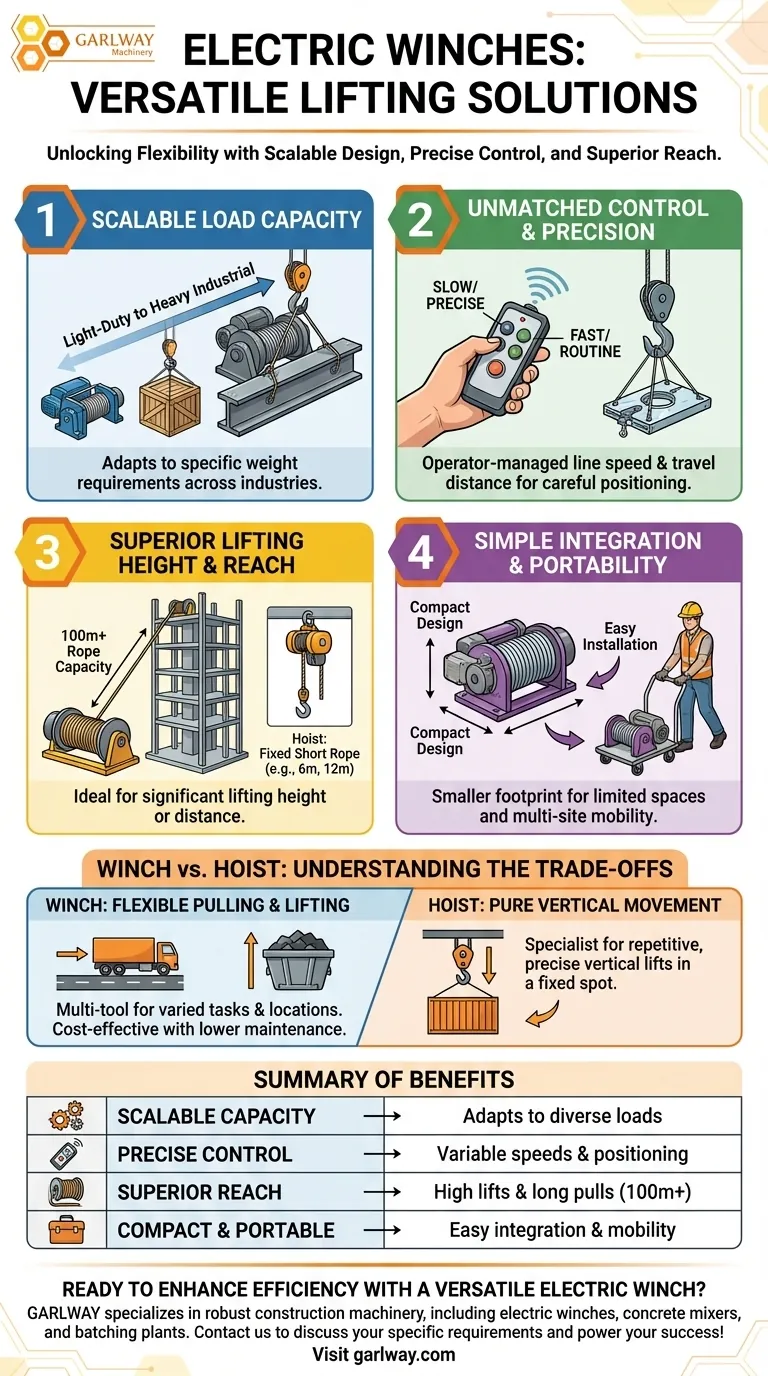
Electric winches are not a one-size-fits-all tool. They are designed to be scalable, with models available for light-duty tasks and heavy industrial applications alike.
This scalability ensures that whether you are in construction, mining, or manufacturing, there is a winch engineered to meet your specific load requirements safely.
Unmatched Control and Precision
Modern electric winches offer exceptional control over the lifting process. Operators can precisely manage both the line speed and the total travel distance.
This allows for slow, careful positioning of delicate equipment or faster speeds for routine operations, all managed with simple controls.
Superior Lifting Height and Reach
One of the most significant advantages of a winch is its large rope capacity. Winches often come with rope lengths of 100 meters or more.
This is a stark contrast to many electric hoists, which are typically equipped with fixed, shorter ropes (e.g., 6 or 12 meters). This extended reach makes winches invaluable for tasks requiring significant lifting height or distance.
Simple Integration and Portability
Electric winches generally feature a compact and lightweight design. This makes them easy to install, relocate, and integrate into other machinery.
Their smaller footprint is a critical advantage in industrial settings where space is limited or where the lifting device needs to be moved between different job sites.
Understanding the Trade-offs: Winch vs. Hoist
To fully appreciate the versatility of a winch, it's helpful to compare it to a more specialized tool: the electric hoist. While both lift heavy loads, they are designed for different operational philosophies.
The Winch's Domain: Flexible Pulling and Lifting
A winch is the multi-tool of material handling. It excels in both horizontal pulling and vertical lifting applications.
Its adaptability makes it the go-to solution when a single piece of equipment must perform varied tasks across a worksite, such as in road construction or mine hoisting.
The Hoist's Specialty: Pure Vertical Movement
An electric hoist is a specialist, engineered primarily for true, controlled vertical lifting. It provides exceptional accuracy and safety for repetitive up-and-down tasks in a fixed location.
A winch can perform these lifts, but a hoist is purpose-built for them, often with more specialized braking and control systems for that specific motion. The trade-off for the winch's versatility is a degree of specialization.
Cost and Maintenance Considerations
Electric winches are often more cost-effective than hydraulic or pneumatic alternatives. Their simpler mechanics and reduced maintenance needs result in a lower total cost of ownership over the equipment's lifetime.
Making the Right Choice for Your Goal
Selecting the correct equipment depends entirely on the demands of your specific application.
- If your primary focus is adaptability across various heights and tasks: An electric winch's long rope capacity and ability to handle both pulling and lifting make it the ideal choice.
- If your primary focus is pure, repetitive vertical lifting in a fixed spot: A dedicated electric hoist will provide the specialized control and accuracy required for the job.
- If your primary focus is portability and integration in tight spaces: The compact, lightweight design of an electric winch offers a clear advantage.
By understanding these core strengths, you can select a tool that not only moves your load but also enhances the efficiency of your entire operation.
Summary Table:
| Key Feature | Benefit for Your Application |
|---|---|
| Scalable Load Capacity | Adapts from light-duty to heavy industrial tasks |
| Precise Control | Enables careful positioning and variable speeds |
| Superior Reach (100m+ rope) | Ideal for high lifts and long-distance pulls |
| Compact & Portable Design | Easy integration in tight spaces and multiple job sites |
Ready to enhance your project's efficiency with a versatile electric winch?
At GARLWAY, we specialize in providing robust construction machinery, including electric winches, concrete mixers, and batching plants, tailored for construction companies and contractors worldwide. Our winches deliver the scalability, control, and reach you need to tackle diverse lifting and pulling tasks with confidence.
Contact us today to discuss your specific requirements and discover how GARLWAY can power your success!
Visual Guide
Related Products
- Electric 120V Boat Winch by Badlands
- Electric and Hydraulic Winch for Heavy Duty Applications
- Small Electric Winch 120V and 240V for Compact Applications
- 12000 lb Electric Boat Trailer Winch with Windlass Anchor Warn
- Electric Hoist Winch Boat Anchor Windlass for Marine Applications
People Also Ask
- How do electric boat winches work? Unlock Effortless Launching & Retrieval
- How much current does an electric boat winch draw? Plan Your Electrical System for Peak Performance
- Can I run a winch straight from a battery? Essential Power Setup for Safe Operation
- What are the types of electric winches available? Choose the Right Winch for Your Job
- What are the uses of electric winches in mining and tunneling? Enhance Safety and Efficiency Underground