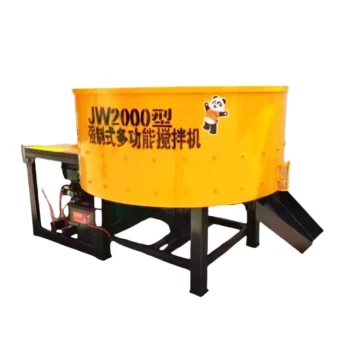
The key characteristics of a modern mortar mixer are its specialized blade design and features built for efficiency. Unlike generic cement mixers, they use star-shaped blades attached to the bottom of the tank that move up and down, combined with a self-cleaning lamination feature to ensure a precise, high-quality mix for fine materials like mortar and stucco.
The defining principle of a modern mortar mixer is not just to mix materials, but to achieve a perfectly consistent and homogenous blend. Its design is a direct solution to the unique challenges of working with fine aggregates, where precision is paramount.

The Core Design: Efficiency and Precision
Modern mortar mixers are engineered for a single purpose: to produce a flawless batch of mortar, stucco, or grout. Every key feature is designed to support this goal, moving beyond the simple tumbling action of a traditional cement mixer.
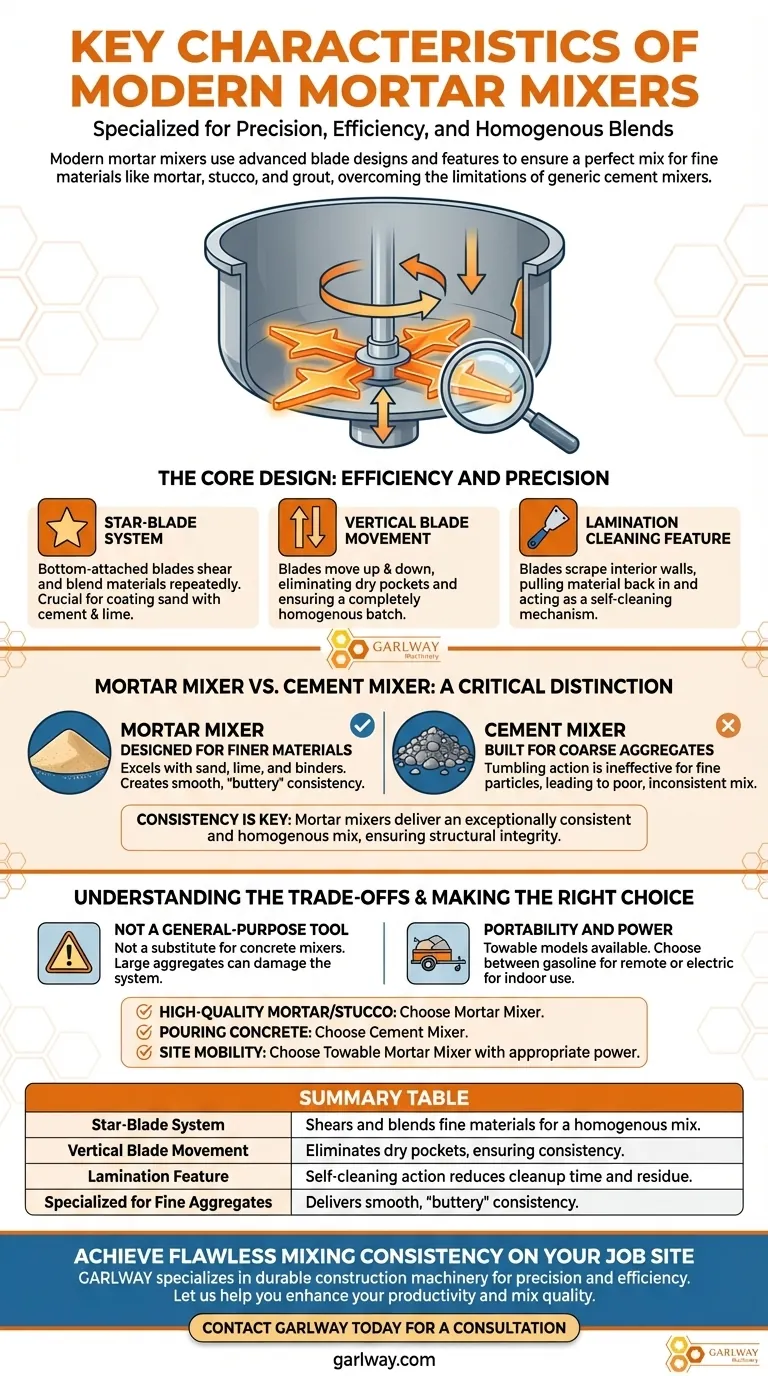
The Star-Blade System
The most significant feature is the star-shaped blade assembly. These blades are attached to the bottom of the tank, not the sides.
This design forces material through the blades repeatedly, shearing and blending the mix rather than just lifting and dropping it. This action is crucial for properly coating sand particles with cement and lime.
Vertical Blade Movement
The blades in these mixers can also move up and down within the tank.
This vertical travel ensures that no material is left unmixed at the top or bottom of the drum, eliminating dry pockets and guaranteeing a completely homogenous batch from start to finish.
The Lamination Cleaning Feature
Many modern designs include a lamination feature, where the blades are set to scrape the interior walls of the tank.
This serves two purposes: it continuously pulls material from the sides back into the mix for maximum consistency and acts as a self-cleaning mechanism, reducing cleanup time and preventing hardened residue buildup.
Mortar Mixer vs. Cement Mixer: A Critical Distinction
While they may seem similar, a mortar mixer and a cement mixer are fundamentally different tools designed for different materials. Using the wrong one can significantly compromise the quality of your final product.
Designed for Finer Materials
Mortar mixers excel with fine materials like sand, lime, and cementitious binders. Their blade system is specifically designed to create the smooth, "buttery" consistency required for masonry work.
In contrast, a standard cement mixer is built for coarse aggregates like gravel and crushed stone. Its tumbling action is ineffective for properly blending the fine particles in mortar, often leading to a poor-quality, inconsistent mix.
Consistency is Key
The ultimate advantage of a mortar mixer is its ability to deliver an exceptionally consistent and homogenous mix.
This precision ensures that every part of the batch has the same water-to-cement ratio and particle distribution, which is critical for the structural integrity and workability of mortar and stucco.
Understanding the Trade-offs
The specialized nature of a mortar mixer is its greatest strength, but it also defines its limitations. Understanding this is key to selecting the right equipment.
Not a General-Purpose Tool
A mortar mixer is not a substitute for a concrete mixer. Attempting to mix concrete with large aggregates in a mortar mixer can damage the blade system and will fail to produce a proper blend.
Portability and Power
While many models are towable for easy transport on large job sites, they still require a power source. You must choose between gasoline-powered models for remote work or electric models for indoor or noise-sensitive areas.
The heavy-duty wheels and towing tongue are designed for construction site mobility, but they are still substantial pieces of equipment that require a vehicle for transport between locations.
Making the Right Choice for Your Project
Choosing the right mixer comes down to the material you are working with and the demands of your job site.
- If your primary focus is high-quality mortar, stucco, or grout: The specialized design of a modern mortar mixer is the only way to guarantee the necessary consistency and workability.
- If your primary focus is pouring concrete slabs, footings, or walls: A traditional, drum-style cement mixer designed for coarse aggregates is the correct and more efficient tool.
- If your primary focus is mobility on a large site: Select a towable mortar mixer and choose a gas or electric power source that aligns with your site's resources.
Ultimately, investing in the correct mixer for the material ensures a higher quality result and greater efficiency on the job.
Summary Table:
| Characteristic | Key Benefit |
|---|---|
| Star-Blade System | Shears and blends fine materials for a homogenous mix. |
| Vertical Blade Movement | Eliminates dry pockets, ensuring consistency from top to bottom. |
| Lamination Feature | Self-cleaning action reduces cleanup time and residue buildup. |
| Specialized for Fine Aggregates | Delivers the smooth, "buttery" consistency required for mortar and stucco. |
Achieve Flawless Mixing Consistency on Your Job Site
Investing in the right equipment is crucial for project success. GARLWAY specializes in durable construction machinery, including mortar mixers designed for contractors and construction companies who demand precision and efficiency.
Let us help you enhance your productivity and mix quality.
Contact GARLWAY today for a consultation to find the perfect mortar mixer for your specific project needs.
Visual Guide
Related Products
- JDY350 Electric Hydraulic Mortar Mud Concrete Mixer
- JDC350 Small Cement Concrete Mortar Mixer
- Mini Cement Mortar Mixer Truck for Construction
- Belle Mixer Drum Self Loading Mortar Mixers JS3000
- JS1000 Volumetric Concrete Mortar Mixer for Sale Skid Steer Cement Mixer
People Also Ask
- When are electric mortar mixers typically used? Find the Perfect Tool for Small to Medium-Sized Jobs
- What are hydraulic concrete mixers used for? Powering Large-Scale Construction Projects
- How are mortar mixers utilized in concrete and grout projects? Maximize Your Mixing Efficiency
- What are the benefits of electric concrete mixers? Quiet, Clean, and Low-Maintenance Mixing
- What is a mortar mixer and what is its primary use? Master Masonry with the Right Equipment