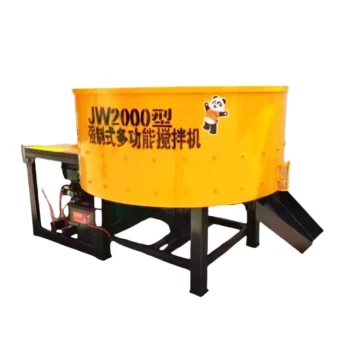
At its core, a drum mixer ensures discharge by using the physical rotation of the drum itself. Internal components like baffles or fins, which are designed for mixing, also serve to catch and guide the material toward the outlet opening as the drum turns. This process relies on gravity and mechanical guidance rather than a separate powered discharge mechanism.
The effectiveness of a drum mixer's discharge hinges on a simple principle: using the drum's rotation to channel materials out. However, this simplicity introduces a critical trade-off between mechanical robustness and the potential for slow, incomplete emptying, which can impact mix quality.
The Core Discharge Mechanism
A drum mixer’s discharge process is an integral part of its design, using the same rotational motion that performs the mixing. The specific configuration, however, can vary.
The Role of Drum Rotation
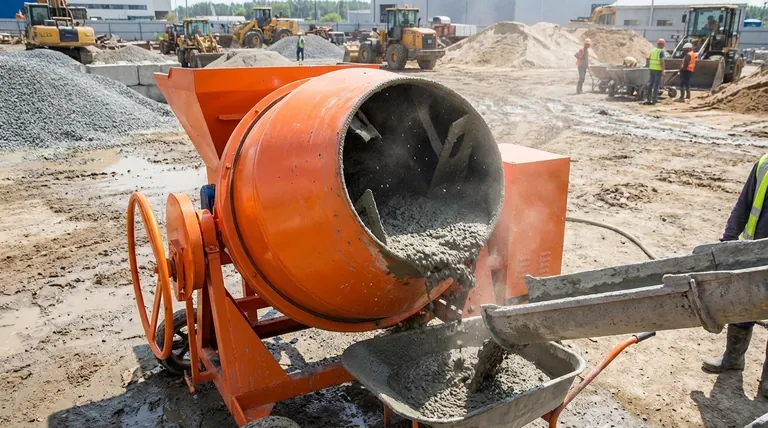
The primary force for discharge is the rotation of the drum around its horizontal axis. As the vessel turns, the material is lifted by the internal fins or baffles. By tilting the drum or reversing the direction of rotation, these same fins guide the material out of the opening instead of tumbling it back into the mix.
Internal Fins and Baffles
These internal structures are crucial. During mixing, they lift and drop the material to ensure a homogenous blend. During discharge, they act as a screw or a scoop, continuously channeling the contents toward the exit point in a controlled manner.
Outlet Configurations
There are two common designs for the outlet:
- Separate Inlet and Outlet: Many traditional rotary mixers, like those for concrete, have an opening at each end. One is for loading, and the other, often wider, is for discharge via tilting.
- Combined Inlet/Outlet: Some industrial designs use a single port for both filling and emptying. Discharge is controlled by a simple flap valve or similar mechanism at this combined port, often used for fluidized materials in a low-headroom, inline process.
Understanding the Trade-offs and Limitations
While the rotational discharge method is simple and reliable, it is not without its drawbacks. Understanding these is key to determining if a drum mixer is right for your process.
The Risk of Segregation
The discharge from a drum mixer is not typically rapid. This slow, tumbling exit can sometimes cause segregation, where heavier or larger components of the mix separate from finer particles. This is a significant concern in applications like high-specification concrete, where mix consistency is paramount.
Incomplete Discharge and Residue
Because the process relies on gravity and mechanical scooping, it can be difficult to achieve a 100% complete discharge. Sticky materials or complex blends may leave a residue on the drum walls and fins, requiring more intensive cleaning and potentially leading to material waste or cross-contamination between batches.
Dependence on Material Flow
The thoroughness of the discharge is highly dependent on the properties of the material being mixed. Fluidized powders and materials that flow easily will empty far more completely than viscous, sticky, or wet granular materials.
Making the Right Choice for Your Goal
To optimize your process, you must align the mixer's characteristics with your material and quality requirements.
- If your primary focus is simplicity and cost-effectiveness: The drum mixer's robust, mechanically simple design is a major advantage for general-purpose mixing.
- If your primary focus is preventing segregation: Be aware that a drum mixer's slow discharge can be a liability; you may need to consider alternative mixer types with faster, full-port discharge gates.
- If your primary focus is handling free-flowing materials in a compact space: An inline drum mixer with a combined inlet/outlet and flap valve offers an efficient, low-headroom solution.
By understanding how a drum mixer's discharge mechanism functions, you can better anticipate its performance and control the quality of your final product.
Summary Table:
| Aspect | How It Works | Key Consideration |
|---|---|---|
| Primary Mechanism | Drum rotation and internal fins guide material to the outlet. | Relies on gravity and mechanical guidance, not a powered mechanism. |
| Discharge Speed | Slow, controlled tumbling of material out of the drum. | Can lead to material segregation, affecting final mix quality. |
| Discharge Completeness | Difficult to achieve 100% discharge; residue can remain. | Sticky or viscous materials are more likely to leave waste. |
| Ideal For | Free-flowing materials; simple, cost-effective operations. | May not be suitable for processes requiring rapid, complete emptying. |
Need a Mixing Solution Tailored to Your Project?
Understanding the limitations of standard equipment is the first step to optimizing your operations. GARLWAY specializes in robust construction machinery, including concrete mixers and batching plants designed for durability and performance.
We help construction companies and contractors like you:
- Select the right mixer type to prevent segregation and ensure mix consistency.
- Improve efficiency with equipment designed for thorough discharge and easier cleaning.
- Achieve higher quality results batch after batch.
Let's discuss your specific material and project requirements. Contact GARLWAY today to find the perfect mixing solution for your needs!
Visual Guide

Related Products
- Belle Mixer Drum Self Loading Mortar Mixers JS3000
- Concrete Cement Mixer Machine Drum Mixer for Construction
- JDY350 Electric Hydraulic Mortar Mud Concrete Mixer
- Construction Products Concrete Plant Machine Mixing Concrete Mixer
- Harbor Freight JS1500 On Site Concrete Mixing Volumetric Cement Mixer
People Also Ask
- What are the features of mobile transporting in a self loading mixer? Boost On-Site Efficiency
- Why is timely cleaning important for a self loading mixer? Prevent Costly Downtime and Mix Failure
- How is discharging accomplished in a self loading mixer? Master Precise Concrete Placement
- What is the purpose of keeping the drum rotating during transportation in a self loading concrete mixer? Ensure Quality & Consistency
- What components are involved in the loading process of a self loading concrete mixer? A Guide to the Key Systems