In marine environments, winches are indispensable mechanical systems used for four primary functions: anchoring, mooring, towing, and cargo handling. These devices provide the critical pulling and lifting force necessary to manage a vessel's position and handle heavy loads safely and efficiently, forming the backbone of maritime operations.
The core purpose of a marine winch is to apply immense, controlled force. Whether securing a massive vessel to a dock, deploying an anchor, or lifting tons of cargo, the winch is the essential tool that makes these fundamental maritime tasks possible.
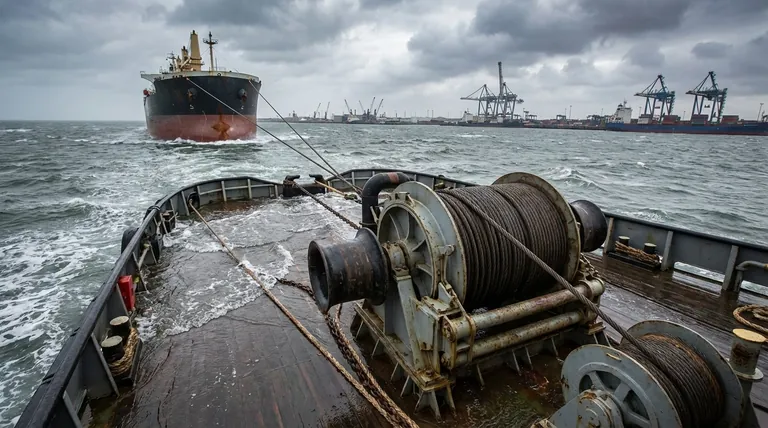
Core Functions of a Marine Winch
A winch's application is defined by the specific task it is designed to accomplish. In the marine industry, these tasks are fundamental to the operation and safety of any vessel.
Anchoring
An anchoring winch is used to deploy and retrieve the vessel's anchor. This is a critical function for holding a ship's position in open water without drifting due to wind or current.
Mooring
Mooring winches are used to secure a vessel to a dock, pier, or another stationary object. They handle the mooring lines, pulling the ship tight against its berth and ensuring it remains safely in place while in port.
Towing
Used in tugboats and other support vessels, towing winches are designed to pull or tow other ships. These are exceptionally robust winches built to handle the massive, sustained forces required to move disabled or unpowered vessels.
Lifting and Cargo Handling
Onboard cranes and derricks rely on winches for all lifting operations. This includes loading and unloading cargo containers, moving heavy equipment, or hoisting materials from the dock to the deck.
The Environment Dictates the Design
The harsh marine environment and the specific operational need heavily influence a winch's design, from its power source to its mechanical construction.
Power Source Matters
Electric winches are common for many anchoring and mooring applications, prized for their reliability and ease of integration into a ship's electrical system.
For more demanding tasks requiring immense power, such as large-scale towing or heavy lifting, hydraulic winches are often the preferred solution. They are renowned for their strength and durability.
Different Mechanisms for Different Jobs
The internal mechanics of a winch, such as worm gear, planetary gear, or capstan designs, are selected to suit a specific purpose. Each offers a different balance of speed, pulling power, and load-holding capability.
Beyond the Vessel: Onshore Applications
The role of winches extends beyond the ship itself to the dockyards and ports that support them.
Dockyard Operations
Onshore, winches are vital for moving heavy materials around the dock. They are used to position cargo for loading, assist in ship repair, and support the general logistics of preparing goods for transport by sea or land.
Understanding the Trade-offs
Choosing the right winch is a critical decision based on balancing power, control, and system requirements. There is no single "best" type; the ideal choice is always dictated by the primary application.
Electric Winch Considerations
These winches are highly efficient and offer precise control, but their power is ultimately limited by the capacity of the vessel's onboard electrical generators. They are an excellent choice for consistent, moderate-load tasks.
Hydraulic Winch Considerations
Hydraulic systems provide unparalleled power and are extremely resilient, making them ideal for the heaviest and most demanding jobs. However, they require a dedicated hydraulic power unit and associated plumbing, adding complexity to the vessel's systems.
The Critical Role of Reliability
In a maritime setting, equipment failure can have severe consequences. The choice between winch types often comes down to proven reliability and the ability to operate consistently in a corrosive, high-stakes environment.
Matching the Winch to the Marine Task
Your final decision should be guided by the primary job the winch will perform.
- If your primary focus is vessel positioning: Your choice for anchoring and mooring winches will depend on vessel size, displacement, and the expected environmental conditions.
- If your primary focus is towing and recovery: You require a winch with maximum pulling power and a robust braking system designed for sustained, heavy-load operations.
- If your primary focus is cargo and equipment handling: The key factors are lifting capacity, line speed, and precise control to ensure the safe and efficient movement of goods.
Ultimately, the right winch is the one that provides the necessary force reliably and safely, making it a cornerstone of modern maritime industry.
Summary Table:
| Application | Primary Function | Common Winch Type |
|---|---|---|
| Anchoring | Deploy/retrieve anchor to hold vessel position | Electric or Hydraulic Anchor Winch |
| Mooring | Secure vessel to dock or pier using mooring lines | Electric Mooring Winch |
| Towing | Pull or tow other vessels, requiring immense power | Hydraulic Towing Winch |
| Cargo Handling | Load/unload cargo and handle heavy equipment | Winch systems for cranes/derricks |
Need a reliable marine winch for your vessel or dockyard operations?
GARLWAY specializes in high-performance construction and marine machinery, offering robust winches designed for the harsh marine environment. Whether you require electric winches for precise mooring control or powerful hydraulic systems for heavy-duty towing, our solutions provide the durability and reliability essential for your safety and efficiency.
Contact GARLWAY today to discuss your specific marine winch requirements and get a tailored solution for your construction or maritime projects.
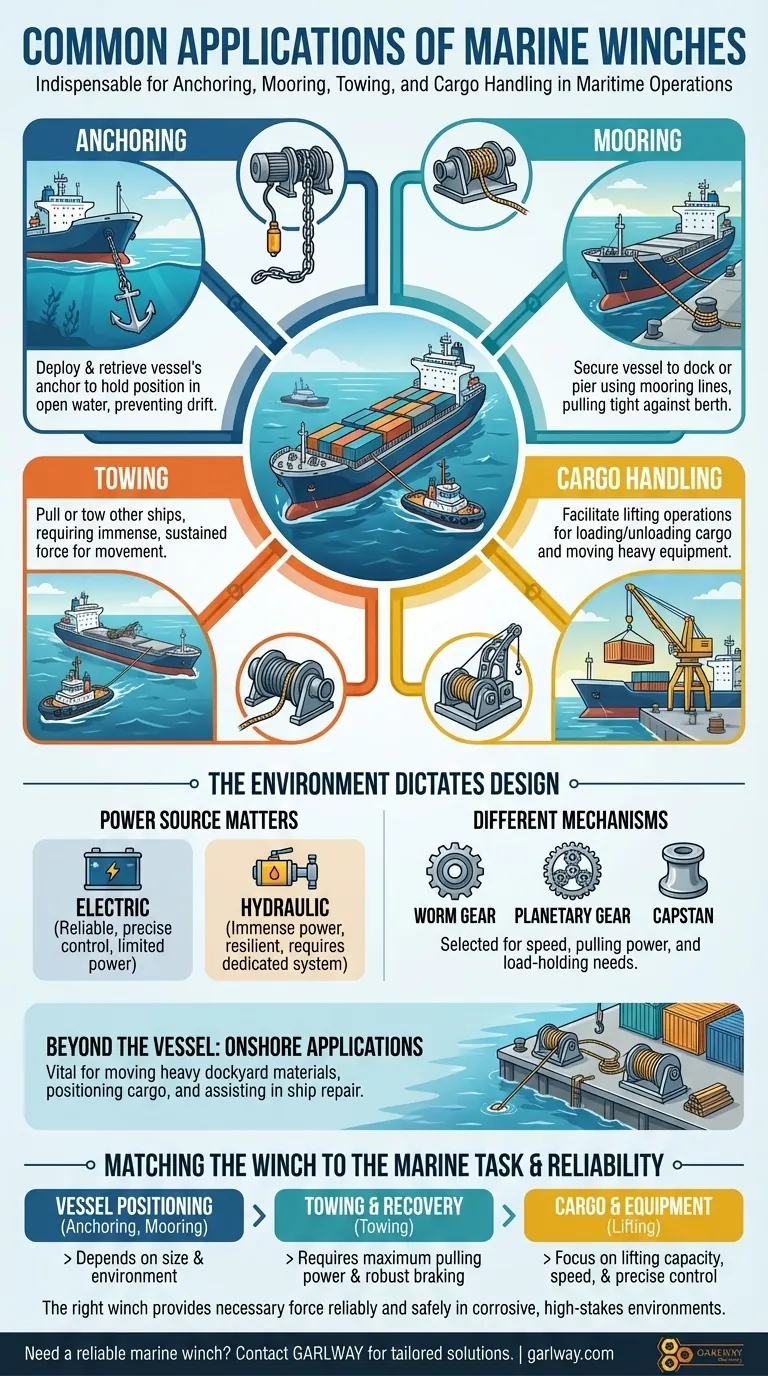
Visual Guide
Related Products
- Electric Hoist Winch Boat Anchor Windlass for Marine Applications
- Heavy Duty Electric Boat Winch Windlass Anchor
- Warn Winch Windlass Boat Trailer Winch
- Hydraulic Winding Engine Harbor Freight Winch
- Quick Windlass Portable Winch for Truck and Boat Best Boat Winch
People Also Ask
- How does an electric anchor winch work? Power, Safety, and Reliable Operation Explained
- What are the advantages of installing an electric anchor winch on a boat? Boost Safety & Ease for Boaters
- What are the operational differences between electric hoists and winches? A Guide to Safe Lifting vs. Pulling
- What are the main benefits of a boat anchor winch? Boost Safety & Efficiency for Your Vessel
- How does a boat anchor winch work? A Guide to Reliable Anchor Handling