
At its core, the drum of a towing winch serves two primary purposes: it safely stores the winch cable and, more importantly, it is the component that translates the motor's rotational power into the linear pulling force required to move a heavy object. Its rotation directly winds the cable in or out, managing the immense tension involved in recovery operations.
The winch drum is not merely a spool for the cable. It is the central mechanism that converts rotational energy into controlled, linear force, making it the functional heart of the entire winch system.
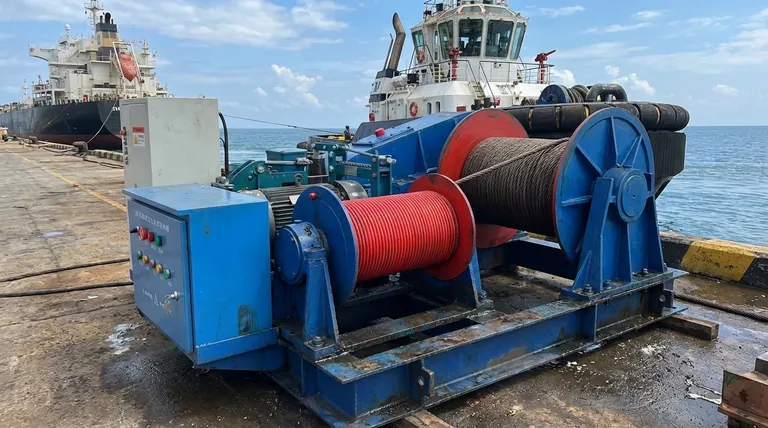
The Core Function of the Winch Drum
A towing winch is a system of components working together, but the drum is where the critical action of pulling takes place. Its design is simple but essential to the winch's operation.
Cable Storage and Management
The most obvious purpose of the drum is to house the steel wire or synthetic rope. Its smooth, round shape is specifically designed to allow the cable to spool evenly.
This prevents the cable from kinking, pinching, or becoming entangled, which would severely compromise its strength and create a significant safety hazard.
Translating Rotation into Pulling Force
The winch motor and gear train generate torque. The drum is the final piece in this powertrain, and its job is to convert that rotational torque into a powerful, straight-line pull.
As the drum rotates, it wraps the cable around its circumference. This winding action is what draws the object closer, effectively reeling it in with immense force.
Maintaining Steady Tension
A winch's job isn't just to pull, but also to hold. The drum, working with the winch's braking system, must hold the full tension of the load without slipping.
This ability to maintain steady tension is critical for safely securing a vehicle during a recovery, preventing it from sliding back into a difficult situation.
How the Drum Fits into the Winch System
Understanding the drum's role requires seeing it as part of an integrated system where each component depends on the others.
The Link Between Power and Work
The drum acts as the crucial interface between the winch's internal power source (motor and gears) and the external work being done (the cable). It is the physical component that applies the system's power to the task at hand.
The Foundation for the Cable
The physical dimensions of the drum—its diameter and width—determine the winch's cable capacity. This dictates the maximum length of cable, often ranging from 30 to 120 feet, that the winch can hold.
Common Pitfalls and Considerations
While the drum's function is straightforward, improper use can lead to equipment failure and dangerous situations.
The Risk of Improper Spooling
The reference states the drum prevents entanglement, but this is only true when the cable is wound correctly. Winding the cable without any tension can cause it to wrap unevenly.
When a load is then applied, the upper layers of cable can crush and damage the looser layers beneath, dramatically reducing the cable's integrity and lifespan.
Pulling Power and Cable Layers
A winch exerts its maximum rated pulling force when the cable is on the first layer—the one closest to the drum's surface.
As more layers of cable are wound onto the drum, the effective diameter increases. This reduces the winch's mechanical advantage and lowers its available pulling power.
Applying This to Your Operation
Understanding the drum's function directly impacts how you use the winch safely and effectively.
- If your primary focus is safety and equipment longevity: Always re-spool your winch cable under light tension to ensure the wraps are tight and even, preventing the cable from crushing itself under load.
- If your primary focus is achieving maximum pulling power: Use as little cable as is safely possible for the pull. This keeps the work on the first few layers of the drum, where the winch is strongest.
Ultimately, viewing the drum as the direct source of pulling force—not just a storage reel—is the key to mastering your winch's capabilities.
Summary Table:
| Function | Key Benefit |
|---|---|
| Cable Storage & Management | Prevents kinks and tangles for safe operation. |
| Translates Rotation into Pull | Converts motor torque into powerful, linear pulling force. |
| Maintains Steady Tension | Holds the load securely with the braking system. |
| Determines Cable Capacity | Dictates the maximum length of cable the winch can hold. |
Maximize Your Recovery Operations with GARLWAY Winches
Understanding the critical role of the winch drum is the first step to safer, more effective recoveries. GARLWAY specializes in engineering robust construction machinery, including powerful winches, concrete mixers, and batching plants, designed for the demanding needs of construction companies and contractors globally.
Our winches feature precisely engineered drums for maximum pulling power and reliable cable management. Let us help you equip your fleet with machinery built to perform.
Contact our experts today to discuss your specific needs and discover the GARLWAY advantage!
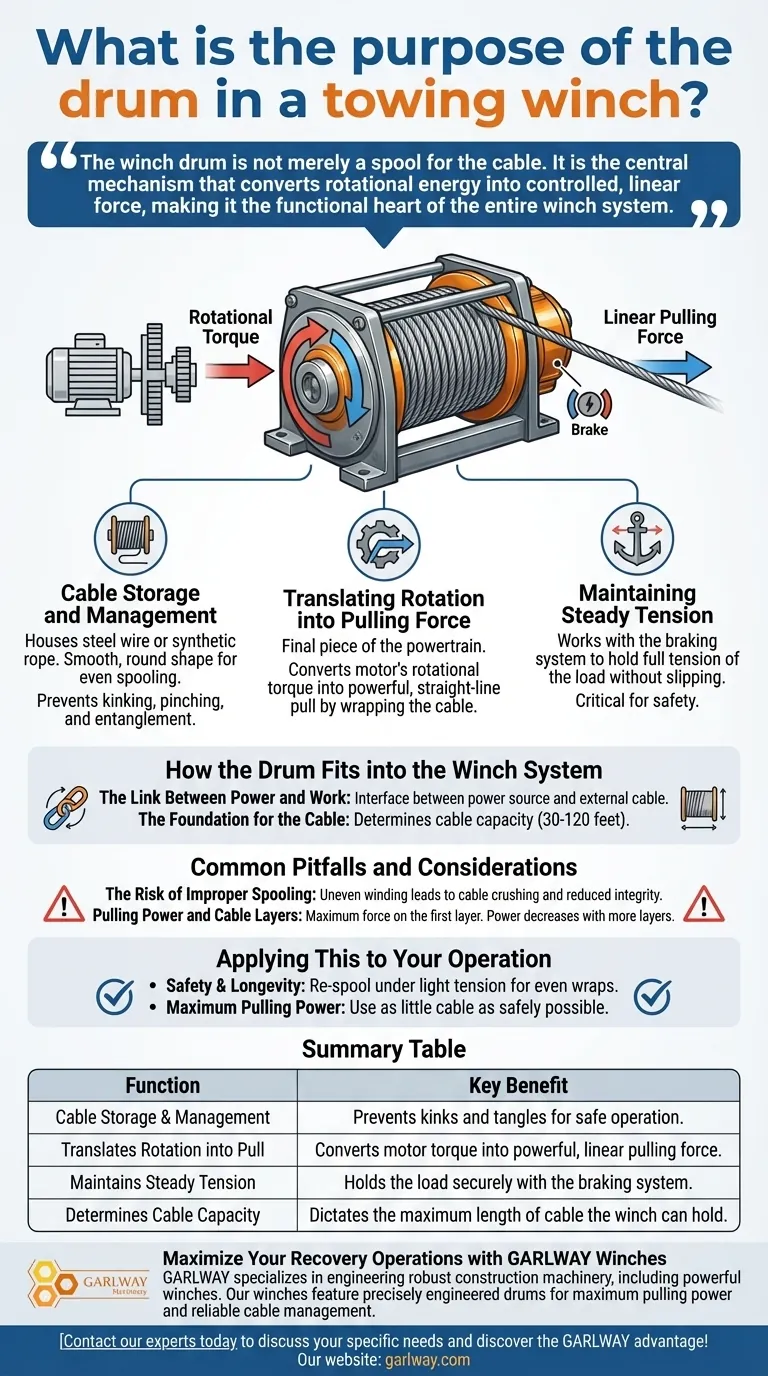
Visual Guide
Related Products
- Best 18000 Pound Drum Anchor Trailer Winch
- Warn Winch Windlass Boat Trailer Winch
- Portable Small Trailer Winch
- Quick Windlass Portable Winch for Truck and Boat Best Boat Winch
- Electric and Hydraulic Winch for Heavy Duty Applications
People Also Ask
- In what scenarios is a winch particularly useful for trailers? Load Heavy Items Safely & Efficiently
- How do you install a trailer winch? A Step-by-Step Guide for a Safe & Secure Setup
- What should be considered when mounting a winch on a trailer? Ensure a Safe, Aligned Installation
- What are the considerations for equipping a trailer with a winch for hauling a car? A Guide to Safe and Efficient Vehicle Loading
- What are the main types of trailer winches? Choose the Right Power Source for Your Load


