The most critical dos for safe winching are to inspect all your equipment before use, select an unquestionably stable anchor point, and rig the system correctly using frame-mounted recovery points and appropriate hardware like D-shackles. During the pull, you must dampen the winch line to contain its energy in case of a failure, operate the winch slowly and smoothly, and ensure all people remain clear of the line's path.
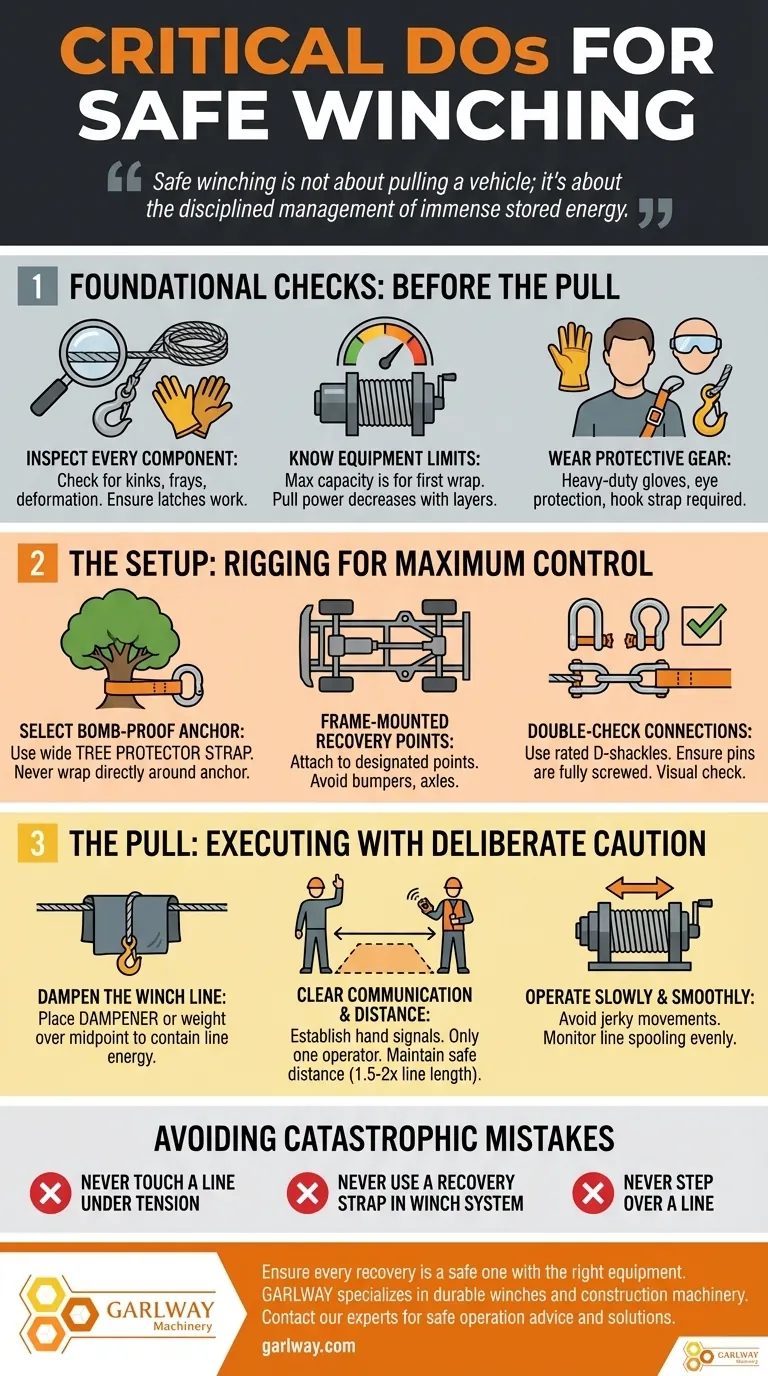
Safe winching is not about pulling a vehicle; it's about the disciplined management of immense stored energy. Every safety rule exists to control that energy and prevent its catastrophic, uncontrolled release.
Foundational Checks: Before the Pull Begins
The safest winch pull is one that is set up with methodical patience. Rushing this stage introduces unnecessary risk.
Inspect Every Component
Before you even think about an anchor point, lay out and inspect your gear. Check the winch line for kinks, frays, or broken strands. Examine hooks for any signs of stretching or deformation, and ensure safety latches function correctly.
Know Your Equipment's Limits
Understand the maximum load capacity of your winch. This rating is almost always for the first wrap of rope on the drum; the pulling power decreases with each additional layer. Never attempt a recovery that exceeds your equipment's limits.
Wear the Right Personal Protective Gear
The absolute minimum is a pair of heavy-duty gloves to protect your hands from sharp cable frays and a hook strap to handle the hook safely. Eye protection is also highly recommended to guard against debris.
The Setup: Rigging for Maximum Control
How you connect the winch to the anchor is where most critical failures occur. Your goal is to create a secure, predictable system with no weak links.
Select a Bomb-Proof Anchor
An ideal anchor is a large, stable tree or a substantial rock. If using a tree, always use a wide tree protector strap to prevent damage to the tree and your winch line. Never wrap the winch line directly around any anchor.
Use Frame-Mounted Recovery Points
Always attach the winch hook to a designated, frame-mounted recovery point on the stuck vehicle. Never attach it to a bumper, axle, or suspension component, as these are not designed to handle the focused pulling forces and can be ripped off.
Double-Check All Connections
Use properly rated D-shackles (or soft shackles) to connect your winch line to straps or recovery points. Ensure the pin is fully screwed in. Once everything is connected, do a final visual check of every single connection point before introducing tension.
The Pull: Executing with Deliberate Caution
During the operation, the winch line is storing an incredible amount of kinetic energy. This is the most dangerous phase of the recovery.
Dampen the Winch Line
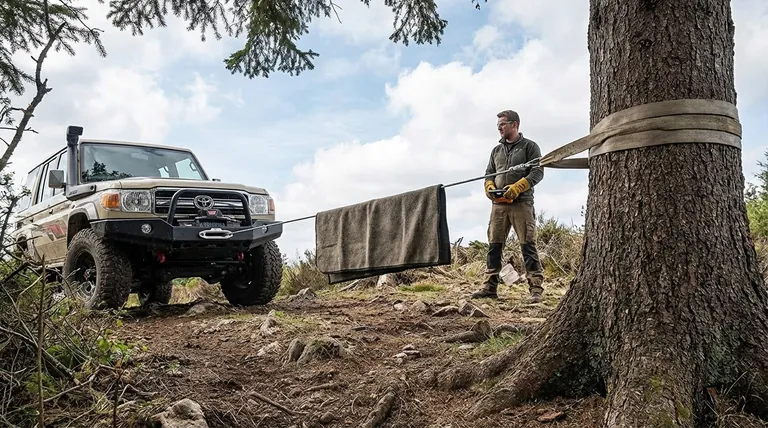
Always place a winch line dampener, a heavy blanket, or even a heavy coat over the midpoint of the tensioned line. This weight will help force the line to the ground if it snaps, preventing it from whipping through the air with lethal force.
Ensure Clear Communication
Establish clear and simple hand signals with the driver of the stuck vehicle. Only one person should be in control of the winch remote. Ensure everyone else is standing far away from the recovery area and completely out of the path of the winch line.
Operate Slowly and Smoothly
Engage the winch with slow, steady, and controlled pulls. Avoid jerky or rapid movements, which can shock-load the system and cause components to fail. Monitor the line to ensure it is spooling evenly onto the winch drum.
Avoiding Catastrophic Mistakes
Knowing what not to do is as important as knowing what to do. Avoiding these common errors is critical for safety.
Never Touch a Line Under Tension
A winch line under load is storing enough energy to cause catastrophic failure and serious injury. Never touch it, and never step over it. Treat it as a live wire.
Never Use a Recovery Strap in a Winch System
Recovery (or "snatch") straps are designed to stretch and store energy. Introducing one into a static winching system creates an unpredictable, high-risk scenario. Use only non-stretch rigging like tree savers and extension straps.
Maintain a Safe Distance
Ensure all bystanders are at a distance of at least 1.5 to 2 times the length of the extended winch line. The area directly between the winch and the anchor point is the highest danger zone.
Respool the Line Correctly
After the recovery is complete, the line must be spooled back onto the drum under light tension (around 500 lbs). This ensures the wraps are tight and won't get crushed or tangled during the next use.
Making the Right Choice for Your Recovery
- If you are a beginner: Practice in a non-emergency situation to become familiar with your equipment, and always work with an experienced operator until you are comfortable.
- If you are performing a complex pull: Use a snatch block to increase your winch's pulling power or to change the direction of the pull safely, reducing strain on the winch motor.
- If safety is your absolute priority: Always take an extra minute to walk the entire setup, verbally confirming each connection point and the safety of all personnel before you begin the pull.
Ultimately, a successful recovery is one where everyone goes home safely and no equipment gets damaged.
Summary Table:
| Critical Safe Winching Step | Key Action | Why It's Critical |
|---|---|---|
| Before the Pull | Inspect all equipment; wear gloves and eye protection. | Identifies weak points before they fail under load. |
| Rigging the System | Use a tree protector strap and frame-mounted recovery points. | Creates a secure, predictable system with no weak links. |
| During the Pull | Dampen the winch line; operate slowly; keep people clear. | Manages immense stored energy to prevent catastrophic release. |
Ensure every recovery is a safe one with the right equipment. GARLWAY specializes in durable, reliable winches and construction machinery for contractors and construction companies globally. Our products are engineered for performance and safety in demanding conditions. Contact our experts today to find the perfect winch for your needs and get professional advice on safe operation.
Contact Us for a Safer Recovery Solution
Visual Guide
Related Products
- Warn Winch Windlass Boat Trailer Winch
- Electric and Hydraulic Winch for Heavy Duty Applications
- Small Electric Winch 120V and 240V for Compact Applications
- 12000 lb Electric Boat Trailer Winch with Windlass Anchor Warn
- Quick Windlass Portable Winch for Truck and Boat Best Boat Winch
People Also Ask
- What are the main components of a boat trailer winch? A Guide to Safe & Efficient Boat Loading
- What factors should be considered when choosing a boat trailer winch? Ensure Safe and Effortless Boat Loading
- What is the purpose of boat trailer winches? Safely and Efficiently Load Your Boat
- What are the two main types of boat trailer winches? Manual vs. Electric Explained
- How often should a boat trailer winch be replaced? Your Guide to Safety and Longevity