
The primary benefits of a windlass are a dramatic reduction in the physical effort required for anchor retrieval, which prevents common injuries like back strain, and a significant increase in safety, especially in poor weather where speed and control are critical. A windlass transforms anchoring from a demanding manual chore into a controlled mechanical process.
An anchor windlass is not simply a convenience; it is a fundamental tool for safety and control. It empowers a boater to manage their anchor quickly and effectively, which is most critical when conditions are at their worst.
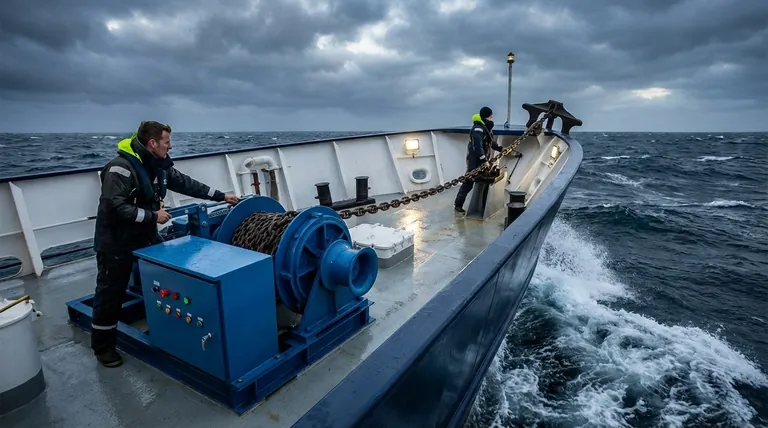
The Core Advantages of a Windlass System
A windlass provides clear, tangible benefits that impact both the crew's well-being and the vessel's overall safety during one of its most essential operations.
Eliminating Physical Strain and Injury
Hauling a heavy anchor and chain by hand is strenuous work. This is especially true on larger boats or in deeper water where the weight of the ground tackle is substantial.
A windlass uses mechanical or electrical power to do the heavy lifting. This prevents common issues like severe rope burn on the hands and, more seriously, debilitating back strain that can ruin a trip or cause long-term injury.
Enhancing Safety in Critical Situations
Weather can change rapidly. If an anchor begins to drag during a storm, the ability to retrieve it quickly and reset it is paramount to avoid drifting onto rocks or other hazards.
Manually hauling an anchor in rough seas is slow, difficult, and dangerous. A windlass allows for rapid retrieval, giving you the time needed to maneuver the boat and attempt another anchor set securely.
Promoting Better Anchoring Practices
Because retrieving an anchor with a windlass is so effortless, you are far more likely to correct a poor anchor set.
If you are not confident in your initial anchor hold, pulling it up to try again is a simple button push away. This encourages better seamanship and leads to a safer, more secure experience when you settle in for the night.
How a Windlass Achieves This
The benefits of a windlass are delivered through a system designed for mechanical advantage and precise control over the anchor rode (the line or chain connecting the anchor to the boat).
The Role of Mechanical Advantage
At its core, a windlass is a powerful winch. It uses a series of gears to multiply the force applied either by a hand crank on a manual model or an electric motor.
This gear system allows a small amount of input power to generate a massive amount of pulling force, easily lifting an anchor and rode that would be impossible to handle by hand.
The Gypsy and Chain Wheel
The key component for handling anchor chain is the gypsy. This is a specially designed notched wheel that precisely interlocks with the links of the chain.
This positive lock ensures the chain is pulled in smoothly and securely without slipping. For rope rodes, a smooth drum is used instead.
Controlled Operation and Security
A windlass isn't just for hauling up the anchor; it also provides control when lowering it. A brake or clutch mechanism allows for controlled deployment.
Once the anchor is up, a chain stopper or pawl bar is used to take the load off the windlass itself, securing the anchor chain and preventing accidental release.
Making the Right Choice for Your Vessel
Choosing a windlass depends entirely on your vessel, your electrical system, and your specific needs.
- If your primary focus is safety in all conditions: An electric windlass is the superior choice for its speed and effortless power, especially on boats over 30 feet.
- If your primary focus is simplicity and reliability on a smaller boat: A manual windlass provides immense mechanical advantage over hand-hauling without the complexity of an electrical installation.
- If your primary focus is reducing physical effort for you and your crew: Any windlass, manual or electric, is a transformative upgrade that makes boating more accessible and enjoyable.
Ultimately, installing a windlass makes anchoring a point of confidence rather than a point of stress.
Summary Table:
| Benefit | Key Advantage |
|---|---|
| Eliminates Physical Strain | Prevents back injury and rope burn with mechanical power. |
| Enhances Safety | Allows for rapid anchor retrieval in poor weather conditions. |
| Promotes Better Practices | Encourages correcting a poor anchor set with effortless operation. |
Ready to make anchoring a point of confidence, not stress?
GARLWAY specializes in robust marine and construction machinery. While our core expertise is in winches, concrete mixers, and batching plants for the construction industry, the principles of reliable, powerful pulling equipment are at the heart of what we do. If you require durable, high-performance mechanical solutions for demanding environments, our engineering team can help.
Contact GARLWAY today to discuss your specific equipment needs and discover the GARLWAY difference in reliability and performance.
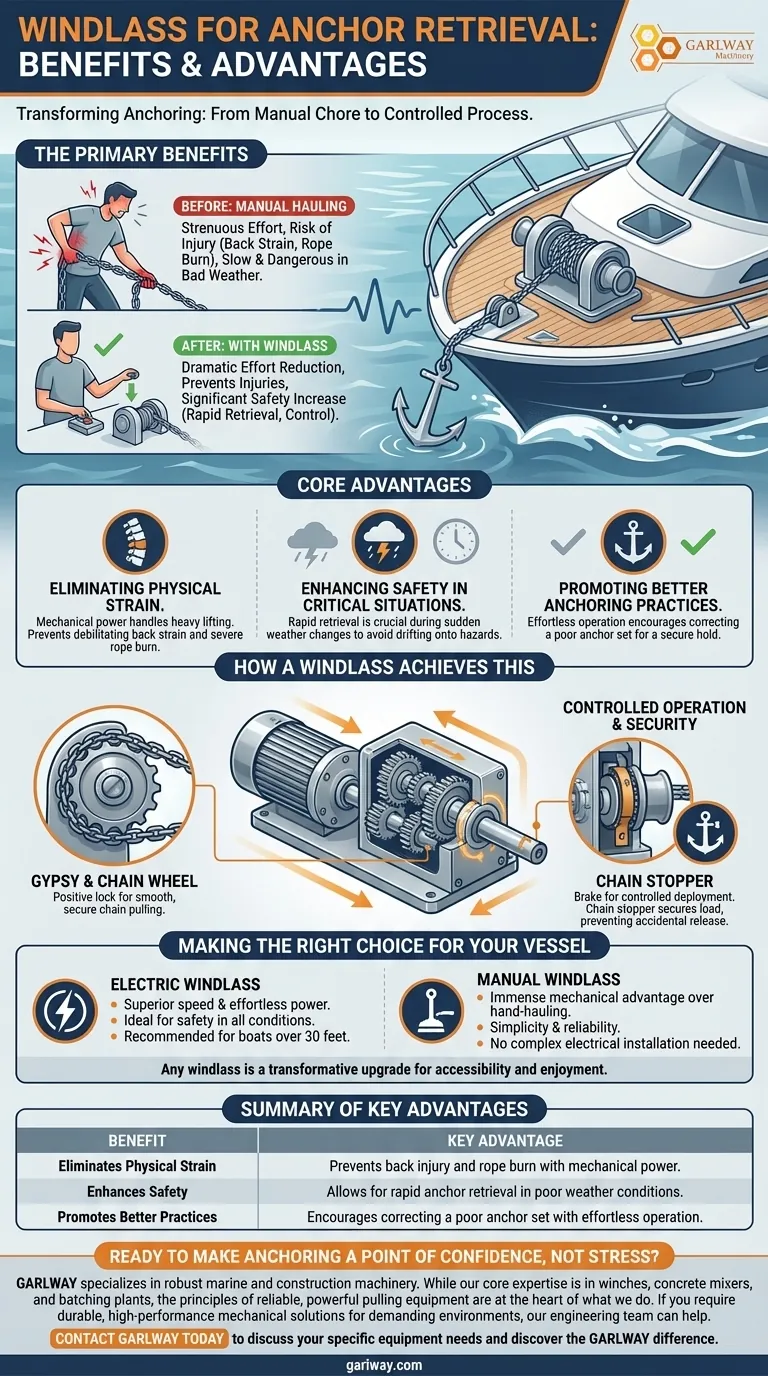
Visual Guide
Related Products
- Quick Windlass Portable Winch for Truck and Boat Best Boat Winch
- Warn Winch Windlass Boat Trailer Winch
- Electric Hoist Winch Boat Anchor Windlass for Marine Applications
- Heavy Duty Electric Boat Winch Windlass Anchor
- 12000 lb Electric Boat Trailer Winch with Windlass Anchor Warn
People Also Ask
- What features were incorporated into the upgraded portable winch system? Boost Your Recovery Power & Safety
- What are some uses mentioned for portable winches beyond vehicle recovery? Essential Versatility for Property & Work
- How could the twisting issue with a portable winch be mitigated? Achieve Safe, Centered Pulls with Proper Rigging
- What are the primary uses of a portable winch for a truck? Boost Your Truck's Capability and Self-Reliance
- What is the single rope traction force of the quick winch without a pulley block? 0.5 to 40 Tons Explained


