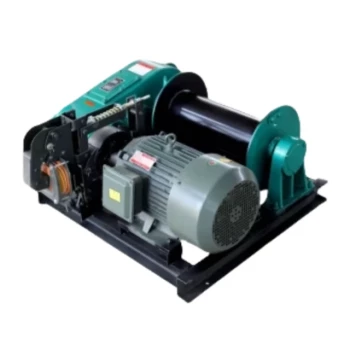
When outfitting a winch, the most common accessories and replacement parts fall into a few key categories: the pulling line itself (synthetic rope or steel cable), line guidance hardware (fairleads), mounting systems (plates and receiver mounts), and essential rigging gear like straps and hooks. These components are not merely optional; they are critical for maintaining performance, ensuring safety, and adapting your winch to a variety of tasks.
Understanding winch accessories is not about adding extras; it's about ensuring operational safety, maximizing pulling power, and adapting your winch to specific recovery or loading scenarios.
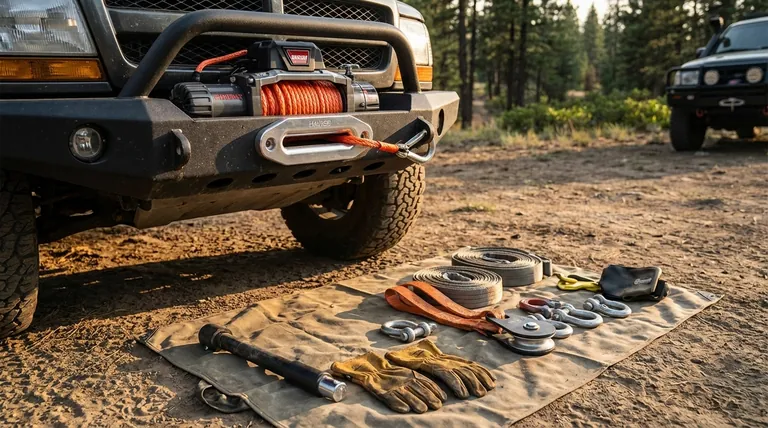
Core Pulling Components
The effectiveness of any winch begins with its most fundamental parts: the line that does the pulling and the hardware that guides it.
Synthetic Rope vs. Steel Cable
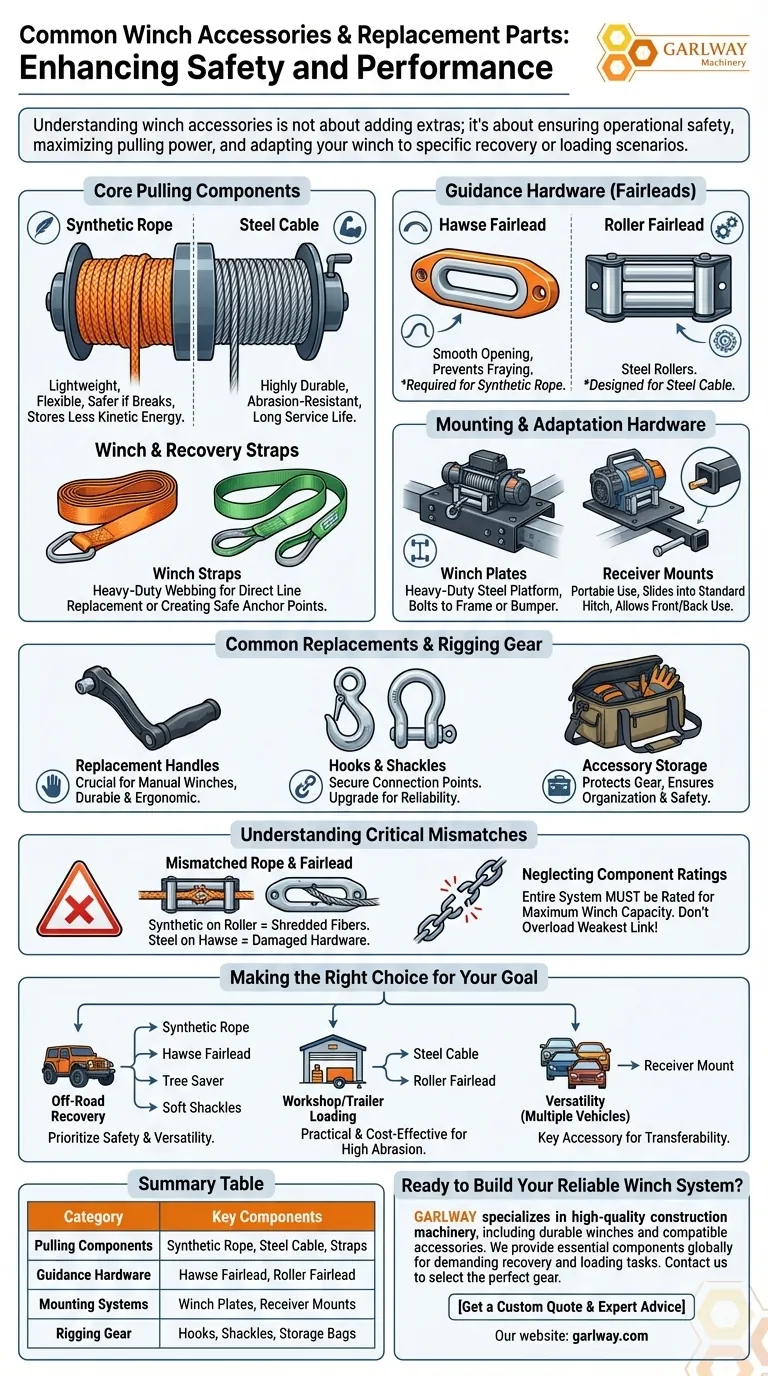
A winch's line is its most common replacement part. Synthetic rope, made from high-strength fibers, is lightweight, flexible, and safer if it breaks as it stores less kinetic energy.
Steel cable is highly durable, abrasion-resistant, and often less expensive. It is a traditional choice known for its long service life when properly maintained.
Winch and Recovery Straps
These are typically made of heavy-duty webbing. Winch straps often serve as direct replacements for lines on manual or trailer winches.
Recovery straps (like tree savers) are used to create a safe anchor point around an object, protecting both your line and the anchor from damage.
Fairleads (Roller vs. Hawse)
A fairlead guides the rope smoothly onto the winch drum. The type of fairlead you use must match the type of line you have.
A roller fairlead uses steel rollers and is designed exclusively for use with steel cable. A hawse fairlead has a smooth, rounded opening and is the required choice for synthetic rope to prevent fraying and damage.
Mounting and Adaptation Hardware
A winch is useless without a secure connection to a vehicle or stable structure. Mounting hardware provides this critical foundation.
Winch Plates
A winch plate is a heavy-duty steel platform that bolts directly to a vehicle's frame or a compatible bumper. It provides the secure, standardized mounting points needed to attach the winch itself.
Receiver Mounts
For portable use, a receiver mount attaches the winch to a plate that slides into a standard trailer hitch receiver. This allows a single winch to be used on the front or back of a vehicle, or even moved between different vehicles.
Common Replacements and Rigging Gear
Over time, certain parts will wear out or may need to be upgraded to handle different situations.
Replacement Handles
For manual winches, the handle is the most important component. Having a durable, ergonomic replacement handle on hand is crucial, as the original can be lost or damaged.
Hooks and Shackles
The hook at the end of the winch line is a common point of failure or wear. Upgrading to a high-quality galvanized or forged snap hook or using a shackle mount provides a more secure connection point.
Accessory Storage
Keeping your straps, shackles, and gloves organized is a matter of efficiency and safety. A dedicated storage bag or box protects your gear from the elements and ensures it's ready when you need it.
Understanding Critical Mismatches
Choosing the wrong accessory or pairing incompatible components can lead to equipment failure and dangerous situations.
Mismatched Rope and Fairlead
Never use a synthetic rope with a roller fairlead that has previously been used with steel cable. Microscopic burrs on the rollers will shred the synthetic fibers. Similarly, using a steel cable with a hawse fairlead will quickly damage both the fairlead and the cable.
Neglecting Component Ratings
Every piece of your rigging is part of a system. A 10,000-pound winch is useless if it's connected to a 4,000-pound strap. Ensure every shackle, strap, and mounting point is rated appropriately for the maximum pulling capacity of your winch.
Making the Right Choice for Your Goal
Select your accessories based on how you intend to use your winch.
- If your primary focus is off-road vehicle recovery: Prioritize a high-quality synthetic rope, a hawse fairlead, a tree-saver strap, and soft shackles for maximum safety and versatility.
- If your primary focus is workshop or trailer loading: A durable steel cable with a roller fairlead is often the most practical and cost-effective choice for these high-abrasion environments.
- If your primary focus is versatility across multiple vehicles: A receiver mount is the single most important accessory, allowing you to easily transfer your winch where it's needed most.
Equipping your winch correctly transforms it from a simple tool into a reliable and safe system.
Summary Table:
| Category | Key Components | Primary Use |
|---|---|---|
| Pulling Components | Synthetic Rope, Steel Cable, Straps | The core line that performs the pulling action. |
| Guidance Hardware | Hawse Fairlead, Roller Fairlead | Guides the rope smoothly onto the winch drum. |
| Mounting Systems | Winch Plates, Receiver Mounts | Securely attaches the winch to a vehicle or structure. |
| Rigging Gear | Hooks, Shackles, Storage Bags | Connects the load and organizes equipment safely. |
Ready to Build Your Reliable Winch System?
Choosing the right accessories is critical for safety and performance. GARLWAY specializes in high-quality construction machinery, including durable winches and a full range of compatible accessories and replacement parts.
We provide the essential components—from robust synthetic ropes and fairleads to secure mounting plates—that construction companies and contractors globally rely on for demanding recovery and loading tasks.
Contact us today to ensure your equipment is equipped correctly and operating at its peak. Let our experts help you select the perfect gear for your specific needs.
Get a Custom Quote & Expert Advice
Visual Guide
Related Products
- Warn Winch Windlass Boat Trailer Winch
- Heavy Duty Electric Boat Winch Windlass Anchor
- Small Electric Winch 120V and 240V for Compact Applications
- Electric and Hydraulic Winch for Heavy Duty Applications
- Quick Windlass Portable Winch for Truck and Boat Best Boat Winch
People Also Ask
- What are the main components of a boat trailer winch? A Guide to Safe & Efficient Boat Loading
- What factors should be considered when choosing a boat trailer winch? Ensure Safe and Effortless Boat Loading
- What is the purpose of boat trailer winches? Safely and Efficiently Load Your Boat
- What are the two main types of boat trailer winches? Manual vs. Electric Explained
- How often should a boat trailer winch be replaced? Your Guide to Safety and Longevity