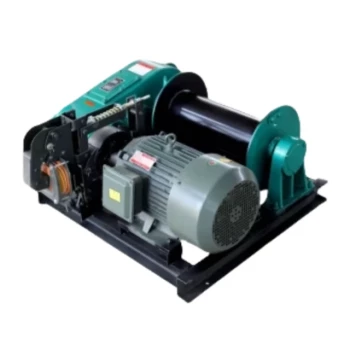
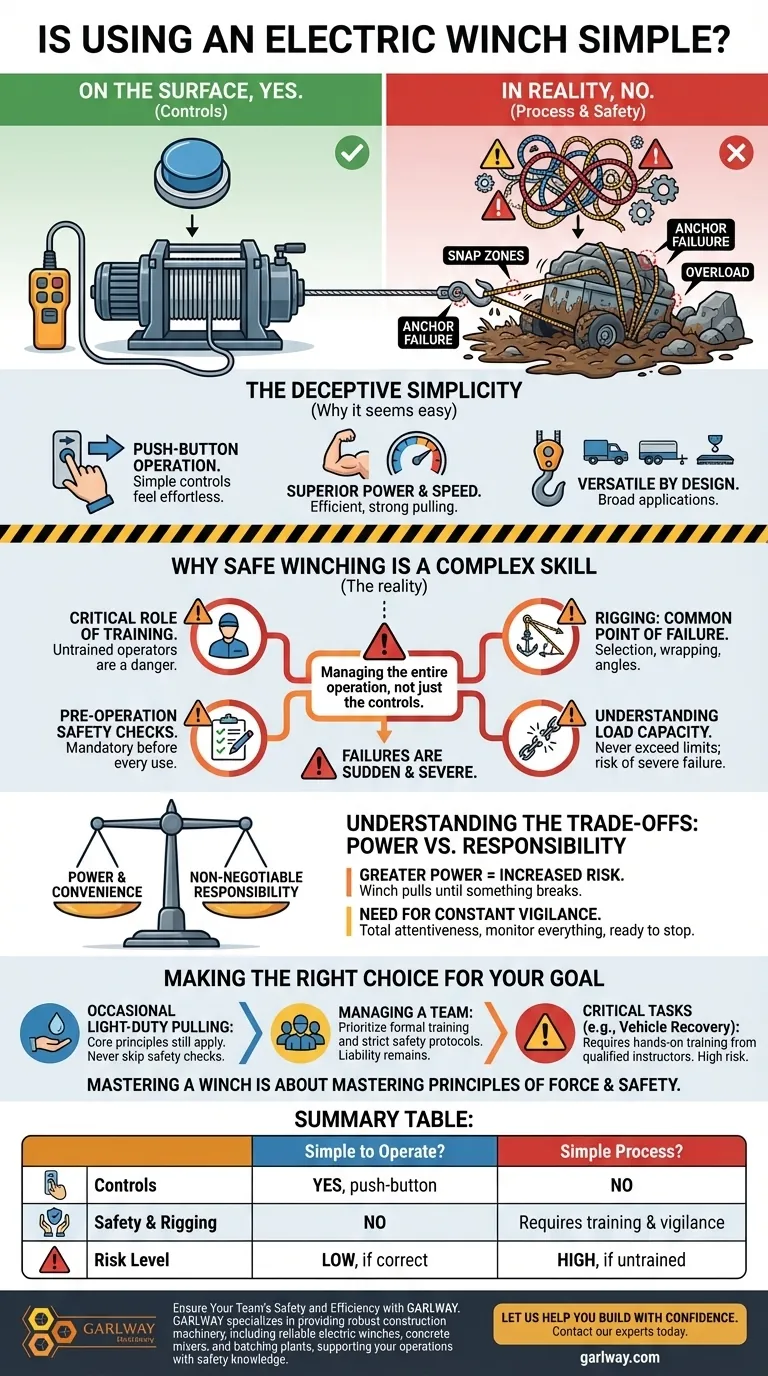
On the surface, yes. An electric winch is operated with simple controls, often just a button or a switch. However, this mechanical simplicity masks a process that is complex, requires significant knowledge, and can be extremely dangerous if performed incorrectly.
The core misunderstanding about electric winches is confusing simple controls with a simple process. While operating the switch is easy, using the winch safely and effectively is a skill that demands proper training, constant vigilance, and a deep respect for the immense forces involved.
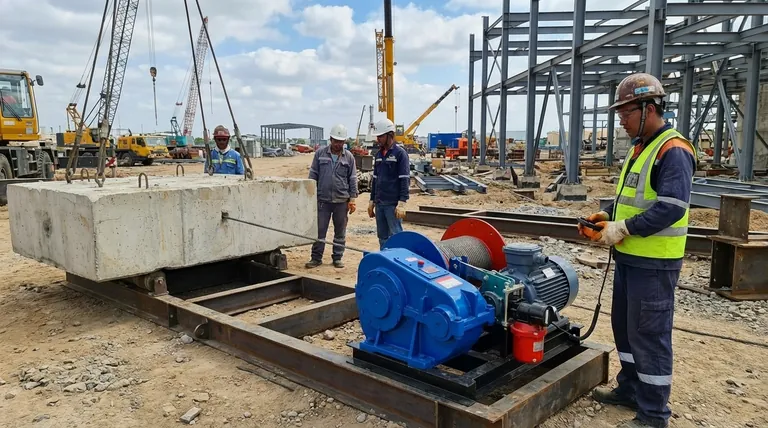
The Deceptive Simplicity of Winch Controls
At first glance, an electric winch seems straightforward. The features that make it so powerful and versatile are the very ones that create its reputation for ease of use.
Push-Button Operation
The primary function of an electric winch—pulling a cable in or letting it out—is typically controlled by a simple remote. This makes the basic act of operation feel effortless compared to a manual winch.
Superior Power and Speed
Electric winches offer significant advantages in power and speed control. They provide greater traction and faster operation than manual methods, making the task of moving heavy objects feel much more efficient.
Versatile by Design
These tools are designed for broad application. They can be mounted on vehicles, trailers, or stationary platforms to lift, pull, and position heavy loads in industries ranging from construction to off-road recovery.
Why Safe Winching is a Complex Skill
The real complexity of using a winch has little to do with its controls. It is about safely managing the entire operation, from initial setup to the final moment the load is secured. This is why experts universally agree on the need for caution.
The Critical Role of Training
The single most important safety measure is proper training. An untrained operator is a danger to themselves and everyone around them. Only personnel who understand the principles of rigging, load forces, and safety protocols should ever operate a winch.
Rigging: The Most Common Point of Failure
Simply hooking the winch line to an object is not enough. Safe winching involves understanding how to select a secure and rated anchor point, how to properly wrap and connect the winch line, and how to manage the line angle to avoid dangerous side pulls.
Pre-Operation Safety Checks
Before every use, a series of checks is mandatory. The operator must inspect the wire rope or synthetic line for damage, ensure all connections are secure, and verify the winch is mounted correctly. Skipping these steps can lead to catastrophic equipment failure.
Understanding Load Capacity
Every winch has a specific load capacity that must never be exceeded. Attempting to pull a load that is too heavy can overload the motor, snap the cable, or break the mounting points, turning components into high-velocity projectiles.
Understanding the Trade-offs: Power vs. Responsibility
The immense power of an electric winch is its greatest asset and its greatest liability. The convenience it offers comes with a non-negotiable responsibility for safety.
Increased Risk with Greater Power
Unlike manual tools where the operator can feel the strain, an electric winch will continue pulling with thousands of pounds of force until something breaks. This immense, unemotional power means that when failures happen, they are sudden and severe.
The Need for Constant Vigilance
Using a winch is not a passive activity. It requires the operator's total attentiveness and caution. You must constantly monitor the line, the load, and the anchor points, ready to stop immediately if something looks unsafe.
Making the Right Choice for Your Goal
Ultimately, an electric winch is a professional tool that demands a professional mindset. Its simplicity is a feature of its controls, not the process.
- If your primary focus is occasional light-duty pulling: Acknowledge that even for simple tasks, the core principles of safety, rigging, and load capacity still apply. Never skip your safety checks.
- If you are managing a team that will use winches: Your first priority must be to provide formal, professional training and enforce strict safety protocols. The ease of use does not reduce your liability.
- If you are considering a winch for critical tasks like vehicle recovery: Do not attempt to use it without hands-on training from a qualified instructor. The risks in these dynamic situations are far too high to learn through trial and error.
Mastering a winch is about mastering the principles of force and safety, not just learning to push a button.
Summary Table:
| Aspect | Simple to Operate? | Simple Process? |
|---|---|---|
| Controls | Yes (push-button/switch) | No |
| Safety & Rigging | No | Requires significant training & vigilance |
| Risk Level | Low (if used correctly) | High (if untrained or careless) |
Ensure Your Team's Safety and Efficiency with GARLWAY
While an electric winch is a powerful tool, its safe and effective use is a complex skill. GARLWAY specializes in providing robust construction machinery, including reliable electric winches, concrete mixers, and batching plants, for construction companies and contractors worldwide. We don't just supply equipment; we support your operations with the knowledge that safety and proper training are paramount.
Let us help you build with confidence. Contact our experts today to find the right winch solution for your projects and learn about our commitment to quality and safety.
Visual Guide
Related Products
- Electric 120V Boat Winch by Badlands
- Electric and Hydraulic Winch for Heavy Duty Applications
- Small Electric Winch 120V and 240V for Compact Applications
- 12000 lb Electric Boat Trailer Winch with Windlass Anchor Warn
- Electric Hoist Winch Boat Anchor Windlass for Marine Applications
People Also Ask
- How do electric boat winches work? Unlock Effortless Launching & Retrieval
- How much current does an electric boat winch draw? Plan Your Electrical System for Peak Performance
- Can I run a winch straight from a battery? Essential Power Setup for Safe Operation
- What are the types of electric winches available? Choose the Right Winch for Your Job
- What are the uses of electric winches in mining and tunneling? Enhance Safety and Efficiency Underground