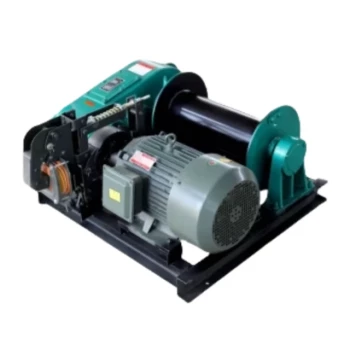
In the construction industry, an electric winch serves as a critical force multiplier for both vertical and horizontal movement of heavy loads. It is used to hoist materials like steel beams and concrete slabs to upper floors and to pull heavy machinery or equipment across a job site, fundamentally improving both safety and operational efficiency.
The core function of an electric winch in construction is to replace manual effort with mechanical power for lifting and pulling tasks. This makes it possible to handle loads that would otherwise be impractical or dangerous to move, turning complex logistical challenges into manageable operations.
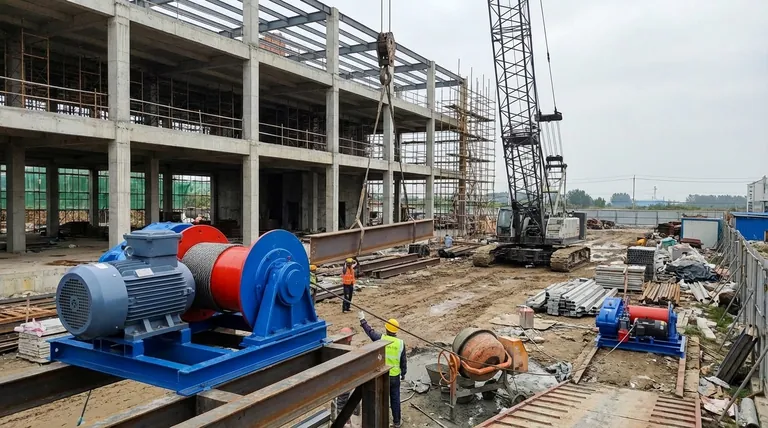
The Two Primary Functions of an Electric Winch
An electric winch's utility on a construction site can be broken down into two main categories: hoisting and hauling. Each addresses a different fundamental challenge in material and equipment logistics.
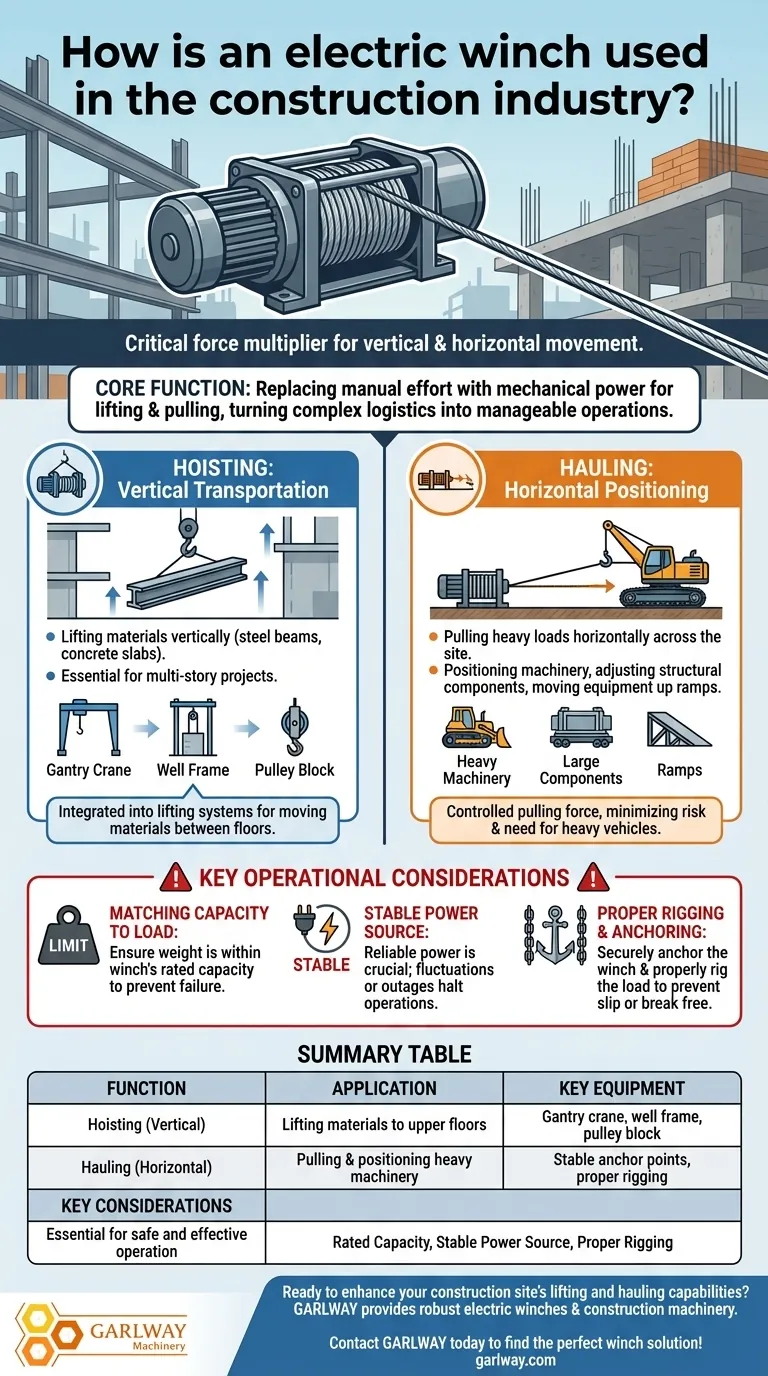
Hoisting: Vertical Transportation
The most common application is lifting materials vertically. This is essential for multi-story building projects.
An electric winch can be used on its own for simple lifts or, more frequently, as a core component within a larger lifting system.
It is often configured with equipment like a gantry crane, a well frame, or a pulley block to create a complete vertical transport apparatus for moving materials between floors.
Hauling: Horizontal Positioning
The second key function is pulling heavy loads horizontally across a site.
This is invaluable for positioning heavy machinery, adjusting the placement of large structural components on the ground, or moving equipment up ramps.
By providing controlled, powerful pulling force, the winch reduces the need for other heavy vehicles and minimizes the risk of accidents associated with pushing or dragging equipment manually.
Key Operational Considerations
While incredibly useful, the effective and safe use of an electric winch depends on understanding its operational context and limitations. Misapplication can lead to equipment failure or, worse, serious accidents.
Matching Capacity to the Load
The winch's rated capacity is the most critical safety factor. You must always ensure the weight of the material or equipment being moved is well within this limit.
Overloading a winch can cause catastrophic failure of the cable, motor, or mounting points.
The Importance of a Stable Power Source
As an electric winch, it depends entirely on a reliable source of power. On a construction site, this can be a challenge.
Fluctuations in power from a generator can affect performance, and power outages can halt operations entirely, potentially leaving a load suspended in a dangerous state.
Proper Rigging and Anchoring
The winch itself is only one part of the system. Its effectiveness and safety are equally dependent on how it is anchored and how the load is rigged.
An improperly secured winch can break free under load, creating a severe hazard. Likewise, poorly attached slings or chains on the load can cause it to slip or become unbalanced.
Making the Right Choice for Your Task
To leverage an electric winch effectively, you must align its application with your specific operational goal.
- If your primary focus is moving materials to upper floors: Integrate the winch into a gantry or well frame system to create a dedicated, efficient material hoist.
- If your primary focus is positioning heavy equipment on site: Use the winch for controlled horizontal pulling to ensure precise and safe placement of machinery.
- If your primary focus is overall site versatility: View the winch as a component that can be moved and re-purposed for various lifting and pulling tasks as the project evolves.
Ultimately, the electric winch is a foundational tool that transforms raw power into controlled, productive force on the construction site.
Summary Table:
| Function | Application | Key Equipment |
|---|---|---|
| Hoisting (Vertical) | Lifting materials (steel beams, concrete) to upper floors | Gantry crane, well frame, pulley block |
| Hauling (Horizontal) | Pulling & positioning heavy machinery across the site | Stable anchor points, proper rigging |
| Key Considerations | Rated Capacity, Stable Power Source, Proper Rigging | Essential for safe and effective operation |
Ready to enhance your construction site's lifting and hauling capabilities?
GARLWAY specializes in providing robust and reliable construction machinery, including electric winches, concrete mixers, and batching plants, for construction companies and contractors globally. Our equipment is designed to improve your operational efficiency and worksite safety.
Contact GARLWAY today to find the perfect winch solution for your project's needs!
Visual Guide
Related Products
- Electric 120V Boat Winch by Badlands
- Electric and Hydraulic Winch for Heavy Duty Applications
- Small Electric Winch 120V and 240V for Compact Applications
- 12000 lb Electric Boat Trailer Winch with Windlass Anchor Warn
- Electric Hoist Winch Boat Anchor Windlass for Marine Applications
People Also Ask
- How do electric boat winches work? Unlock Effortless Launching & Retrieval
- How much current does an electric boat winch draw? Plan Your Electrical System for Peak Performance
- Can I run a winch straight from a battery? Essential Power Setup for Safe Operation
- What are the types of electric winches available? Choose the Right Winch for Your Job
- What are the uses of electric winches in mining and tunneling? Enhance Safety and Efficiency Underground