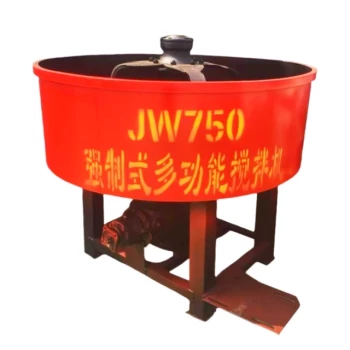
To effectively manage the wear and tear of a mixing blade, you must implement a comprehensive strategy that combines regular, detailed inspections with consistent preventative maintenance and vigilant real-time monitoring. This involves not only cleaning and lubricating the blade but also checking its structural integrity, treating its surfaces for enhanced durability, and listening for operational warning signs.
The core principle is shifting from a reactive "fix it when it breaks" mindset to a proactive one. A systematic maintenance protocol is the most effective way to maximize the blade's lifespan, ensure operational safety, and prevent costly, unscheduled downtime.
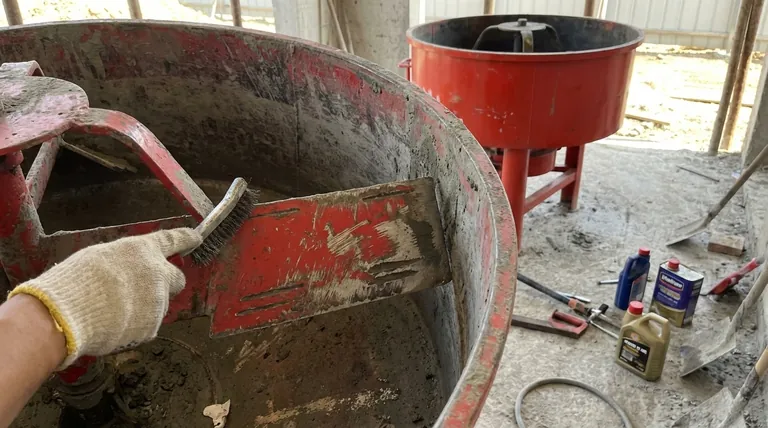
A Proactive Inspection Protocol
Regular inspection is your first line of defense against catastrophic failure. It allows you to identify and address minor issues before they escalate into major problems.
Visual Checks for Wear and Damage
You must regularly inspect the blade for signs of abrasion, cracks, and corrosion. Pay special attention to welded areas, as these can be points of high stress and potential failure.
Material-Specific Reinforcements
To significantly enhance durability, consider treating different parts of the blade. Adding materials like manganese or chromium can substantially increase the blade's strength and wear resistance in high-contact zones.
Consistent Documentation
Any abnormality found during an inspection, no matter how small, must be addressed promptly and recorded. This log creates a history that helps identify recurring issues and predict future maintenance needs.
The Pillars of Preventative Maintenance
While inspection identifies problems, preventative maintenance stops many of them from ever occurring. These simple, consistent actions have a massive impact on the blade's longevity.
Post-Use Cleaning
After every single use, the mixing blades must be thoroughly cleaned to remove all residue. Material buildup can cause imbalance, increase strain on the motor, and accelerate corrosive processes.
Strategic Lubrication
Proper lubrication is critical to reducing friction, a primary cause of wear. Regularly apply lubricating oil between the mixer bearings and the blades and between the blades and their shanks.
Active Rust Prevention
Beyond cleaning, you should apply rust prevention treatments directly to the blades. This creates a protective barrier against corrosion, which can structurally weaken the metal over time.
Monitoring Real-Time Operational Signals
Your eyes and ears are powerful diagnostic tools. Paying attention to the mixer during operation can provide immediate clues about the blade's condition.
Listen for Changes in Sound
Any new or unusual sounds, such as grinding or vibrating, can indicate an imbalanced blade or a bearing that is beginning to fail. These sounds are early warnings of mechanical stress.
Observe Speed and Force
A noticeable change in the blade's operational speed or the force required to mix can signal increased resistance. This is often caused by wear, damage, or improper cleaning.
Preventing Blade Breakage
Closely monitoring these signals is crucial for preventing accidents like blade breakage. A sudden failure is not only expensive but also a significant safety hazard for operators and equipment.
Common Pitfalls to Avoid
Many maintenance programs fail not because of a lack of knowledge, but because of a lack of consistency. Avoiding these common mistakes is essential.
Neglecting Post-Use Cleaning
Skipping the cleaning step, even once, allows material to harden on the blade. This makes future cleaning more difficult and starts a cycle of accumulating residue and imbalance.
Inconsistent Maintenance Schedules
Lubrication and rust prevention are not one-time tasks. Their effectiveness depends on a regular, disciplined schedule. Inconsistent application offers little long-term protection.
Ignoring Early Warning Signs
The most costly mistake is to hear an odd noise or notice a change in performance and continue operating. This "run-to-failure" approach almost always results in more extensive damage and longer downtime.
How to Apply This to Your Operation
Your maintenance strategy should align with your primary operational goals.
- If your primary focus is maximizing equipment lifespan: Prioritize regular inspections and surface treatments, such as adding manganese or chromium for wear resistance.
- If your primary focus is ensuring operational safety: Make real-time monitoring of sound, speed, and force a non-negotiable part of the operator's responsibilities.
- If your primary focus is minimizing daily downtime: Embed post-use cleaning, lubrication, and rust prevention as a mandatory, end-of-shift routine.
A proactive and disciplined approach to blade maintenance is a direct investment in your operational reliability and safety.
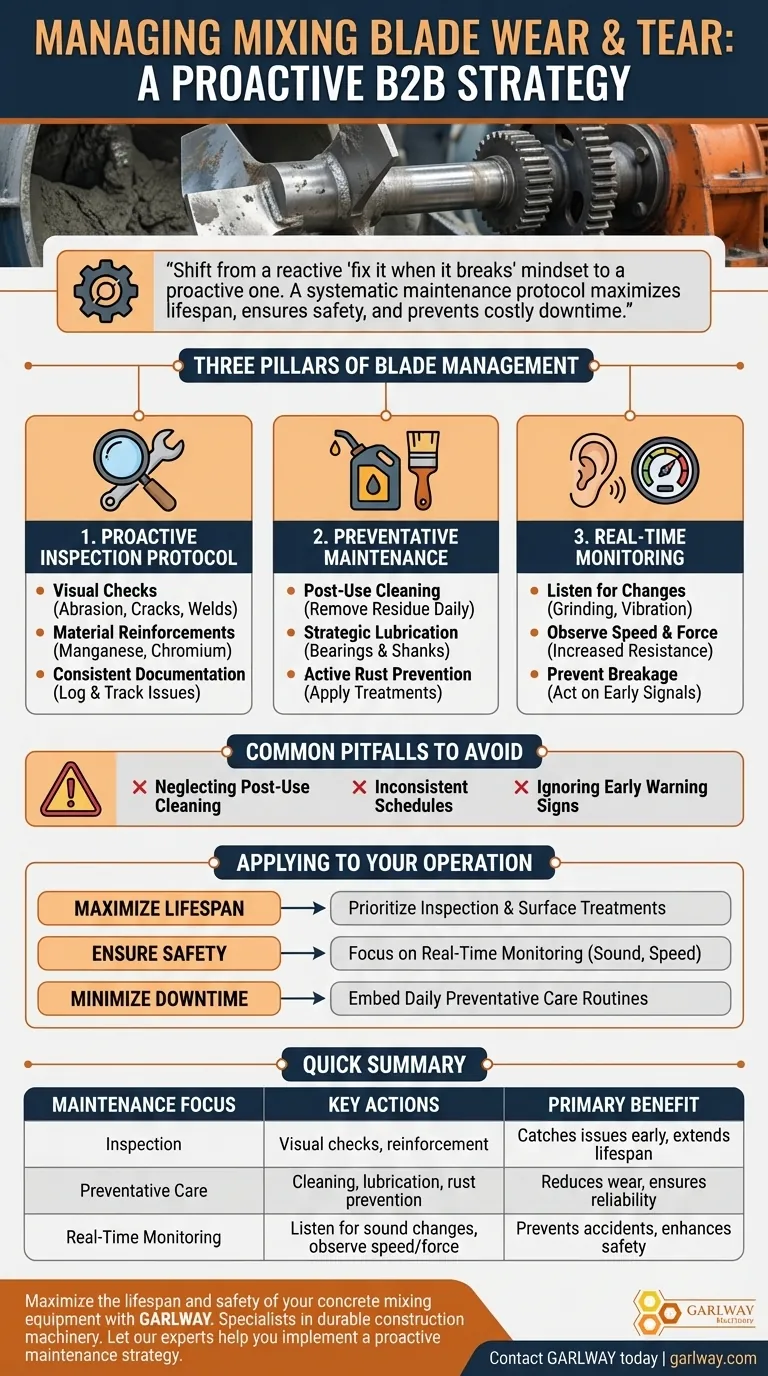
Summary Table:
| Maintenance Focus | Key Actions | Primary Benefit |
|---|---|---|
| Inspection | Visual checks, material reinforcement, documentation | Catches issues early, extends lifespan |
| Preventative Care | Post-use cleaning, strategic lubrication, rust prevention | Reduces wear, ensures daily reliability |
| Real-Time Monitoring | Listen for sound changes, observe speed/force | Prevents accidents, enhances safety |
Maximize the lifespan and safety of your concrete mixing equipment with GARLWAY.
As a specialist in construction machinery, we provide durable winches, concrete mixers, and batching plants designed for the demanding needs of construction companies and contractors worldwide. Our equipment is built to withstand rigorous use, but proper maintenance is key to avoiding costly downtime.
Let our experts help you implement a proactive maintenance strategy tailored to your operation. Contact GARLWAY today to discuss your needs and ensure your machinery runs smoothly and safely.
Visual Guide
Related Products
- Portable Concrete Mixer Machine Equipment for Mixing Concrete
- Construction Products Concrete Plant Machine Mixing Concrete Mixer
- HZS90 Large Multiquip Concrete Mixers for Construction
- HZS25 Best Cement Mixer for Quick Mix Concrete at Bunnings
- Concrete Cement Mixer Machine Drum Mixer for Construction
People Also Ask
- Why is it necessary to use a portable concrete mixer? Gain Total Control & Efficiency
- How much concrete can you pour with a portable mixer? Find the Perfect Fit for Your Project
- What types of projects are portable concrete mixers suitable for? Ideal for DIY & Small-Scale Construction
- How much does a portable concrete mixer hold? A Guide to Choosing the Right Capacity
- What types of portable concrete mixers exist? Find the Perfect Mixer for Your Project