To maintain the air path of a cement silo, you must regularly check that the air outlet is clear and clean the dust collector filter. If ventilation is poor, the filter is the most likely cause and requires immediate attention to prevent pressure buildup and ensure safe, efficient operation.
A clear air path is not just a maintenance task; it is a critical safety requirement for your cement silo. Proper maintenance goes beyond the filter, encompassing the entire dust collection and pressure relief system to prevent equipment damage and operational failure.
The Core Component: The Dust Collector System
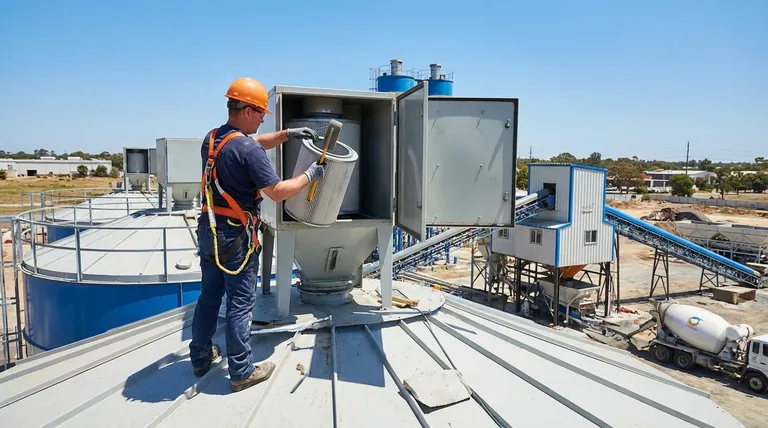
The dust collector is the heart of the silo's air management system. Its primary job is to allow air to escape during filling while capturing cement dust, and to allow air to enter during discharge.
Inspecting the Air Outlet
The first and simplest check is a visual inspection of the air path's outlet. Ensure it is free from any physical obstruction that could impede airflow.
Diagnosing a Clogged Filter
Poor ventilation is the classic symptom of a clogged dust filter. This blockage prevents air from escaping the silo as it's being filled, which can lead to over-pressurization.
The Correct Procedure for Cleaning a Filter
When a filter is clogged, it must be carefully removed and cleaned.
First, tie the filter securely with string. This crucial step prevents the filter media from deforming or being damaged during the washing process.
After washing, the filter must be completely dry before it is reinstalled. Reusing a damp filter can lead to immediate clogging and potential moisture problems inside the silo.
Expanding the Inspection Beyond the Filter
A healthy air path depends on more than just a clean filter. The entire system must be evaluated to ensure reliability.
Checking the Ash Cleaning Mechanism
Many dust collectors have an automated ash cleaning mechanism (like a pulse-jet system). You must verify that this mechanism is functioning correctly to keep the filter clear during operation.
Verifying Fan Operation
If your system uses an induced draft fan to assist with airflow, confirm that it is operating as expected. A malfunctioning fan can cause the same symptoms as a clogged filter.
Ensuring System Airtightness
Inspect all seals and connection points associated with the dust collector and silo roof. Air leaks can compromise the system's efficiency and allow moisture to enter the silo.
A Critical Related Issue: Cement Caking
Moisture ingress is the enemy of a cement silo. It leads to cement caking, which creates blockages and operational nightmares.
Identifying and Removing Caked Cement
Periodically inspect the silo's interior for any cement that has caked due to moisture.
If caking is found, it must be physically removed with tools like hammers or shovels. Afterward, the area should be thoroughly cleaned to remove all residue.
Preventing Future Caking
After removing caked material, it is vital to ensure no residual moisture remains inside the silo. A dry interior prevents the cycle of caking and rust from starting again.
A Proactive Maintenance Checklist
Your maintenance strategy should be guided by your operational goals.
- For routine daily/weekly checks: Your primary focus should be a quick visual inspection of the air outlet and monitoring for any signs of poor ventilation.
- If you notice poor silo performance: Your first action should be to inspect and clean the dust collector filter, as this is the most common point of failure.
- For long-term reliability and safety: You must implement a comprehensive inspection schedule that includes the fan, seals, ash cleaning mechanism, and an internal check for cement caking.
Ultimately, consistent and thorough maintenance of the entire air system is the key to a safe and efficient cement silo operation.
Summary Table:
| Maintenance Task | Key Action | Frequency / Trigger |
|---|---|---|
| Inspect Air Outlet | Check for physical obstructions. | Daily/Weekly (Routine) |
| Clean Dust Filter | Remove, wash (while tied), and dry completely. | When ventilation is poor |
| Check Ash Cleaning System | Verify pulse-jet or other mechanism is working. | Monthly (Comprehensive) |
| Inspect Fan Operation | Ensure induced draft fan is functional. | Monthly (Comprehensive) |
| Check for Cement Caking | Inspect interior and remove hardened cement. | Quarterly / As needed |
| Verify System Airtightness | Inspect seals and connections for leaks. | Monthly (Comprehensive) |
Ensure your project's efficiency and safety with reliable equipment. Proper silo maintenance is critical, but it starts with a quality silo. GARLWAY specializes in providing robust construction machinery, including durable cement silos, concrete batching plants, mixers, and winches for construction companies and contractors globally.
Contact our experts today to find the perfect equipment solution for your needs and keep your operations running smoothly.
Visual Guide

Related Products
- HZS35 Small Cement Concrete Mixing Batch Plant
- HZS120 Ready Mix Concrete Batching Plant Commercial Mud Cement Mixer
- Portable Cement Mixer with Lift Concrete Machine
- JW1000 Mobile Cement Mixer Concrete Mixer Truck and Batching Plant
- Commercial Construction Mixer Machine for Soil Cement Mixing Concrete
People Also Ask
- Why buy concrete batch plant parts only from the manufacturer? Protect Your Investment and Maximize Uptime
- Why is proper maintenance important for a concrete batch mix plant? Maximize Uptime & Profitability
- What is the advantage of a mobile concrete batching plant? Achieve On-Site Production & Total Control
- What are the advantages and disadvantages of concrete batching plants? Maximize Quality & Efficiency
- What are the two methods of material charging in a concrete mixing station? Single vs. Multiple Charging Explained