
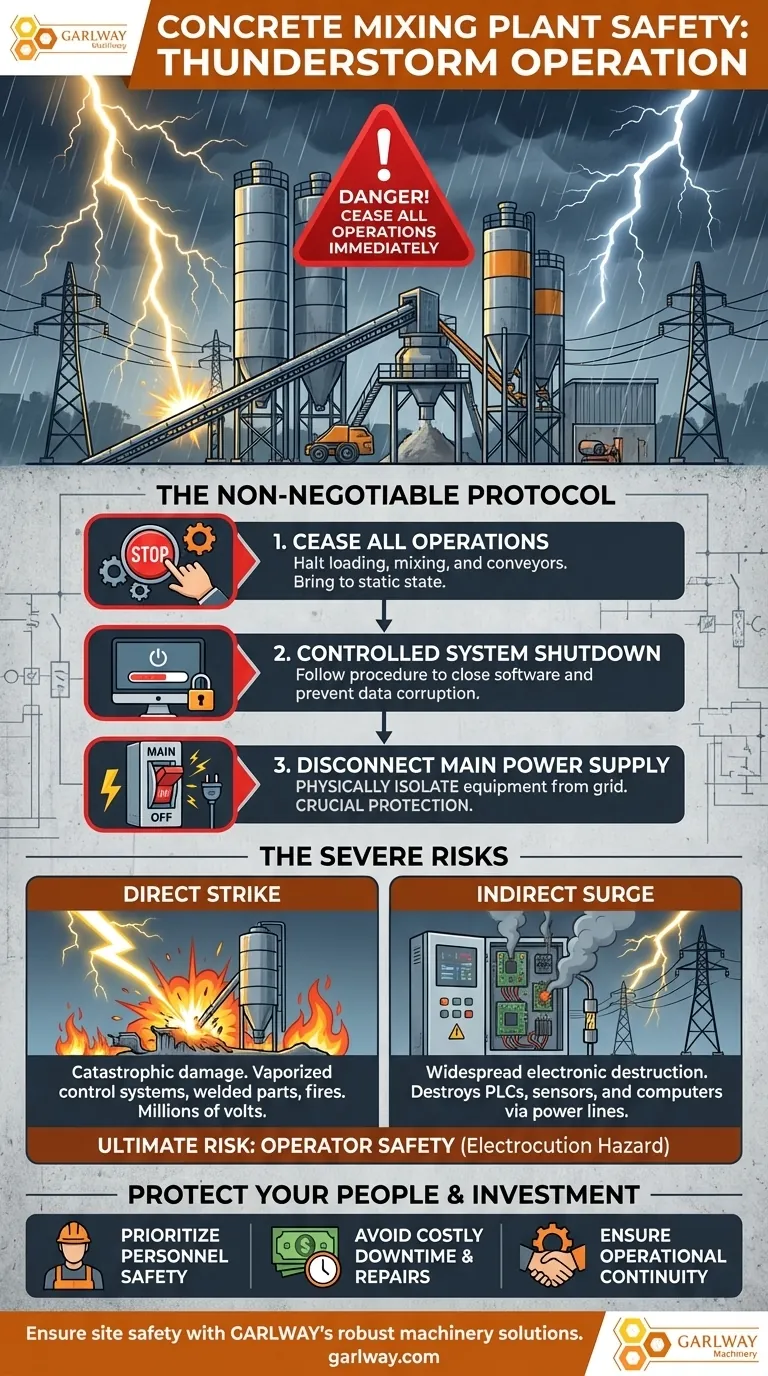
Under no circumstances should a concrete mixing plant be operated during a thunderstorm. The only correct and safe procedure is to immediately cease all operations, perform a controlled system shutdown, and completely disconnect the main power supply to protect both personnel and the equipment from the severe risks of a lightning strike.
The core principle is simple: a concrete mixing plant is a tall, conductive structure, making it a natural target for lightning. The risk of a catastrophic electrical surge or a direct strike far outweighs any benefit of continued operation, mandating a complete shutdown and power disconnect as the only responsible course of action.
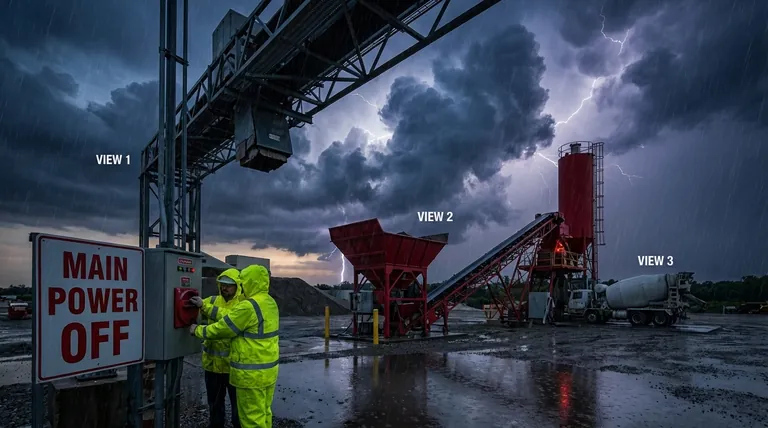
The Core Principle: Why Shutdown is Non-Negotiable
A thunderstorm introduces an unacceptable level of risk to any industrial site, especially one with the vertical profile and sensitive electronics of a concrete plant. Understanding the nature of this threat clarifies why a full shutdown is the only safe option.
The Primary Threat: Lightning Strikes
A concrete mixing plant, with its tall metal silos, conveyors, and mixing towers, acts as a lightning rod. It provides a natural path of least resistance for an electrical discharge, making a direct or nearby strike a significant probability during a storm.
Direct Strikes vs. Indirect Surges
A direct strike can be catastrophic, delivering millions of volts that can vaporize control systems, weld mechanical parts, and cause fires. More common, however, are indirect surges caused by a nearby strike. This powerful electromagnetic pulse can travel through power lines and ground connections, destroying sensitive components like PLCs, sensors, and computer controls even if the plant itself isn't hit directly.
Protecting Your Most Valuable Asset: Personnel
Beyond the equipment, the primary reason for this protocol is human safety. Operators working in or near the plant's control structures are at extreme risk of electrocution during a storm. Equipment can be replaced; people cannot.
The Standard Operating Procedure for Thunderstorms
When a thunderstorm is imminent, every plant should have a clear, three-step safety protocol that every operator understands and is empowered to execute without delay.
Step 1: Cease All Operations Immediately
As soon as a thunderstorm is detected, stop all processes. This means halting the loading of aggregates, stopping the mixing cycle, and clearing any active conveyors. The goal is to bring the plant to a static, non-operational state as quickly and safely as possible.
Step 2: Perform a Controlled System Shutdown
Follow your standard procedure for shutting down the plant's control system. This ensures that software is properly closed and prevents data corruption, but it is not sufficient on its own to protect the hardware.
Step 3: Disconnect the Main Power Supply
This is the most critical step. After the system is shut down, go to the main electrical disconnect or breaker for the entire plant and switch it to the "off" position. This physically isolates your expensive equipment from the electrical grid, providing the only reliable protection against a massive power surge from a lightning strike.
Risks of Non-Compliance
Ignoring this procedure introduces severe and unnecessary risks. The potential consequences of continuing operations during a thunderstorm are severe, impacting safety, finances, and project timelines.
Catastrophic Equipment Damage
A lightning-induced surge can instantly destroy the plant's "brain"—the programmable logic controllers (PLCs), computer interfaces, and motor controls. Repairing this kind of widespread electronic damage is extremely expensive and time-consuming.
Financial and Project Timeline Impacts
The cost of replacing specialized electronic components and control panels can be immense. More importantly, the resulting downtime can last for weeks, derailing project schedules and leading to significant financial losses.
The Ultimate Risk: Operator Safety
The most serious consequence is the risk to human life. An operator in a control cabin or working near the plant's structure is dangerously exposed. No amount of concrete production is worth this risk.
Implementing a Robust Lightning Safety Protocol
Your response to a thunderstorm should not be an improvisation. It must be a clear, well-rehearsed plan that prioritizes safety above all else.
- If you are a Plant Operator: Your immediate responsibility is to cease operations, shut down the system, and disconnect the main power source as soon as a storm approaches. Do not wait for instructions.
- If you are a Site Manager: Your role is to establish this shutdown procedure as a mandatory, non-negotiable policy and ensure every operator is trained on it.
- If you are a Project Owner: Your focus should be on reinforcing a culture where safety takes precedence over production schedules, understanding that this protocol protects your long-term investment and your people.
Ultimately, protecting your personnel and machinery from thunderstorms is a fundamental aspect of responsible site management.
Summary Table:
| Step | Action | Critical Reason |
|---|---|---|
| 1 | Cease All Operations Immediately | Halts all processes to bring plant to a static state. |
| 2 | Perform a Controlled System Shutdown | Prevents software and data corruption. |
| 3 | Disconnect the Main Power Supply | Crucial step to physically isolate equipment from lightning-induced power surges. |
Ensure your site's safety and operational continuity with GARLWAY.
Thunderstorms pose a severe risk of catastrophic damage to your concrete batching plant's sensitive electronics and, most importantly, your personnel. GARLWAY specializes in robust construction machinery, including reliable concrete mixers and batching plants designed with safety in mind.
Protect your investment and your team by implementing a clear safety protocol. Our experts can provide guidance on best practices for your equipment.
Contact GARLWAY today to discuss how our solutions support safe and efficient construction operations for companies and contractors globally.
Visual Guide
Related Products
- HZS120 Ready Mix Concrete Batching Plant Commercial Mud Cement Mixer
- HZS35 Small Cement Concrete Mixing Batch Plant
- HZS75 Concrete Batching Plant Cement Mixer Price Concrete Mixer Bunnings Mixing Plant
- HZS180 Ready Mix Concrete Plant for Foundations with Sand and Cement
- Commercial Electric Concrete Mixer Machine HZS 50 Small Batch Plant for Sale
People Also Ask
- What is a ready mix concrete batching plant? The Engine of Modern Construction
- What is the name of the machine used in ready mix? Unpacking the Complete Concrete System
- What is the core component of a concrete batching plant? The Mixer Unit Defines Your Concrete Quality
- What are the types of concrete mixers used in batching plants? Choose the Right Mixer for Your Project
- What are the advantages and disadvantages of concrete batching plants? Maximize Quality & Efficiency





