
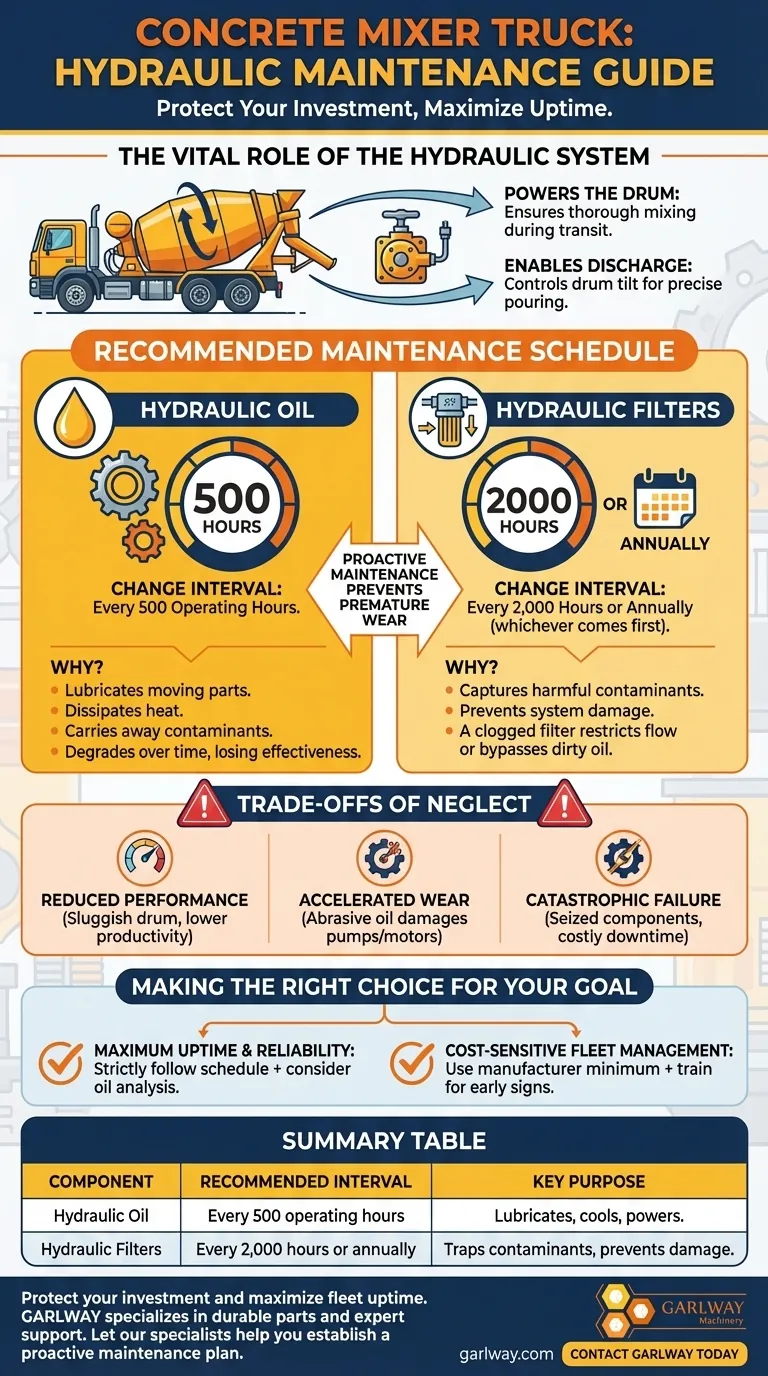
For a concrete mixer truck, the standard maintenance interval is to change the hydraulic oil every 500 hours of operation. The hydraulic filters have a longer lifespan and should be replaced either annually or after 2000 hours of use, whichever comes first, to ensure the consistent performance of the system.
Adhering to a maintenance schedule isn't just a best practice; it's a critical strategy to prevent the premature wear and catastrophic failure of the hydraulic system that powers your mixer's core functions.
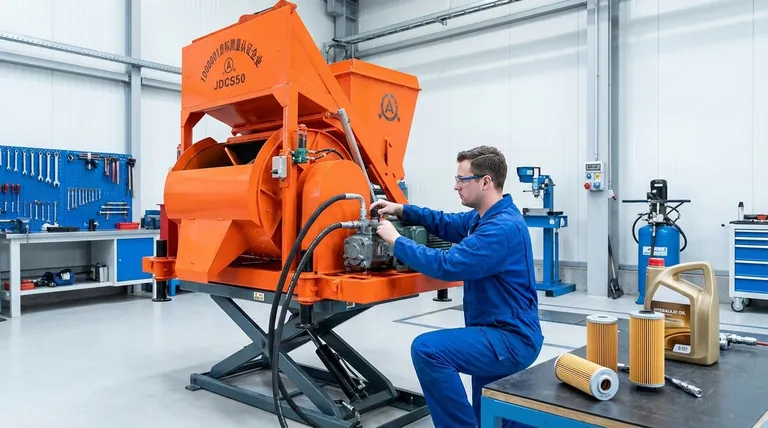
The Role of the Hydraulic System in Your Mixer
Before discussing maintenance, it's essential to understand what this system does. The hydraulic system is the muscle of your concrete mixer, responsible for its most critical operations.
Powering the Drum
The hydraulic system drives the motor that rotates the mixer drum. This ensures the concrete is mixed thoroughly during transit and can be discharged properly at the job site.
Enabling Concrete Discharge
This same system provides the power to tilt and control the drum, allowing for the precise and controlled pouring of concrete. Without a healthy hydraulic system, the truck cannot perform its primary function.
The "Why" Behind the Maintenance Schedule
Simply following a schedule is good, but understanding the reasons behind it empowers you to make better decisions and spot problems early.
Hydraulic Oil: The System's Lifeblood
Hydraulic oil does more than just transmit power. It also lubricates moving parts, dissipates heat, and carries away contaminants. Over time and with use, this oil breaks down due to heat and becomes contaminated with microscopic particles from component wear.
Degraded oil loses its ability to lubricate and cool effectively, accelerating wear on expensive pumps and motors.
Filters: The System's Guardian
The hydraulic filters are designed to capture the harmful contaminants that accumulate in the oil. Once a filter becomes clogged, its ability to protect the system is severely compromised.
A clogged filter can lead to a pressure drop, forcing the system to work harder, or it can go into bypass mode, allowing dirty oil to circulate freely and cause damage.
Understanding the Trade-offs of Neglect
Stretching maintenance intervals might seem like a way to save money in the short term, but it introduces significant risks and long-term costs.
Reduced Performance
As oil degrades and filters clog, the first sign is often a loss of efficiency. The drum may turn more slowly, or the system might seem sluggish, especially under load. This directly impacts your on-site productivity.
Accelerated Component Wear
Dirty, contaminated oil is abrasive. It acts like liquid sandpaper, grinding away at the tight tolerances inside hydraulic pumps, motors, and valves. This wear is irreversible and leads directly to costly repairs.
The Risk of Catastrophic Failure
The ultimate consequence of neglect is a complete system failure. A seized hydraulic pump or motor can bring a job to a standstill, resulting in lost loads, significant downtime, and repair bills that far exceed the cost of routine maintenance.
Making the Right Choice for Your Goal
Your maintenance strategy should align with your operational priorities. Sticking to the recommended schedule is the baseline for ensuring reliability and longevity.
- If your primary focus is maximum uptime and reliability: Strictly follow the 500-hour oil and 2000-hour/annual filter change schedule, and consider oil sampling analysis to detect issues before they become failures.
- If your primary focus is managing a large, cost-sensitive fleet: Use the manufacturer's schedule as a mandatory minimum, and train operators to report signs of sluggishness or overheating, which may indicate a need for earlier service.
Ultimately, proactive hydraulic maintenance is one of the most effective investments you can make in the performance and lifespan of your equipment.
Summary Table:
| Component | Recommended Change Interval | Key Purpose |
|---|---|---|
| Hydraulic Oil | Every 500 operating hours | Lubricates, cools, and powers the system; degrades over time. |
| Hydraulic Filters | Every 2,000 hours or annually | Traps contaminants; a clogged filter can cause system damage. |
Protect your investment and maximize the uptime of your concrete mixer fleet. GARLWAY specializes in construction machinery, offering durable parts and expert support for construction companies and contractors globally. Let our specialists help you establish a proactive maintenance plan.
Contact GARLWAY today for reliable solutions and keep your projects on schedule!
Visual Guide
Related Products
- Ready Mixer Machine for Construction Ready Mix Machinery
- JW1000 Mobile Cement Mixer Concrete Mixer Truck and Batching Plant
- Mini Cement Mortar Mixer Truck for Construction
- Harbor Freight JS1500 On Site Concrete Mixing Volumetric Cement Mixer
- HZS90 Large Multiquip Concrete Mixers for Construction
People Also Ask
- What are the purposes of low-speed agitation in truck mixers? Preserve Concrete Quality During Transit
- How is ready-mixed concrete transported from a commercial concrete batching plant? Ensuring Quality & Timely Delivery
- What are the main ingredients mixed in a concrete mixer truck? Master the Formula for Strong Concrete
- In what ways does a mobile concrete mixer improve quality control and consistency? Achieve Superior On-Site Concrete Quality
- What types of construction projects typically use concrete mixer trucks? From Highways to Home Foundations





