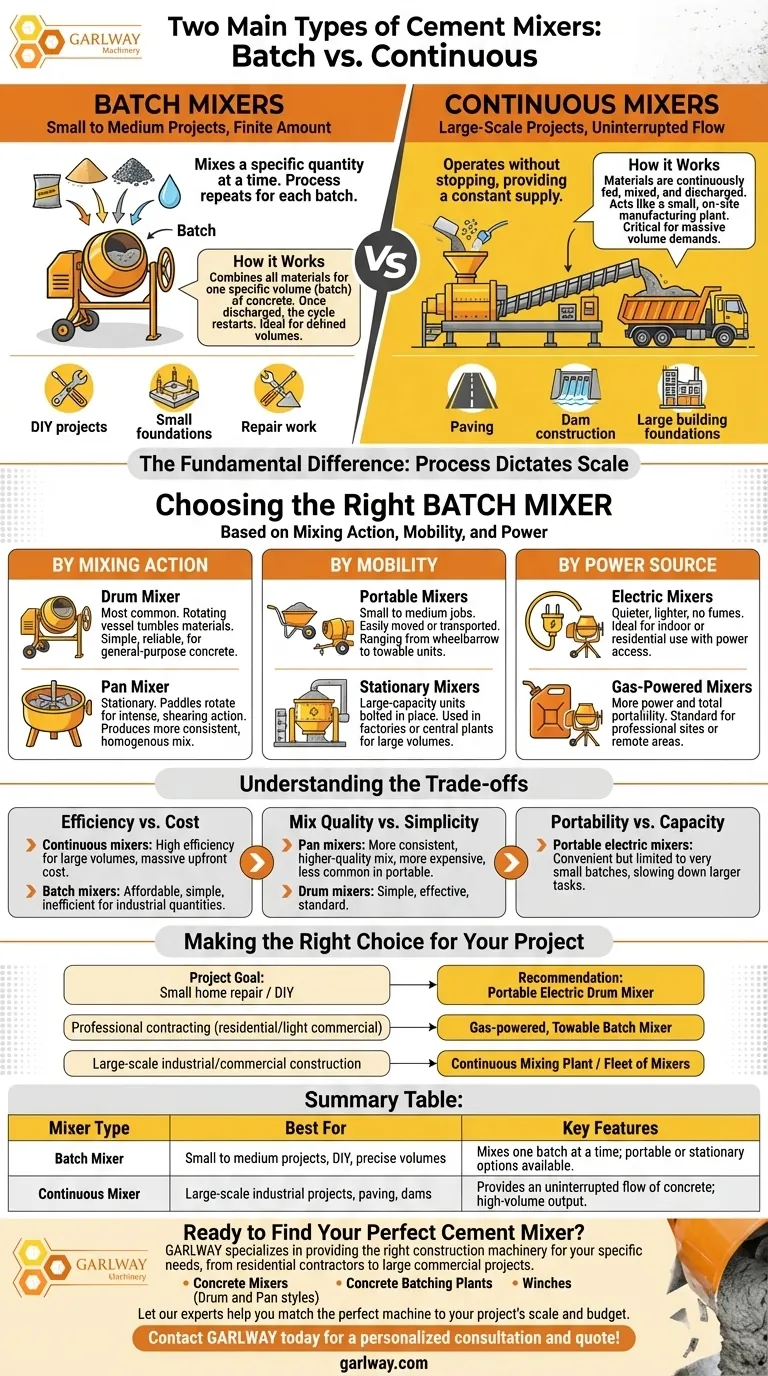
At its core, the world of cement mixers is divided into two primary categories based on their operational process: batch mixers and continuous mixers. Batch mixers are designed to create a specific, finite amount of concrete in a single cycle, making them ideal for smaller projects. In contrast, continuous mixers are industrial-scale machines that provide an uninterrupted flow of concrete, built for large-scale construction.
The fundamental choice between a batch or continuous mixer is dictated by the scale of your project. After that, factors like power source, mobility, and mixing action determine the specific tool you need for the job.
The Fundamental Difference: Process Dictates Scale
The most important way to classify a cement mixer is by how it works. This single distinction separates small-scale tools from large industrial machinery.
What is a Batch Mixer?
A batch mixer combines all materials—cement, sand, aggregate, and water—to create one specific quantity, or "batch," of concrete at a time. Once the batch is mixed and poured, the process begins again.
This method is perfect for projects with defined volumes, such as DIY home projects, small foundations, or repair work. The vast majority of mixers you see on residential job sites are batch mixers. Common types include drum and pan mixers.
What is a Continuous Mixer?
A continuous mixer operates without stopping, providing a steady stream of concrete. Materials are continuously fed into the machine, mixed, and then discharged.
These are used for massive projects like paving, dam construction, or large building foundations where a constant supply is critical. They are more like a small, on-site manufacturing plant than a simple tool.
How to Choose the Right Batch Mixer
Since most professionals and DIYers will be using a batch mixer, understanding the sub-types is essential for selecting the right tool. The choice comes down to mixing action, mobility, and power.
By Mixing Action: Drum vs. Pan
A drum mixer is the most common type, featuring a rotating vessel that tumbles the materials to mix them. They are simple, reliable, and excellent for general-purpose concrete. They come in tilting and non-tilting varieties.
A pan mixer is stationary and uses paddles that rotate inside the pan to combine materials. This provides a more intense, shearing action that results in a very consistent and homogenous mix, often in less time than a drum mixer.
By Mobility: Portable vs. Stationary
Portable mixers are designed for small to medium jobs where the mixer needs to be moved around a site or transported between locations. They range from small, wheelbarrow-style units to larger, towable mixers.
Stationary mixers are large-capacity units bolted in place. They are used in pre-cast factories or central mixing plants where large volumes of concrete are produced in one location before being transported by truck.
By Power Source: Electric vs. Gas
Electric mixers are quieter, lighter, and produce no fumes, making them ideal for indoor or residential use where a power source is available.
Gas-powered mixers offer more power and total portability, making them the standard choice for professional construction sites or remote areas without reliable access to electricity.
Understanding the Trade-offs
Choosing a mixer isn't just about features; it's about understanding the inherent compromises in each design.
Efficiency vs. Cost
Continuous mixers are incredibly efficient for large volumes but come with a massive upfront cost and complex setup. Batch mixers are far more affordable and simpler to operate but are highly inefficient for producing industrial quantities of concrete.
Mix Quality vs. Simplicity
While a standard drum mixer is simple and effective, a pan mixer often produces a more consistent, higher-quality mix due to its paddle action. However, pan mixers are typically more expensive and less common in portable designs.
Portability vs. Capacity
The convenience of a small, portable electric mixer comes at the cost of capacity. You will be limited to mixing very small batches, which can significantly slow down a project like pouring a small slab, which may require dozens of cycles.
Making the Right Choice for Your Project
Your project's goal should be the deciding factor.
- If your primary focus is a small home repair or DIY project: A portable electric drum mixer offers the best balance of cost, convenience, and capability.
- If your primary focus is professional contracting across various job sites: A gas-powered, towable batch mixer provides the power, mobility, and capacity needed for most residential and light commercial work.
- If your primary focus is large-scale industrial or commercial construction: Your project requires a continuous mixing plant or a fleet of truck-mounted mixers to meet the high-volume demand.
Ultimately, selecting the correct mixer is about accurately matching the machine’s capabilities to the specific demands of your task.
Summary Table:
| Mixer Type | Best For | Key Features |
|---|---|---|
| Batch Mixer | Small to medium projects, DIY, precise volumes | Mixes one batch at a time; portable or stationary options available. |
| Continuous Mixer | Large-scale industrial projects, paving, dams | Provides an uninterrupted flow of concrete; high-volume output. |
Ready to Find Your Perfect Cement Mixer?
Understanding the difference between batch and continuous mixers is the first step. GARLWAY specializes in providing the right construction machinery for your specific needs, whether you're a contractor on a residential site or managing a large commercial project.
We offer a range of high-performance equipment, including:
- Concrete Mixers (Drum and Pan styles)
- Concrete Batching Plants
- Winches
Let our experts help you match the perfect machine to your project's scale and budget.
Contact GARLWAY today for a personalized consultation and quote!
Visual Guide
Related Products
- HZS25 Best Cement Mixer for Quick Mix Concrete at Bunnings
- JDC350 Small Cement Concrete Mortar Mixer
- Concrete Cement Mixer Machine Drum Mixer for Construction
- JW1000 Mobile Cement Mixer Concrete Mixer Truck and Batching Plant
- JZC500 Large Cement Mixer Machine Price for Concrete Mix
People Also Ask
- How do cement mixers enhance safety on construction sites? Reduce Strain, Hazards, and Accidents
- What are the main components of a cement mixer? A Guide to Core Parts & Functions
- What are some tips for using a cement mixer effectively? Maximize Your Mixer's Performance & Concrete Quality
- How does cleaning a cement mixer after use benefit its performance? Maximize Lifespan and Mix Quality
- Why is it important to clean the cement mixer after use? Prevent Costly Damage and Ensure Quality Concrete