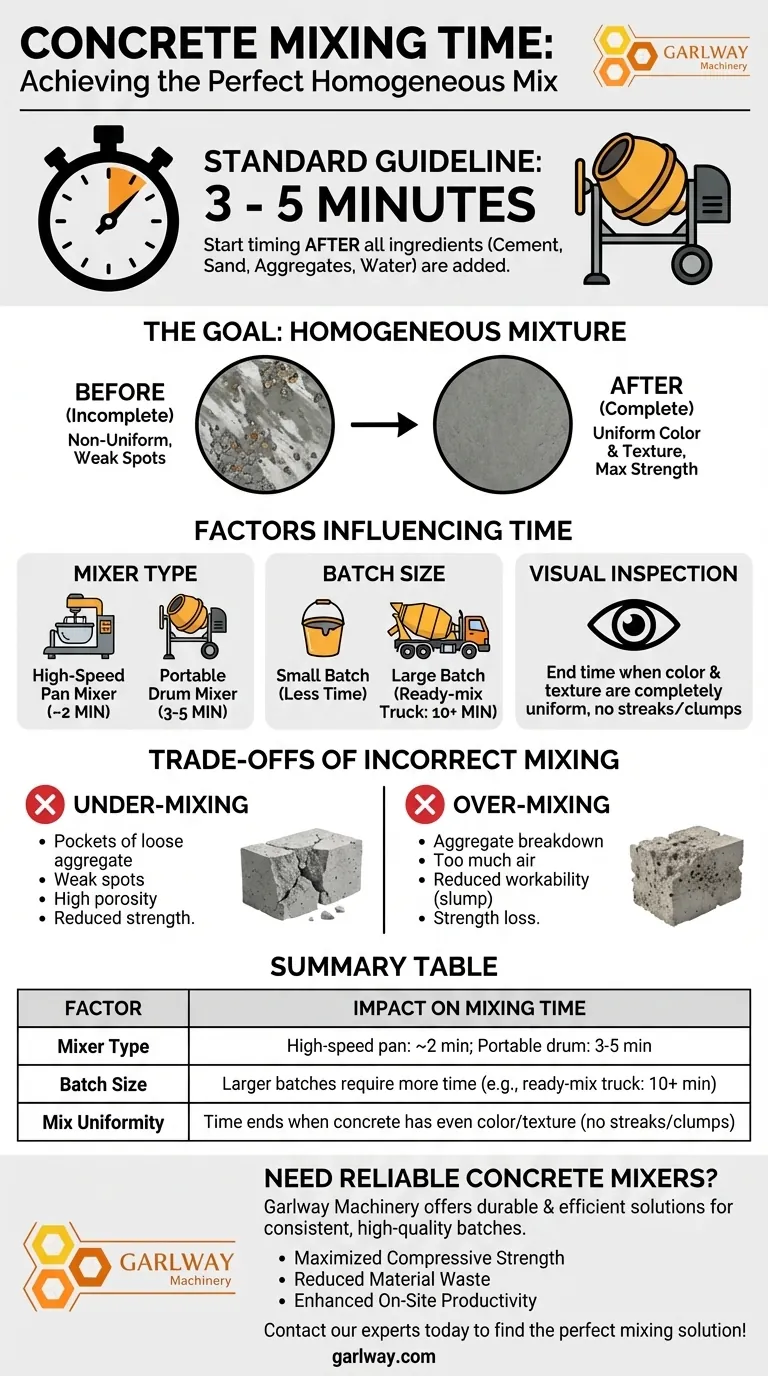
For a standard concrete mixer, the ideal mixing time is typically between 3 to 5 minutes. This duration begins after all the ingredients—cement, sand, aggregates, and water—have been added to the machine. However, this is a general guideline, as the exact time can vary significantly based on the type and size of the mixer. For instance, high-speed industrial pan mixers can achieve a proper mix in as little as 2 minutes, while the total batching and loading process for a large ready-mix truck can take over 10 minutes.
The goal of mixing is not to meet a specific time on a stopwatch, but to achieve a homogeneous mixture. The correct mixing duration is the time it takes to create a completely uniform consistency and color, ensuring the strength and durability of the final concrete.
Why Mixing Time is Not a Single Number
The "3 to 5 minute" rule is a reliable starting point, but understanding the factors that influence it is crucial for producing high-quality concrete. The time depends entirely on the equipment being used and the desired outcome.
The Critical Role of the Mixer Type
Different mixers work at different speeds and efficiencies. A small, portable drum mixer used for a DIY project operates differently than a high-capacity pan mixer in a precast factory. Industrial mixers, such as the high-speed pan mixers used in ready-mix plants, are designed for rapid, high-shear mixing and can produce a batch in around 2 minutes.
The Influence of Batch Size
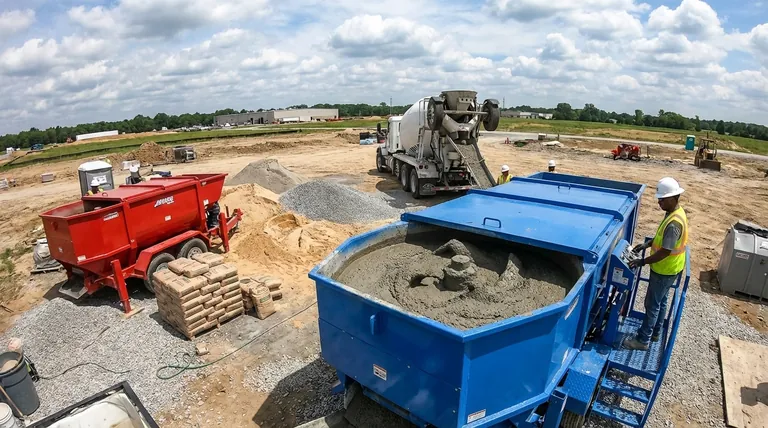
The volume of concrete being mixed directly impacts the time required. A larger batch needs more time for all the materials to be thoroughly combined. This is why the entire cycle to load a 6 cubic meter transit mixer at a batching plant can take 12 minutes, as it involves multiple batches and the entire loading sequence.
The Goal: Achieving a Homogeneous Mix
The true indicator of sufficient mixing is uniformity. A properly mixed batch of concrete will have a consistent, even color and texture. There should be no visible streaks of unmixed cement, no clumps of sand, and all aggregate particles should be evenly coated with cement paste.
Starting the Clock: When Does Mixing Begin?
A common point of confusion is when to start timing. The mixing time should only begin after all ingredients have been added to the mixer. Adding ingredients sequentially and starting the timer too early will result in under-mixed concrete.
Understanding the Trade-offs of Incorrect Mixing
The mixing duration is a critical control point in concrete production. Getting it wrong in either direction can significantly compromise the structural integrity of the final product.
The Dangers of Under-mixing
This is the most common mistake. If concrete is not mixed long enough, the water and cement paste will not be evenly distributed. This results in a non-uniform mixture with pockets of loose aggregate, leading to weak spots, high porosity, and a dramatic reduction in the final compressive strength.
The Problems with Over-mixing
Mixing for too long can also be detrimental. It can cause excessive breakdown of the aggregate particles, altering the properties of the mix. Over-mixing also introduces too much air into the concrete, which can decrease its strength. In warm weather, it can accelerate evaporation and hydration, reducing the concrete's workability or "slump."
How to Get the Right Mix for Your Project
Use the type of equipment and scale of your project as your primary guide for determining the correct mixing time.
- If you are using a portable drum mixer for a DIY project: Aim for 3-5 minutes after adding all materials, but rely on your eyes. Look for a uniform color and consistency before discharging the concrete.
- If you are managing a commercial site with a larger mixer: Strictly follow the manufacturer's specifications and the concrete mix design, as times can be as short as 2 minutes for efficient machines.
- If you are ordering ready-mix concrete: Trust the plant's automated and calibrated process, but be mindful of the total time from batching to pouring to manage the concrete's workability on site.
Ultimately, using time as a guideline and visual inspection as your confirmation is the key to producing strong, reliable concrete every time.
Summary Table:
| Factor | Impact on Mixing Time |
|---|---|
| Mixer Type | High-speed pan mixers: ~2 min; Portable drum mixers: 3-5 min |
| Batch Size | Larger batches require more time (e.g., ready-mix truck: 10+ min) |
| Mix Uniformity | Time ends when concrete has even color/texture (no streaks/clumps) |
Need a Reliable Concrete Mixer for Your Project?
Producing high-quality, durable concrete starts with the right equipment. Under-mixing or over-mixing can compromise strength and lead to costly failures.
GARLWAY specializes in construction machinery, offering durable and efficient concrete mixers and batching plants for construction companies and contractors globally. Our machines are engineered for optimal mixing performance, ensuring a homogeneous batch every time, which translates to:
- Maximized Compressive Strength: Achieve the structural integrity your project demands.
- Reduced Material Waste: Efficient mixing ensures every batch is consistent and usable.
- Enhanced On-Site Productivity: Save time with reliable equipment designed for your scale.
Let us help you build stronger. Contact our experts today to find the perfect concrete mixing solution for your specific needs!
Visual Guide
Related Products
- Portable Concrete Mixer Machine Equipment for Mixing Concrete
- Construction Products Concrete Plant Machine Mixing Concrete Mixer
- Portable Electric Concrete Mixer Machine for Cement Mixing
- JZC400 Mobile Small Concrete Mixer Cement Mixer Machine
- Hydraulic Concrete Mixer Machine Cement Mixing Equipment for Mixture Concrete
People Also Ask
- Why is it necessary to use a portable concrete mixer? Gain Total Control & Efficiency
- How much concrete can you pour with a portable mixer? Find the Perfect Fit for Your Project
- What types of projects are portable concrete mixers suitable for? Ideal for DIY & Small-Scale Construction
- How much does a portable concrete mixer hold? A Guide to Choosing the Right Capacity
- What types of portable concrete mixers exist? Find the Perfect Mixer for Your Project