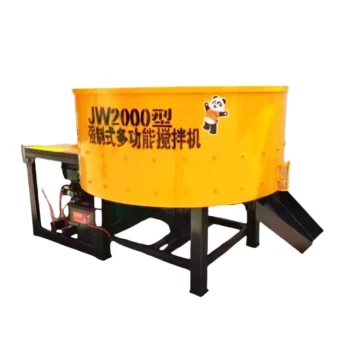
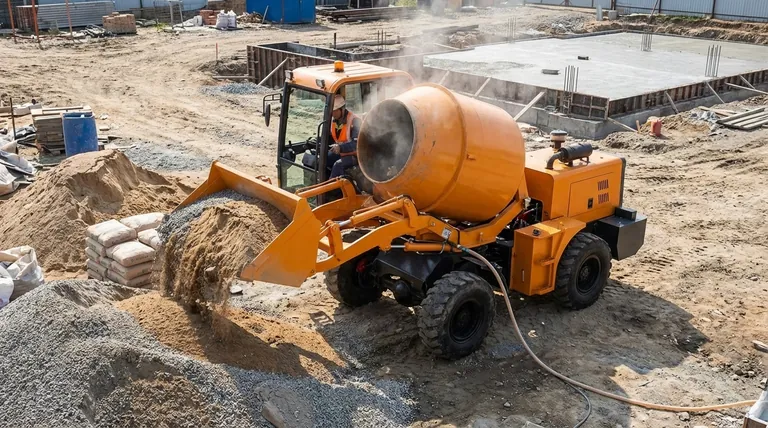
The mixing process in a self-loading concrete mixer is driven by the controlled rotation of its drum, which is equipped with internal spiral blades. These blades continuously lift, fold, and agitate the aggregates, cement, and water, forcing them into a consistent, homogeneous mixture. The entire process, from loading raw materials to discharging finished concrete, is managed by a single operator from an electronic control cabin.
The true advantage of a self-loading mixer isn't just its mixing method, but its complete integration of weighing, loading, mixing, and transport. It functions as a precise, mobile concrete batching plant, bringing production directly to the job site.
The Step-by-Step Operational Workflow
Understanding the mixing action requires looking at the entire sequence, as each step directly impacts the quality of the final product.
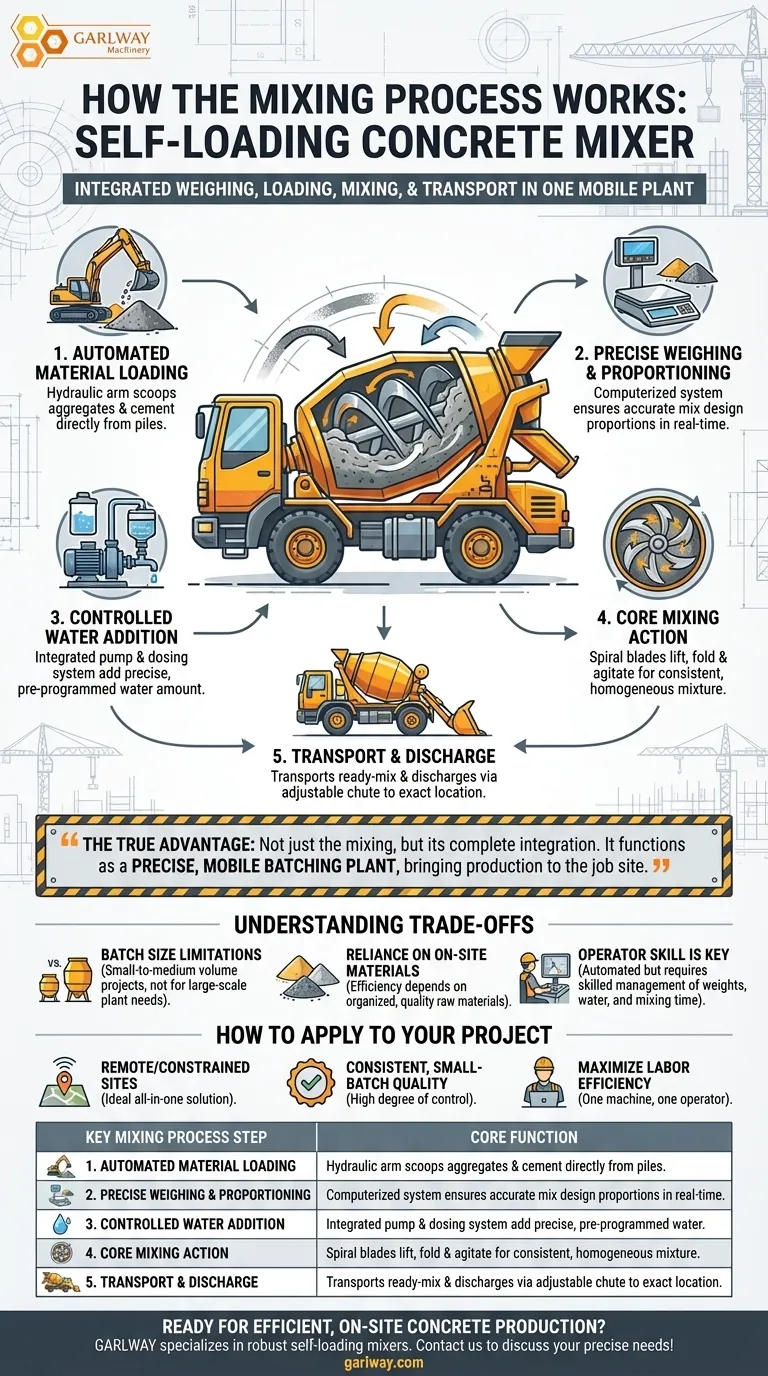
Step 1: Automated Material Loading
The process begins with the machine’s hydraulic loading arm and shovel. The operator scoops the required aggregates (sand, gravel) and cement directly from piles on the ground.
This self-loading capability eliminates the need for a separate wheel loader, streamlining the operation and reducing labor requirements.
Step 2: Precise Weighing and Proportioning
As materials are loaded into the bucket, a computerized, built-in weighing system measures their weight in real-time.
This is a critical step that ensures the correct proportions for the concrete mix design, providing a level of accuracy that is difficult to achieve manually.
Step 3: Controlled Water Addition
Once the dry materials are in the drum, water is added. This is not done by guesswork.
The mixer uses an integrated water pump and dosing system, allowing the operator to add a precise, pre-programmed amount of water to achieve the target water-cement ratio.
Step 4: The Core Mixing Action
With all ingredients loaded, the operator activates the mixing drum from the cabin. The vehicle's hydraulic system powers the drum's rotation at a controlled speed.
Inside, specially designed spiral blades continuously lift the materials from the bottom of the drum to the top, where they tumble back down. This constant folding and agitating action ensures every particle is evenly coated, creating a homogeneous mixture. This mixing can continue even while the vehicle is transporting the concrete.
Step 5: Transport and Discharge
The machine transports the ready-mix concrete to the exact point of use. To discharge, the operator uses an adjustable chute, which can often be swiveled and tilted for precise placement, minimizing waste and manual labor.
Understanding the Trade-offs
While highly efficient, the self-loading mixer's process has specific considerations.
Batch Size Limitations
Self-loading mixers are designed for small-to-medium volume projects. They cannot match the large batch capacity of a traditional transit mixer fed by a full-scale batching plant.
Reliance on On-Site Materials
The machine's efficiency depends on having well-organized piles of raw materials (sand, aggregate, cement) available on-site. The quality of these source materials directly affects the quality of the concrete.
Operator Skill is Key
While the system is highly automated, the final quality of the concrete mix still relies on a skilled operator. They are responsible for programming the correct weights, managing the water intake, and ensuring the proper mixing time is observed.
How to Apply This to Your Project
The effectiveness of the mixing process is tied directly to your project's goals.
- If your primary focus is remote or constrained sites: The all-in-one nature of the self-loading mixer is ideal, as it eliminates the need for a separate batching plant and multiple vehicles.
- If your primary focus is consistent, small-batch quality: The integrated weighing and water systems provide a high degree of control and repeatability for every batch.
- If your primary focus is maximizing labor efficiency: This single machine, operated by one person, replaces the need for a separate loader operator, mixer operator, and transport driver on smaller jobs.
Ultimately, the self-loading mixer's mixing process is a function of its integrated design, turning raw materials into quality concrete exactly where you need it.
Summary Table:
| Key Mixing Process Step | Core Function |
|---|---|
| Automated Loading | Hydraulic arm scoops aggregates and cement directly from ground piles. |
| Precise Weighing | Built-in computerized system ensures accurate material proportions. |
| Controlled Water Addition | Integrated pump adds a pre-programmed amount of water for consistency. |
| Core Mixing Action | Spiral blades lift and tumble materials for a homogeneous mixture. |
| Transport & Discharge | Vehicle transports and discharges concrete via an adjustable chute. |
Ready to bring efficient, on-site concrete production to your project?
GARLWAY specializes in construction machinery, offering robust self-loading concrete mixers for construction companies and contractors globally. Our machines integrate weighing, loading, mixing, and transport into one efficient operation, saving you time and labor costs on remote or constrained job sites.
Contact GARLWAY today to discuss how our self-loading mixers can provide the precise, high-quality concrete you need, right where you need it.
Visual Guide
Related Products
- Skid Steer Self Loading Concrete Mixers for Construction
- Belle Mixer Drum Self Loading Mortar Mixers JS3000
- Portable Cement Mixer with Lift Concrete Machine
- Portable Concrete Mixer Machine Equipment for Mixing Concrete
- Portable Ready Mix Concrete Mixer Equipment
People Also Ask
- How does the control system improve production efficiency in a self loading concrete mixer? Automate Mixing for Speed & Quality
- What is the purpose of keeping the drum rotating during transportation in a self loading concrete mixer? Ensure Quality & Consistency
- How does the weighing process work in a self loading concrete mixer? Achieve Precise, On-Site Concrete Batching
- What components are involved in the loading process of a self loading concrete mixer? A Guide to the Key Systems
- How should materials be loaded into a self-loading concrete mixer? Master the Step-by-Step Process