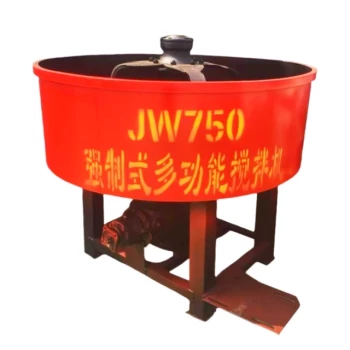
At its core, a flat-mouth design reduces concrete loss by creating a smoother, more controlled, and direct path for the material during discharge. This design minimizes the turbulence and spatter common with other systems, ensuring more concrete lands in the formwork and less is wasted on the ground.
The fundamental advantage of the flat-mouth design is not in the mixing, but in the final step of delivery. By minimizing the drop distance and turbulence, it transforms the discharge process from a potential point of waste into a highly efficient and clean transfer of material.
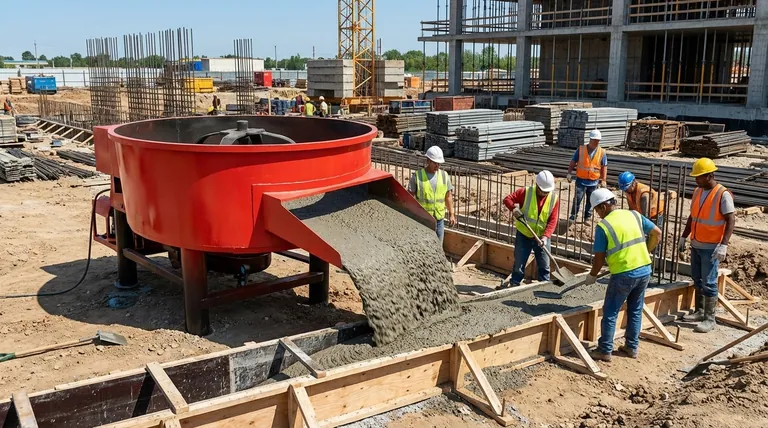
The Core Principle: Controlling the Flow Path
The benefits of the flat-mouth design stem from its physical geometry and how that influences the behavior of wet concrete. It addresses the common problems of spillage and imprecise placement.
Minimizing Turbulence and Spatter
A flat, wide opening allows concrete to flow out in a more uniform, sheet-like manner. This is often referred to as a more laminar flow.
Less turbulent flow means the concrete aggregate and paste are less likely to separate and splash upon exiting the mixer. This directly reduces the amount of material lost to spatter around the pour site.
Enabling a Smoother, Faster Discharge
The design's unconstricted opening allows for a smoother and faster discharge of material.
Because the flow is more efficient, the truck can empty its load more quickly. This reduces the time the truck spends at the pour site, improving overall work efficiency and allowing for tighter scheduling.
Improving Placement Accuracy
The shape of the flat mouth gives the operator better control to direct the concrete stream precisely.
This accuracy means less over-pouring and spillage around the edges of forms or footings. Less waste directly translates to improved concrete utilization and lower material costs.
The Impact on Overall Site Efficiency
While the design's primary benefit is reducing material loss, this has a cascading effect on other aspects of the construction project.
Better Material Utilization
By ensuring that nearly all the batched concrete is used as intended, the design directly improves your material yield.
This reduces the need to order excess concrete to account for spillage, leading to significant cost savings over the course of a project.
Reduced Cleanup Labor
Spilled concrete is not just a material loss; it requires significant labor to clean up, especially once it begins to harden.
A cleaner pour site means reduced cleanup costs and a safer working environment for the crew.
Understanding the Trade-offs
No design is perfect for every scenario. While highly efficient, the flat-mouth system has considerations you should be aware of.
Mix Consistency is Key
The design performs best with well-proportioned, flowable concrete mixes.
Extremely stiff, low-slump mixes or those with very large aggregate could potentially clog or discharge unevenly from a wide, flat opening compared to a more traditional rounded chute.
Less Versatility Than Articulated Chutes
A flat-mouth discharge is optimized for pouring directly below or near the truck.
It may offer less flexibility than a system with multiple articulated chute sections, which can be angled to navigate rebar or reach difficult-to-access areas far from the truck itself.
How to Apply This to Your Project
Your choice of equipment should always align with the specific demands of your job site and operational goals.
- If your primary focus is minimizing material waste and cleanup costs: The flat-mouth design is a superior choice, as its low-spillage discharge directly impacts your bottom line.
- If your primary focus is rapid cycle times: The combination of fast mixing and efficient discharge makes this system highly effective for projects where speed is critical.
- If you work in tight spaces or need precise, direct pours: The controlled flow of the flat-mouth design provides the accuracy needed for foundation work, slabs, and curbs.
Ultimately, selecting equipment based on its discharge mechanics is a critical step toward a more efficient, cost-effective, and cleaner construction site.
Summary Table:
| Benefit | How It Works |
|---|---|
| Reduces Spillage | Creates a laminar flow, minimizing turbulence and splatter. |
| Improves Accuracy | Allows for a controlled, direct pour into formwork. |
| Saves Time | Enables a faster, more efficient discharge cycle. |
| Cuts Costs | Lowers material waste and reduces cleanup labor. |
Ready to pour with precision and save on material costs?
GARLWAY specializes in construction machinery, offering advanced concrete mixers with flat-mouth discharge systems designed for construction companies and contractors who demand efficiency and cost-effectiveness. Our technology ensures more concrete lands where it should, directly improving your project's bottom line.
Contact GARLWAY today to discuss how our mixers can reduce waste and increase productivity on your next job.
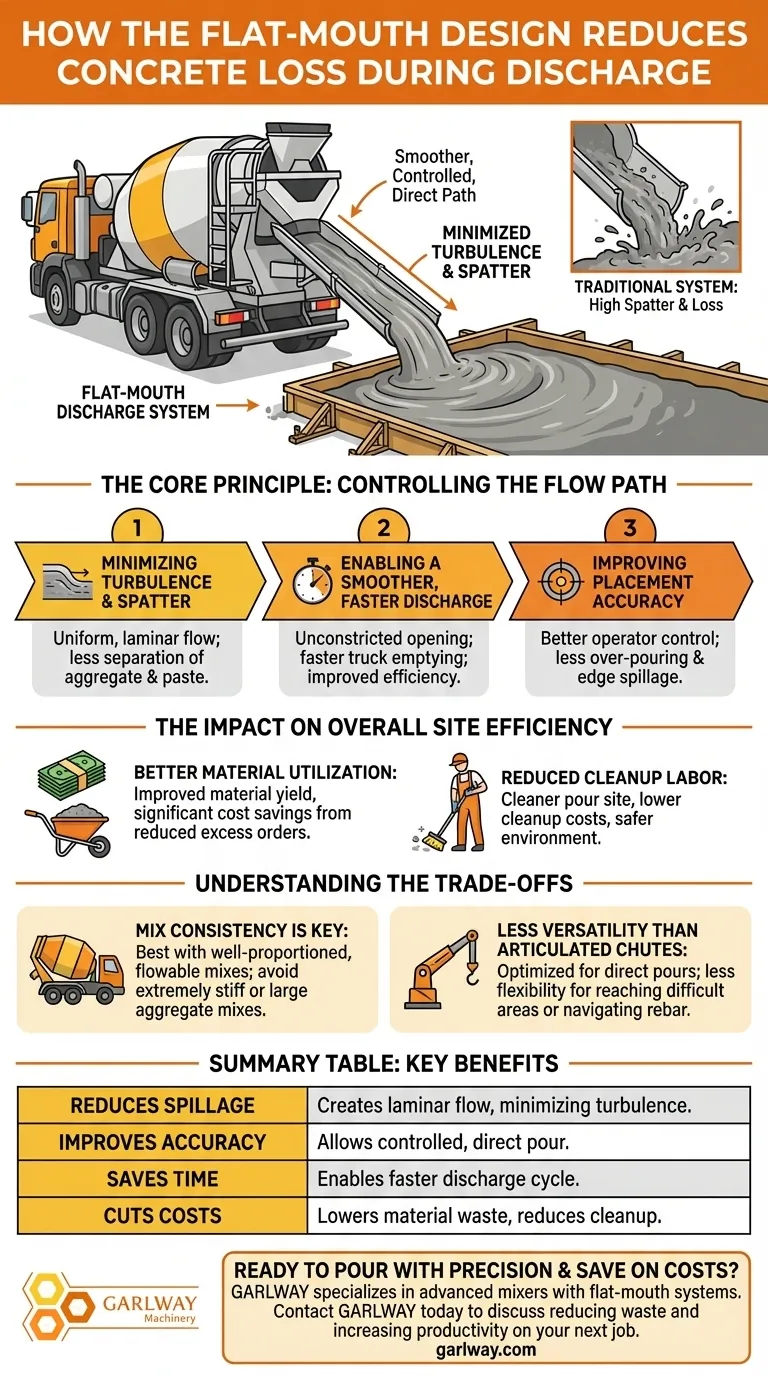
Visual Guide
Related Products
- JDC350 Small Cement Concrete Mortar Mixer
- HZS25 Best Cement Mixer for Quick Mix Concrete at Bunnings
- Portable Concrete Mixer Machine Equipment for Mixing Concrete
- Construction Products Concrete Plant Machine Mixing Concrete Mixer
- Harbor Freight JS1500 On Site Concrete Mixing Volumetric Cement Mixer
People Also Ask
- What are the primary uses of a small cement mixer? Boost Efficiency for Small to Medium Construction Jobs
- What are the physical benefits of using a small cement mixer? Reduce Strain and Prevent Injury
- What are the cost benefits of using a small cement mixer? Save on Labor, Materials & Time
- What makes small cement mixers easy and convenient to use? Boost Productivity on Any Job Site
- What factors should be considered before purchasing a small cement mixer? Find the Perfect Match for Your Project