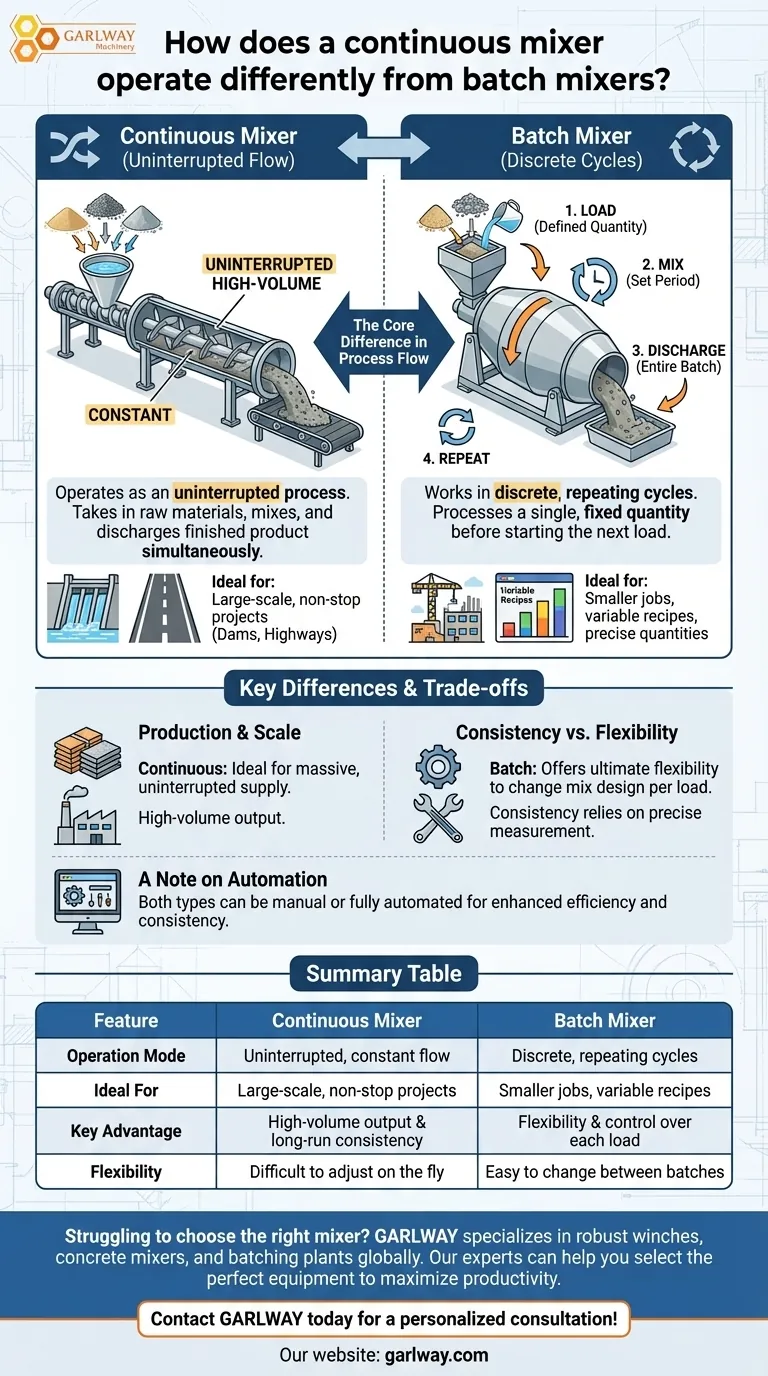
The fundamental difference is in their operational flow. A continuous mixer operates as an uninterrupted process, constantly taking in raw materials at one end and discharging a finished mixture from the other. In contrast, a batch mixer works in discrete, repeating cycles, processing a single, fixed quantity of material at a time before it can begin the next load.
The choice between a continuous and batch mixer is a strategic decision based on production scale. Continuous mixers are built for high-volume, non-stop production, while batch mixers offer the control and flexibility needed for defined quantities and variable recipes.
The Core Difference in Process Flow
The operational model of each mixer type directly dictates its best use case. Understanding this flow is key to selecting the right equipment for your goals.
The Continuous Flow Model
A continuous mixer functions like an assembly line. Raw materials are fed continuously into the mixing chamber, often using mechanisms like screw feeders.
The materials move through the chamber, are mixed, and then exit from a discharge point. The entire process—loading, mixing, and discharging—happens simultaneously and without interruption.
The Batch Cycle Model
A batch mixer operates in a distinct, sequential cycle. First, a specific, pre-measured quantity of materials is loaded into the mixer.
Next, the materials are mixed for a set period. Finally, the entire finished batch is discharged before the mixer is cleaned and the cycle can begin again with a new load.
How This Impacts Production and Scale
The difference in process flow creates significant distinctions in output volume, project suitability, and operational flexibility.
Uninterrupted, High-Volume Output
Because they run constantly, continuous mixers are ideal for large-scale projects that require a massive, uninterrupted supply of material.
This makes them the standard for applications like building dams, paving highways, or constructing large foundations for high-rise buildings where stopping the flow of concrete would be detrimental.
Precise, Defined Quantities
Batch mixers excel in situations where you need specific, measured quantities of a mix. This control over each individual load is essential for smaller construction jobs.
They also provide the flexibility to easily change the recipe from one batch to the next, which is impossible to do on the fly with a continuous system.
Understanding the Trade-offs
Neither system is inherently superior; they are simply designed for different objectives. Choosing the wrong one for your application can lead to significant inefficiency.
Consistency vs. Flexibility
A properly calibrated continuous mixer delivers exceptional consistency over a very long production run. However, it is inflexible and difficult to adjust once it's running.
A batch mixer offers ultimate flexibility, allowing you to alter the mix design for every single load. The trade-off is that consistency between separate batches depends entirely on precise measurement for each cycle.
A Note on Automation
It's important not to confuse the mixing process (continuous vs. batch) with the control system (manual vs. automatic).
Both batch and continuous mixers can be operated manually or be fully automated. Automation refers to using computer controls for precise measurement and operation, which can enhance the efficiency and consistency of either system.
Making the Right Choice for Your Project
Your decision should be guided by the primary demand of your operation.
- If your primary focus is large-scale, non-stop production: A continuous mixer is the clear choice for its high-volume, uninterrupted output.
- If your primary focus is control, flexibility, or smaller jobs: A batch mixer provides the necessary control over discrete quantities and allows for frequent changes in mix design.
- If your primary focus is absolute traceability for each specific load: The discrete nature of a batch mixer makes it easier to track and verify the precise contents of every quantity produced.
Ultimately, aligning the mixer's operational model with your project's scale and requirements is the key to efficient production.
Summary Table:
| Feature | Continuous Mixer | Batch Mixer |
|---|---|---|
| Operation Mode | Uninterrupted, constant flow | Discrete, repeating cycles |
| Ideal For | Large-scale, non-stop projects (e.g., dams, highways) | Smaller jobs, variable recipes, precise quantities |
| Key Advantage | High-volume output & long-run consistency | Flexibility & control over each load |
| Flexibility | Difficult to adjust mix on the fly | Easy to change mix design between batches |
Struggling to choose the right mixer for your project's scale?
GARLWAY specializes in construction machinery, providing robust winches, concrete mixers, and concrete batching plants for construction companies and contractors globally. Whether you need the high-volume efficiency of a continuous system or the precise control of a batch mixer, our experts can help you select the perfect equipment to maximize your productivity and profitability.
Contact GARLWAY today for a personalized consultation and discover the right mixing solution for your business needs!
Visual Guide
Related Products
- JS1000 Volumetric Concrete Mortar Mixer for Sale Skid Steer Cement Mixer
- Portable Concrete Mixer Machine Equipment for Mixing Concrete
- Portable Cement Mixer with Lift Concrete Machine
- JDY350 Electric Hydraulic Mortar Mud Concrete Mixer
- Portable Electric Concrete Mixer Machine for Cement Mixing
People Also Ask
- What is the basic working principle of volumetric concrete mixers? On-Demand Mixing for Zero Waste
- What are the advantages of using volumetric mixers for small concrete jobs? Save Costs and Gain On-Site Control
- What are the advantages of volumetric concrete mixers compared to drum mixers? Achieve On-Demand Mixing & Zero Waste
- What are some innovations in volumetric concrete mixers? Boost Efficiency with On-Demand Production
- Why do volumetric mixers provide better ROI? Maximize Profit with On-Demand Concrete Production