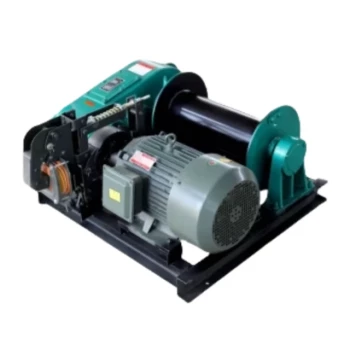
The fundamental load capacity advantage of hydraulic winches is their ability to pull exceptionally heavy loads continuously without the risk of overheating. This power is derived directly from a running vehicle's engine via a hydraulic pump, providing a consistent and formidable source of energy that far exceeds the capabilities of battery-dependent electric winches.
The core distinction is not just about peak pulling power, but about sustainable power delivery. While electric winches are excellent for intermittent pulls, hydraulic winches are engineered for the relentless, heavy-duty work common in industrial, recovery, and military applications.
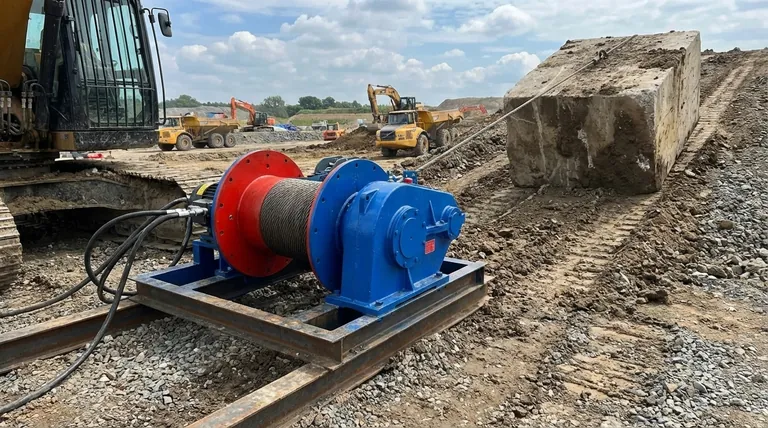
The Source of Unmatched Power
Understanding why hydraulic winches excel under extreme loads requires looking at their power source and operational design. Their strength is not a single feature but the result of a robust, integrated system.
The Principle of Hydraulic Force
A hydraulic winch is powered by a hydraulic pump, which is typically driven by the vehicle's engine. This system uses pressurized fluid to generate immense mechanical force, allowing for a steady and powerful pull that is limited only by the engine's output and the winch's structural integrity.
In contrast, an electric winch draws a massive amperage from a battery. This creates a finite power source that depletes and can cause the motor to fail under prolonged strain.
Continuous Duty Cycle
The most critical advantage for heavy loads is a near-100% duty cycle. Because the hydraulic fluid cools the system as it operates, a hydraulic winch can run continuously under full load for extended periods.
Electric winches generate significant heat and require cool-down periods. Attempting long, heavy pulls with an electric winch risks severe overheating, which can permanently damage the motor and lead to catastrophic failure.
Superior Power Density
Hydraulic systems offer an exceptional power-to-weight ratio. This means that for a given size and weight, a hydraulic winch can typically deliver significantly more pulling force than its electric counterpart, making it ideal for applications where space is limited but power cannot be compromised.
Beyond Raw Strength: Control and Reliability
Massive load capacity is useless without the ability to manage it safely and reliably. Hydraulic systems provide inherent advantages in both of these areas, especially when conditions are unforgiving.
Precision Under Extreme Load
Hydraulic power delivery is exceptionally smooth. This allows for precise, fractional control over line speed and tension, which is critical when maneuvering massive, unstable, or delicate loads where jerky movements could be disastrous.
Inherent Durability
Hydraulic winches are sealed systems, making them highly resistant to water, mud, and dust. This inherent robustness ensures they remain reliable in the harsh environments—construction sites, mining operations, and marine settings—where their power is most needed.
Integrated Safety Mechanisms
Most hydraulic systems incorporate fail-safes like pressure relief valves. These valves automatically prevent the winch from being overloaded beyond its specified capacity, protecting the equipment, the vehicle, and the operator from mechanical failure.
Understanding the Trade-offs
The immense power of hydraulic winches comes with specific requirements and limitations that make them unsuitable for every situation. Objectivity demands acknowledging these trade-offs.
Dependency on the Engine
A hydraulic winch will not operate unless the vehicle's engine is running to power the hydraulic pump. If the engine fails, the winch is inoperable, unlike an electric winch that can run off battery power alone.
Installation Complexity and Cost
Installing a hydraulic winch is a complex task. It requires tapping into the vehicle's power steering system or installing a dedicated pump, along with running high-pressure hydraulic lines. This process is significantly more involved and costly than wiring an electric winch to a battery.
Slower Line Speed
Generally, hydraulic winches have a slower line speed than electric winches. While this can be a drawback for speed-critical tasks, it is often a deliberate feature that enhances control and safety during heavy, methodical pulls.
Making the Right Choice for Your Application
Selecting the correct winch type is about matching the tool to the true demands of the job, not just the maximum anticipated load.
- If your primary focus is extreme, continuous loads: A hydraulic winch is the only reliable choice for applications like heavy vehicle recovery, industrial rigging, or commercial towing.
- If your primary focus is intermittent, moderate loads: An electric winch is more practical and cost-effective for recreational off-roading or occasional farm and utility use.
- If your primary focus is operational safety under heavy strain: A hydraulic winch's precise control, continuous duty cycle, and built-in fail-safes provide a superior margin of safety.
Ultimately, choosing a hydraulic winch is a decision to prioritize unwavering power and reliability for the most demanding tasks.
Summary Table:
| Key Advantage | Why It Matters for Load Capacity |
|---|---|
| Continuous Duty Cycle | Can pull heavy loads non-stop without overheating, unlike electric winches. |
| Power from Vehicle Engine | Provides immense, sustained force directly from the engine's power. |
| Superior Power Density | Delivers more pulling force for its size and weight compared to electric winches. |
| Precision Control | Enables smooth, safe handling of heavy, unstable, or delicate loads. |
| Inherent Durability | Sealed system is resistant to harsh environments like construction sites and mines. |
Ready to tackle your most demanding projects with unwavering power?
For construction companies and contractors who rely on equipment that won't quit under extreme loads, the right winch is critical. GARLWAY specializes in robust construction machinery, including hydraulic winches, concrete mixers, and batching plants, engineered for the toughest global job sites.
Let us help you equip your fleet with the reliable power it needs. Contact GARLWAY today to discuss your specific requirements and discover how our heavy-duty solutions can enhance your operational safety and efficiency.
Visual Guide

Related Products
- Hydraulic Winding Engine Harbor Freight Winch
- Electric and Hydraulic Winch for Heavy Duty Applications
- Small Electric Winch 120V and 240V for Compact Applications
- Electric 120V Boat Winch by Badlands
- 12000 lb Electric Boat Trailer Winch with Windlass Anchor Warn
People Also Ask
- What role does hydraulic fluid play in hydraulic winches? It's the Lifeblood of Your Heavy-Duty Pulling Power
- What vehicles commonly use hydraulic winches? For Industrial Trucks Needing Unmatched Power
- What are the features of hydraulic winches? Unmatched Power and Continuous Duty for Heavy Loads
- What preventive measures can be taken to avoid oil leakage in hydraulic winches? Ensure Long-Term Reliability
- What does 'power out' mean in a hydraulic winch? Achieve Absolute Control When Lowering Heavy Loads