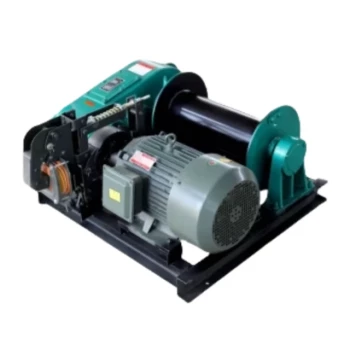
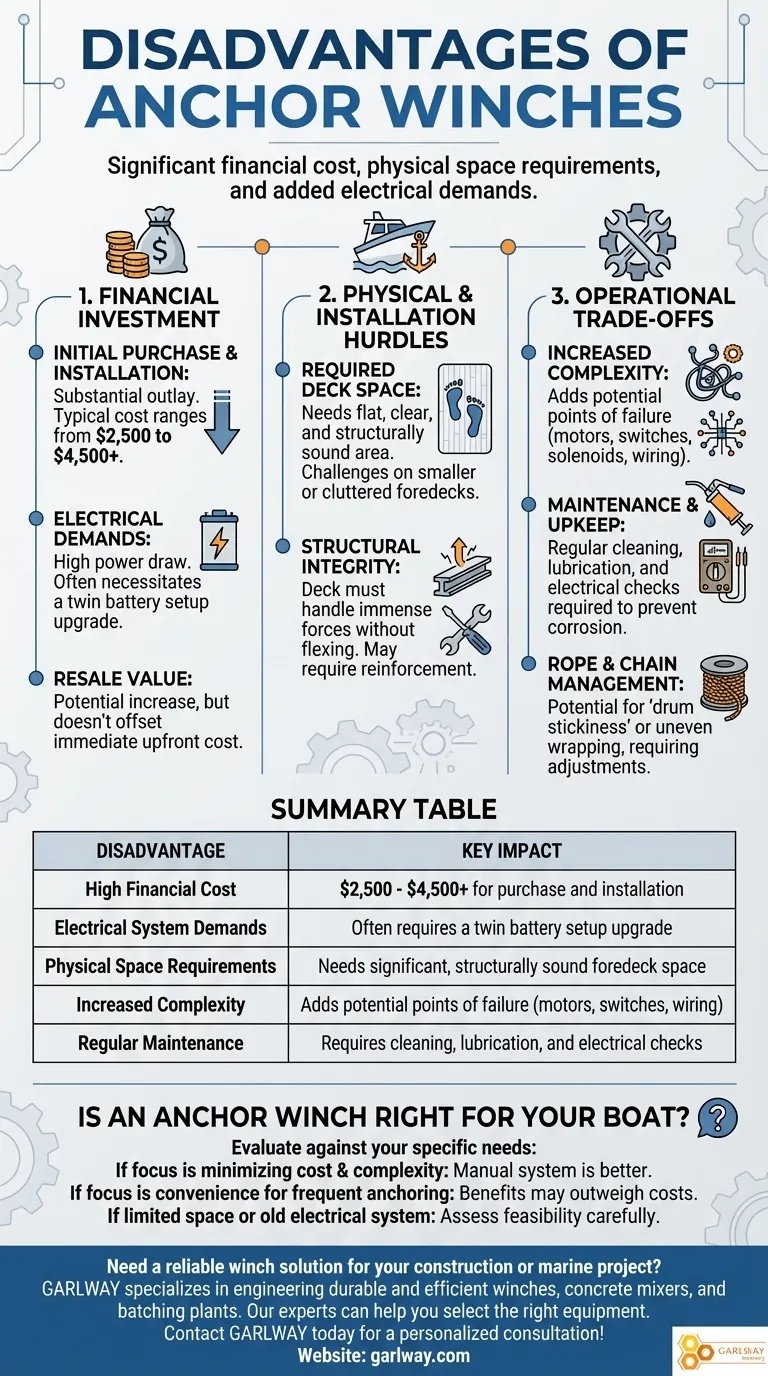
The primary disadvantages of an anchor winch are its significant financial cost, the physical space it requires on the foredeck, and the added electrical system demands it places on your boat. These factors introduce a layer of cost and complexity that may not be suitable for every vessel or boater.
While an anchor winch offers undeniable convenience, that convenience comes at a price. The core disadvantages are not just the upfront cost, but also the potential for installation challenges and increased maintenance compared to a simple manual setup.
The Financial Investment: More Than Just the Sticker Price
An anchor winch is a significant upgrade, and its cost extends beyond the unit itself. Understanding the full financial picture is crucial before making a commitment.
Initial Purchase and Installation
A professionally installed anchor winch can represent a substantial outlay. The typical cost ranges from $2,500 to $4,500, depending on the model and the complexity of the installation.
Electrical System Demands
Electric winches draw a large amount of power. This often necessitates upgrading your boat's electrical system, most commonly by adding a twin battery setup to handle the load without draining your primary starting battery.
The Resale Value Argument
While a notable expense, it's worth noting that a properly installed anchor winch can increase your boat's resale value. This may help offset the initial investment over the long term, but it does not reduce the immediate upfront cost.
Physical Constraints and Installation Hurdles
Not every boat is an ideal candidate for an anchor winch. The physical requirements can be a significant limiting factor.
Required Deck Space
A winch requires a flat, clear, and structurally sound area on the foredeck for mounting. On smaller boats or vessels with cluttered bow designs, finding adequate space can be a primary obstacle.
Structural Integrity
The forces exerted by an anchor winch during retrieval are immense. The deck must be strong enough to handle this load without flexing or sustaining damage, which can sometimes require reinforcing the mounting area.
Understanding the Operational Trade-offs
Moving from a manual system to an automated one introduces new complexities and potential points of failure.
Increased System Complexity
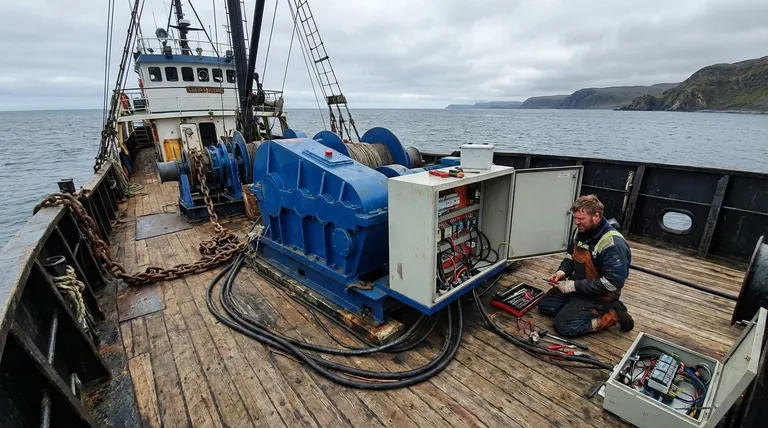
A manual anchor is simple: an anchor, a rope or chain, and your own power. A winch adds electric motors, switches, solenoids, and wiring, all of which can potentially fail and require troubleshooting.
Maintenance and Upkeep
Unlike a simple anchor rode, a winch has moving parts that require regular maintenance. This includes cleaning, lubricating, and checking electrical connections to prevent corrosion and ensure reliable operation.
Rope and Chain Management
Automated systems are not always flawless. Issues like "drum stickiness" can occur, where the rope does not wrap evenly. This sometimes requires adjustments, such as modifying the length of your rope or chain, to ensure smooth operation.
Is an Anchor Winch Right for Your Boat?
Evaluating these disadvantages against your specific needs will determine if the investment is worthwhile.
- If your primary focus is minimizing cost and complexity: A winch is likely an unnecessary expense, and the simplicity of a manual system is a better fit.
- If your primary focus is convenience for frequent anchoring: The benefits will almost certainly outweigh the costs, provided you have the budget and space for a quality installation.
- If you have limited foredeck space or an older electrical system: You must carefully assess the feasibility and hidden costs of necessary upgrades before proceeding.
Ultimately, choosing an anchor winch is a decision of balancing its significant convenience against the concrete costs of purchase, installation, and maintenance.
Summary Table:
| Disadvantage | Key Impact |
|---|---|
| High Financial Cost | $2,500 - $4,500+ for purchase and installation |
| Electrical System Demands | Often requires a twin battery setup upgrade |
| Physical Space Requirements | Needs significant, structurally sound foredeck space |
| Increased Complexity | Adds potential points of failure (motors, switches, wiring) |
| Regular Maintenance | Requires cleaning, lubrication, and electrical checks |
Need a reliable winch solution for your construction or marine project?
At GARLWAY, we specialize in engineering durable and efficient winches, concrete mixers, and batching plants for construction companies and contractors worldwide. Our experts can help you select the right equipment to meet your project's demands and budget, ensuring a smooth and cost-effective operation.
Contact GARLWAY today for a personalized consultation and discover how our machinery can power your success!
Visual Guide
Related Products
- 12000 lb Electric Boat Trailer Winch with Windlass Anchor Warn
- Electric Hoist Winch Boat Anchor Windlass for Marine Applications
- Best 18000 Pound Drum Anchor Trailer Winch
- Heavy Duty Electric Boat Winch Windlass Anchor
- Warn Winch Windlass Boat Trailer Winch
People Also Ask
- How does an electric boat trailer winch differ from a manual one? Effort vs. Control Explained
- What size winch do I need for my boat? Get the Right Capacity for Safe Hauling
- How should a boat trailer winch be properly used? A Step-by-Step Guide for Safe Loading
- What maintenance steps are specific to boat trailer winches? Ensure Safety & Reliability at the Ramp
- How strong of a winch do I need for my boat? Get the Right Pulling Power for Trailering & Anchoring