Improving your anchor retrieval process is achieved by ensuring your system is mechanically sound and by providing clear visual cues. The three most impactful adjustments involve perfecting the alignment of your winch drum, using a swivel to prevent rope twist, and adding markers to your anchor line to signal its approach.
The core principle is that a smooth retrieval is not a matter of power, but of precision. A correctly configured system where each component works in harmony prevents the common frustrations of jamming, twisting, and shock loading.
The Foundation: Correct Winch and Roller Alignment
Proper alignment is the single most important factor for a reliable drum anchor winch. It is the foundation upon which a smooth retrieval process is built.
Why Perpendicular Alignment is Critical
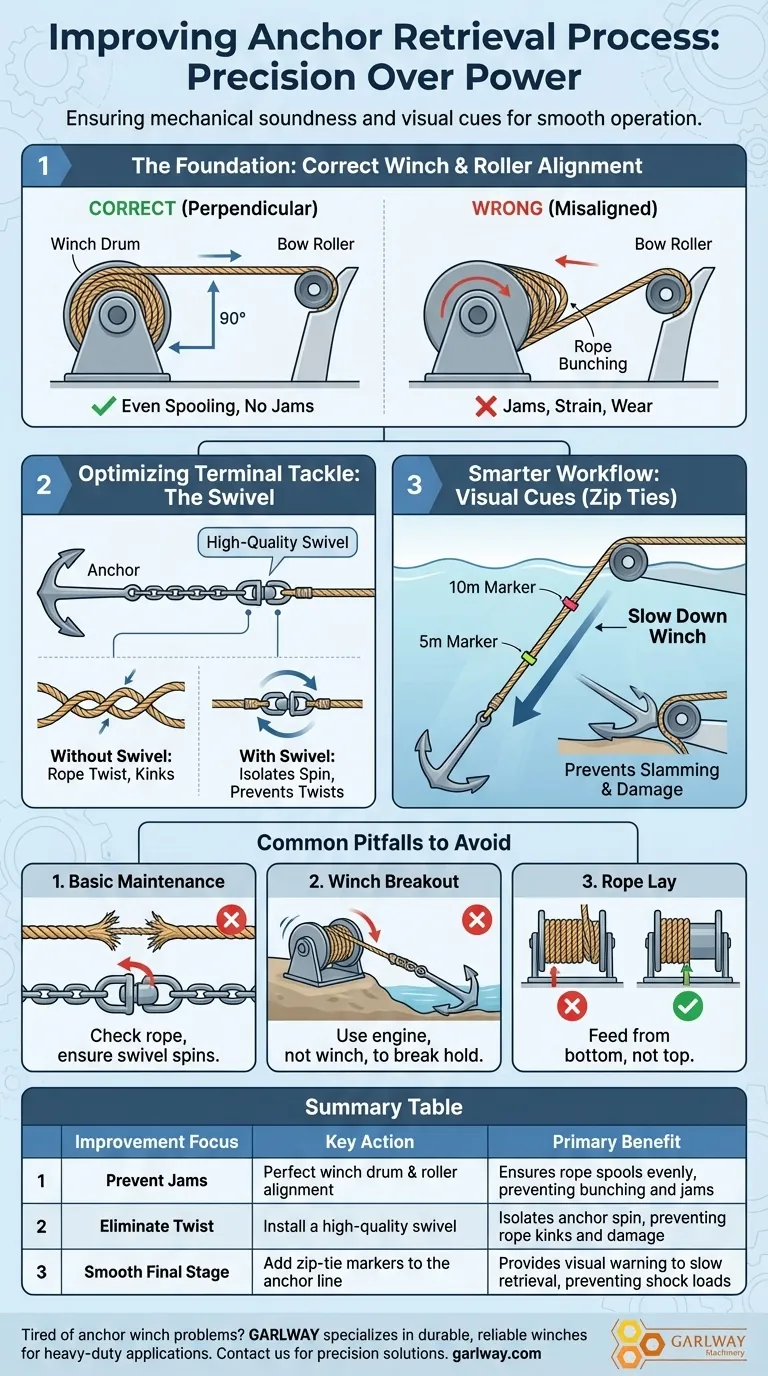
The drum of your winch must be perfectly perpendicular to your final bow roller or guide.
This precise 90-degree angle ensures the anchor rope lays evenly across the full width of the drum as it's retrieved. Think of it like the line guide on a fishing reel moving back and forth.
The Consequence of Misalignment
If the alignment is off, the rope will "bunch up" on one side of the drum. This creates an uneven, cone-shaped pile that can lead to severe jams, increased strain on the winch motor, and premature wear on the rope.
Optimizing Your Terminal Tackle
The connection point between your anchor and your rope is a common source of retrieval problems. A small, inexpensive component can eliminate the primary cause of these issues.
The Role of the Swivel
A high-quality swivel installed between the anchor shank and the chain or rope is essential. As the anchor is lifted, it will often spin in the water.
Without a swivel, this rotational force travels directly up the rope, causing it to twist and kink. The swivel allows the anchor to spin independently, isolating that motion from the line.
How Rope Twist Cripples Your System
A twisted rope becomes stiff and unmanageable. It will not spool correctly onto the drum, often catching on itself and creating tangles that can halt the retrieval process entirely. Over time, this twisting action also weakens the rope fibers.
Creating a Smarter Retrieval Workflow
Mechanical perfection is only half the battle. Improving your own process with simple indicators can prevent damage and make the final stage of retrieval much smoother.
Using Visual Cues: The Zip Tie Method
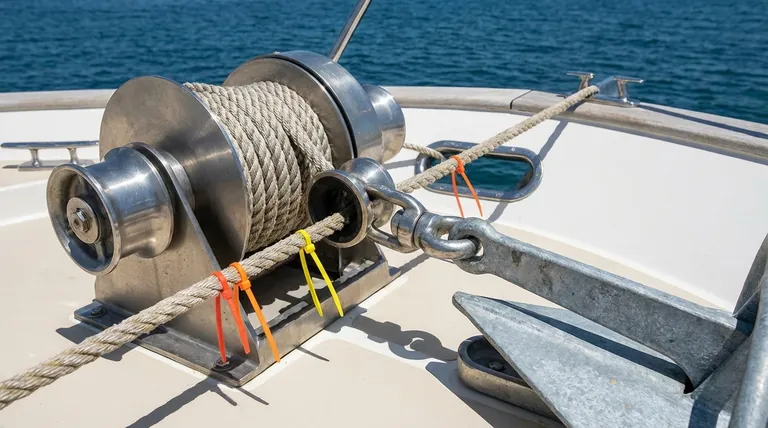
Attach several brightly colored zip ties to your anchor rope at set intervals, such as 10 and 5 meters from the anchor.
As the rope comes in, these markers provide an unmissable visual signal that the anchor is about to reach the surface and contact the bow roller.
The Benefit of Advance Warning
This simple warning system allows you to slow down the winch for the final few meters. It prevents the anchor from slamming into the bowsprit, which can damage the anchor, the roller, the winch, and the vessel's gelcoat.
Common Pitfalls to Avoid
Even with a well-configured system, poor practices can undermine performance. Avoiding these common mistakes is crucial for long-term reliability.
Forgetting Basic Maintenance
Periodically check your rope for frays or damage, especially in the first 20 meters. Ensure your swivel is free-spinning and not seized with salt or corrosion.
Using the Winch to Breakout the Anchor
Your anchor winch is designed for lifting, not for pulling your boat or breaking the anchor free from a stubborn bottom. Use your boat's engine to motor forward and gently break the anchor's hold before beginning retrieval.
Ignoring the Rope Lay
Always ensure the rope is feeding onto the drum from the bottom, not the top. This uses the geometry of the winch to help guide the rope and ensure it spools tightly and evenly.
How to Apply This to Your Vessel
Your immediate actions should be guided by the specific problems you are experiencing.
- If your primary focus is preventing frustrating jams: Confirm your winch drum is perfectly perpendicular to your bow roller, as this is the leading cause of uneven spooling.
- If your primary focus is extending the life of your equipment: Install a quality swivel and use visual markers to prevent shock loading your system at the end of each retrieval.
By treating your anchoring system with mechanical precision, you transform a potentially stressful task into a smooth and reliable operation.
Summary Table:
| Improvement Focus | Key Action | Primary Benefit |
|---|---|---|
| Prevent Jams | Perfect winch drum & roller alignment | Ensures rope spools evenly, preventing bunching and jams |
| Eliminate Twist | Install a high-quality swivel | Isolates anchor spin, preventing rope kinks and damage |
| Smooth Final Stage | Add zip-tie markers to the anchor line | Provides visual warning to slow retrieval, preventing shock loads |
Tired of anchor winch problems disrupting your operations? GARLWAY specializes in durable and reliable construction machinery, including winches designed for heavy-duty applications. Our expertise ensures your equipment is configured for precision and longevity. Contact GARLWAY today to discuss how our winches and solutions can bring smooth, reliable performance to your construction or marine projects.
Visual Guide
Related Products
- Electric Hoist Winch Boat Anchor Windlass for Marine Applications
- 12000 lb Electric Boat Trailer Winch with Windlass Anchor Warn
- Best 18000 Pound Drum Anchor Trailer Winch
- Heavy Duty Electric Boat Winch Windlass Anchor
- Portable Small Trailer Winch
People Also Ask
- How does an electric anchor winch work? Power, Safety, and Reliable Operation Explained
- What are the advantages of installing an electric anchor winch on a boat? Boost Safety & Ease for Boaters
- What are the operational differences between electric hoists and winches? A Guide to Safe Lifting vs. Pulling
- What are the main benefits of a boat anchor winch? Boost Safety & Efficiency for Your Vessel
- How does a boat anchor winch work? A Guide to Reliable Anchor Handling