
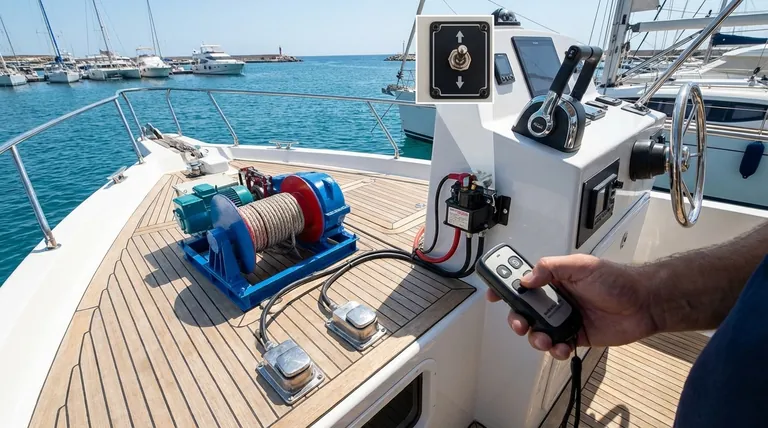
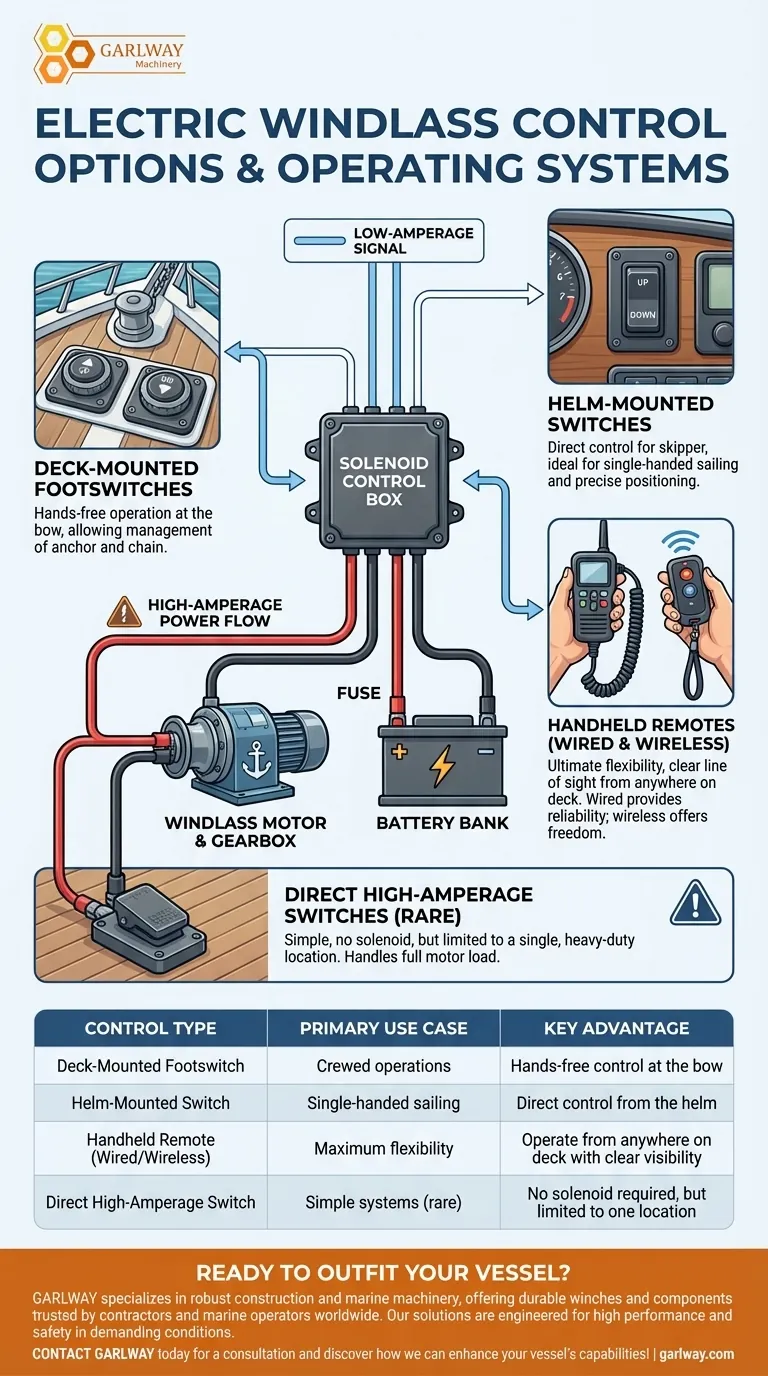
The primary control options for an electric windlass are remarkably flexible, ranging from simple footswitches at the bow to toggle switches at the helm, and even handheld wireless remotes. The vast majority of modern installations use a solenoid control box, which acts as a relay, enabling the use of multiple, convenient, low-amperage switches to manage the high-power motor.
The key to understanding your windlass control options lies with the solenoid control box. This component allows for a versatile and safe system with multiple control points; without it, you are restricted to a single, heavy-duty switch that must handle the motor's entire electrical load.
The Core Component: The Solenoid Control Box
A windlass motor is a high-demand piece of equipment. It can easily draw over 80 amps at 12 volts, requiring heavy-duty electrical components to operate safely.
How a Solenoid Works
A solenoid is essentially a remote-controlled, high-power switch. Your control panel—be it a footswitch or a helm toggle—sends a small, low-amperage electrical signal to the solenoid.
This signal activates an electromagnet inside the solenoid, which closes a heavy-duty internal contact. This action completes the main circuit, allowing the high-amperage current from the battery to flow directly to the windlass motor.
Why It Enables Flexibility
Because your switches only handle the small signal current, they can be smaller, more affordable, and wired with much lighter gauge wire. This makes it simple and safe to install multiple control stations in parallel around your boat.
A Breakdown of Common Control Types
With a solenoid-based system, you can mix and match controls to fit your specific needs. Each type offers distinct advantages for different anchoring situations.
Deck-Mounted Footswitches
These are rugged, waterproof switches typically installed on the foredeck near the windlass. They allow for hands-free operation, letting you manage the anchor and chain with both hands while controlling the windlass with your foot.
Helm-Mounted Switches
An up/down toggle or rocker switch at the helm provides the skipper with direct control over anchoring and retrieval. This is invaluable for single-handed operation or when precise boat positioning over the anchor is required.
Handheld Remotes (Wired and Wireless)
Remotes offer the ultimate flexibility, allowing you to operate the windlass from anywhere on deck. This gives you a clear line of sight to the anchor, chain, and any potential obstacles.
Wireless remotes provide maximum freedom of movement, while plug-in wired versions offer the reliability of a physical connection without the need for batteries.
Direct High-Amperage Switches
In the rare case a system does not use a solenoid, a single, extremely robust switch is required. This is almost always a heavy-duty footswitch designed to handle the full 80+ amp load of the motor directly. This setup is electrically simpler but offers no flexibility for additional control stations.
Understanding the Trade-offs and Safety
Choosing the right control system involves balancing convenience with the realities of a high-power electrical system.
The Critical Electrical Load
An electric windlass drawing 1000 watts or more is a significant electrical load. This necessitates not only a robust control system but also heavy-gauge power cables (35-50 mm²) running to the windlass or a dedicated battery bank in the bow.
Combining Controls for Maximum Utility
The most effective setups often combine multiple control types. A common and highly functional configuration includes an up/down switch at the helm for the captain and a pair of footswitches at the bow for the crew.
Essential Safety Features
Regardless of the control type, ensure your system includes safety features. An emergency stop is critical, and many modern controls integrate this function. Proper circuit protection with a high-amperage circuit breaker or fuse located near the battery is non-negotiable for protecting the motor and wiring.
Making the Right Choice for Your Boat
Your decision should be based on how you operate your vessel.
- If your primary focus is single-handed sailing: A reliable helm-mounted switch is essential, often supplemented by a wireless remote for visibility at the bow.
- If your primary focus is crewed cruising: A combination of a helm switch and bow-mounted footswitches provides the most flexibility for a coordinated anchoring process.
- If your primary focus is maximum visibility and flexibility: A wireless remote, often with an integrated chain counter, gives you complete freedom to manage the anchor from the best vantage point.
By understanding how these components work together, you can design a windlass control system that is safe, reliable, and perfectly suited to how you use your vessel.
Summary Table:
| Control Type | Primary Use Case | Key Advantage |
|---|---|---|
| Deck-Mounted Footswitch | Crewed operations | Hands-free control at the bow |
| Helm-Mounted Switch | Single-handed sailing | Direct control from the helm |
| Handheld Remote (Wired/Wireless) | Maximum flexibility | Operate from anywhere on deck with clear visibility |
| Direct High-Amperage Switch | Simple systems (rare) | No solenoid required, but limited to one location |
Ready to outfit your vessel with a reliable, professional-grade electric windlass system?
GARLWAY specializes in robust construction and marine machinery, offering durable winches and components trusted by contractors and marine operators worldwide. Our solutions are engineered for high performance and safety in demanding conditions.
Let our experts help you select or customize the perfect control system for your needs. Contact GARLWAY today for a consultation and discover how we can enhance your vessel's capabilities!
Visual Guide
Related Products
- Electric Hoist Winch Boat Anchor Windlass for Marine Applications
- Heavy Duty Electric Boat Winch Windlass Anchor
- 12000 lb Electric Boat Trailer Winch with Windlass Anchor Warn
- Quick Windlass Portable Winch for Truck and Boat Best Boat Winch
- Warn Winch Windlass Boat Trailer Winch
People Also Ask
- How does an electric anchor winch work? Power, Safety, and Reliable Operation Explained
- What are the advantages of installing an electric anchor winch on a boat? Boost Safety & Ease for Boaters
- What are the operational differences between electric hoists and winches? A Guide to Safe Lifting vs. Pulling
- What are the main benefits of a boat anchor winch? Boost Safety & Efficiency for Your Vessel
- How does a boat anchor winch work? A Guide to Reliable Anchor Handling


