
At their core, winches in waste management are specialized hydraulic systems integrated into garbage trucks to provide the necessary power for lifting and maneuvering heavy commercial waste containers. They are a critical tool for handling refuse that is too heavy or awkwardly positioned for standard lifting mechanisms.
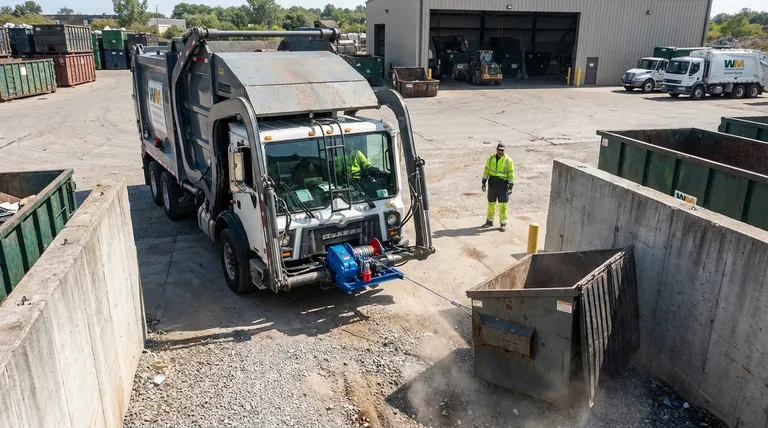
The primary role of a winch in the waste and refuse industry is to provide a safe, powerful, and reliable method for pulling and positioning heavy dumpsters, solving logistical challenges that a truck's primary collection system cannot handle alone.
The Operational Need for Winches
In waste management, efficiency and safety are paramount. While the main hydraulic arms on front-loader or side-loader trucks handle the majority of containers, certain situations demand the raw pulling power and flexibility of a winch.
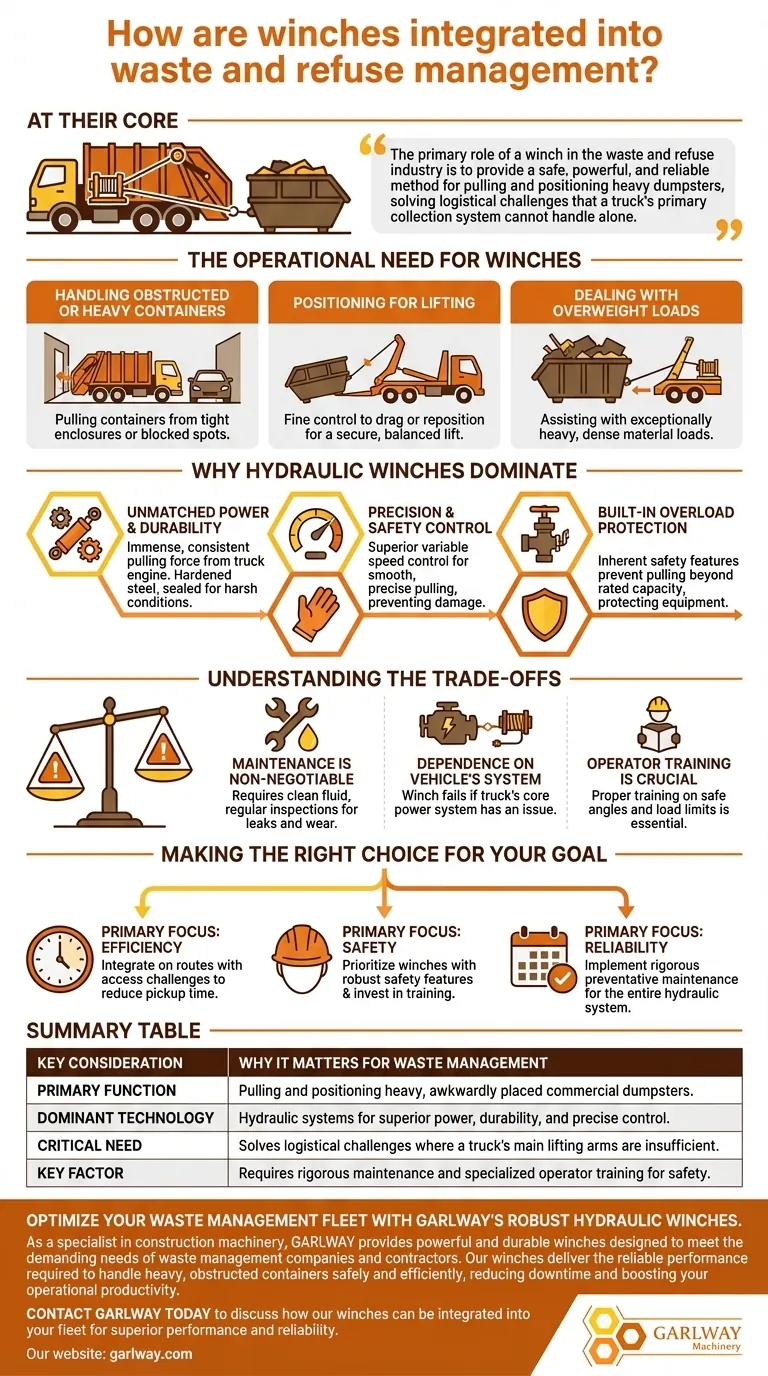
Handling Obstructed or Heavy Containers
A common challenge is a commercial dumpster placed in a tight enclosure or blocked by a parked vehicle. A winch allows the operator to pull the container out to a clear position where the truck's primary lifting arms can safely engage it.
Positioning for Lifting
Sometimes, a container is not perfectly aligned for the truck's forks. The winch provides the fine control needed to drag or reposition the bin by a few feet, ensuring a secure and balanced lift.
Dealing with Overweight Loads
Occasionally, a container is exceptionally heavy due to improper disposal of dense materials like construction debris. A winch can assist in dragging the container into a better position or helping to manage the initial load.
Why Hydraulic Winches Dominate
The waste management environment is demanding, requiring equipment that is both powerful and resilient. Hydraulic winches are the industry standard for specific, well-founded reasons.
Unmatched Power and Durability
Hydraulic systems tap into the truck's own engine power, generating immense and consistent pulling force. They are designed with hardened steel components and sealed mechanisms to withstand the constant exposure to dirt, grime, and harsh weather.
Precision and Safety Control
Unlike electric winches that can have a more binary on/off operation, hydraulic systems offer superior variable speed control. This allows the operator to pull a heavy, multi-ton container with precision, preventing sudden jerks that could damage the container, the truck, or surrounding property.
Built-in Overload Protection
Hydraulic systems have inherent safety features, such as pressure relief valves. These valves prevent the winch from attempting to pull a load beyond its rated capacity, protecting the equipment and the operator from mechanical failure.
Understanding the Trade-offs
While essential, integrating and maintaining hydraulic winches requires careful consideration. They are not a "fit and forget" solution and come with specific operational demands.
Maintenance is Non-Negotiable
Hydraulic systems rely on clean, high-pressure fluid. Hoses, fittings, and seals are points of potential failure. Regular inspections for leaks and wear are critical to prevent on-site failures and costly environmental cleanups from hydraulic fluid spills.
Dependence on the Vehicle's System
The winch is entirely dependent on the truck's engine and hydraulic pump. Any issue with the truck's core power system will render the winch inoperable, creating a single point of failure.
Operator Training is Crucial
The power of a hydraulic winch introduces significant risk if used improperly. Proper training on safe pulling angles, load assessment, and a clear understanding of the equipment's limits is essential to prevent accidents.
Making the Right Choice for Your Goal
Selecting and managing winches in a waste fleet depends on your primary operational priority.
- If your primary focus is operational efficiency: Integrate winches on trucks servicing commercial routes with known access challenges to dramatically reduce time spent on difficult pickups.
- If your primary focus is operator safety: Prioritize winches with robust safety features like pressure relief valves and invest heavily in comprehensive, hands-on operator training.
- If your primary focus is long-term reliability: Implement a rigorous preventative maintenance schedule for the entire hydraulic system, focusing on fluid quality and hose integrity.
Ultimately, a properly specified and maintained winch is a problem-solving tool that transforms difficult situations into routine, efficient tasks.
Summary Table:
| Key Consideration | Why It Matters for Waste Management |
|---|---|
| Primary Function | Pulling and positioning heavy, awkwardly placed commercial dumpsters. |
| Dominant Technology | Hydraulic systems for superior power, durability, and precise control. |
| Critical Need | Solves logistical challenges where a truck's main lifting arms are insufficient. |
| Key Factor | Requires rigorous maintenance and specialized operator training for safety. |
Optimize your waste management fleet with GARLWAY's robust hydraulic winches.
As a specialist in construction machinery, GARLWAY provides powerful and durable winches designed to meet the demanding needs of waste management companies and contractors. Our winches deliver the reliable performance required to handle heavy, obstructed containers safely and efficiently, reducing downtime and boosting your operational productivity.
Contact GARLWAY today to discuss how our winches can be integrated into your fleet for superior performance and reliability.
Visual Guide
Related Products
- Hydraulic Winding Engine Harbor Freight Winch
- Electric and Hydraulic Winch for Heavy Duty Applications
- Small Electric Winch 120V and 240V for Compact Applications
- Electric 120V Boat Winch by Badlands
- 12000 lb Electric Boat Trailer Winch with Windlass Anchor Warn
People Also Ask
- What role does hydraulic fluid play in hydraulic winches? It's the Lifeblood of Your Heavy-Duty Pulling Power
- What vehicles commonly use hydraulic winches? For Industrial Trucks Needing Unmatched Power
- What are the features of hydraulic winches? Unmatched Power and Continuous Duty for Heavy Loads
- What preventive measures can be taken to avoid oil leakage in hydraulic winches? Ensure Long-Term Reliability
- What does 'power out' mean in a hydraulic winch? Achieve Absolute Control When Lowering Heavy Loads



