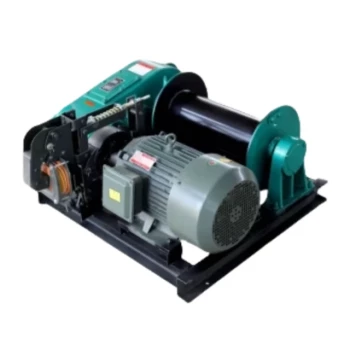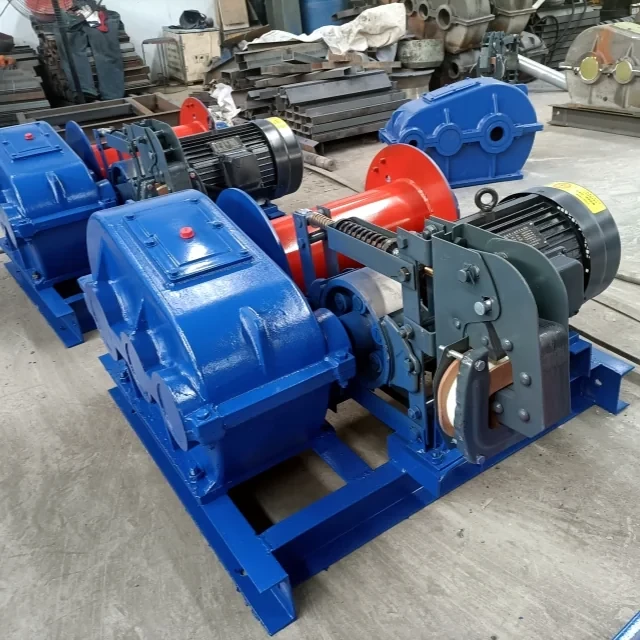
Electric winches have evolved from brute-force tools to intelligent lifting partners, thanks to ergonomic engineering and smart control systems. This article reveals how thoughtful design reduces operator fatigue, enhances safety, and delivers measurable productivity gains across industries—helping you identify winches that work with users, not against them.
Design Principles for Operator-Centric Electric Winches
Modern electric winches prioritize human factors engineering—a discipline that adapts technology to human physical and cognitive limits. Leading manufacturers like Garlway integrate three core principles:
- Minimized Repetitive Strain: Controls positioned within natural arm reach angles prevent shoulder and wrist fatigue during prolonged use.
- Cognitive Load Reduction: Intuitive interfaces with tactile feedback eliminate guesswork in high-stress scenarios.
- Adaptive Performance: Smart winches automatically adjust speed and torque based on load detection, reducing manual calibration errors.
Ever wondered why some winches feel effortless to operate while others exhaust operators within hours? The answer lies in millimeter-perfect handle placements and control responsiveness.
Ergonomic Control Interfaces for Reduced Fatigue
The Science of Grip Comfort
Studies in construction equipment ergonomics show that pistol-grip handles reduce muscle activation by 22% compared to traditional lever controls. Garlway’s designs incorporate:
- Contoured rubberized grips that dampen vibrations
- Thumb-operated directional toggles requiring
- Backlit buttons for low-light environments
Voice of Operators
Feedback from oil rig technicians revealed that 90° angled control panels—positioned perpendicular to the operator’s line of sight—cut reaction times by 1.5 seconds during emergency stops.
Automated Load Management Systems
Smart winches now embed three-layer protection to prevent human error:
| Technology | Function | Human Benefit |
|---|---|---|
| Gyroscopic Load Sensing | Detects unbalanced loads | Prevents dangerous sway during lifts |
| Progressive Braking | Gradually slows overloaded cables | Eliminates jerky stops that damage cargo |
| Auto-Rewind Scheduling | Calculates optimal spooling patterns | Saves 8–12 minutes per hour of operation |
Imagine a winch that warns you about impending cable wear before it becomes visible—that’s predictive maintenance in action.
Safety Features That Simplify Complex Tasks
Fail-Safe Engineering
- Dead-Man Switch: Immediately halts operation if the operator releases the controller
- Anti-Two-Block: Uses ultrasonic sensors to prevent hook-collision accidents
- Load Path Visualization: Projects real-time force vectors via LED indicators
These features transform safety from a checklist item to an embedded workflow. In wind turbine installations, such systems reduced near-miss incidents by 67% according to industry reports.
Industry Applications Demonstrating Efficiency Gains
Case 1: Offshore Logistics
A marine transport company using ergonomic winches reported:
- 40% fewer operator shift changes due to reduced fatigue
- 15% faster cargo transfers through one-hand load positioning
Case 2: Theater Rigging
Broadway stage crews adopted voice-controlled winches to:
- Execute 110+ precise lifts per performance with
- Eliminate ladder climbs for manual adjustments
Conclusion: Choosing Winches That Work for Humans
The best electric winches today act as extensions of the operator’s intent, not just tools. When evaluating options like Garlway’s range, prioritize:
- Physical Harmony: Test if controls align with your natural posture
- Cognitive Alignment: Ensure interface logic matches your workflow
- Adaptive Intelligence: Verify automated responses to load changes
For construction and heavy lifting professionals, these ergonomic advancements aren’t luxuries—they’re the difference between meeting quotas and sustaining injuries. The right winch should leave operators saying, “I didn’t fight the equipment today.”
Garlway’s ergonomic winch solutions integrate these human-centered design principles. Explore how their engineering reduces fatigue while maintaining industrial-grade performance.
Related Products
- Electric 120V Boat Winch by Badlands
- Electric and Hydraulic Winch for Heavy Duty Applications
- Small Electric Winch 120V and 240V for Compact Applications
- 12000 lb Electric Boat Trailer Winch with Windlass Anchor Warn
- Electric Hoist Winch Boat Anchor Windlass for Marine Applications
Related Articles
- How to Choose Between Reversible and Friction Electric Winches: A Transmission Guide
- The Unseen System: How an Electric Winch Manages Force and Eliminates Fear
- How to Choose Between Manual and Electric Winches for Your Project
- When Automation Fails: The Critical Role of Manual Override in Electric Winches
- Beyond Brute Force: The Calculated Power of the Electric Winch