Introduction
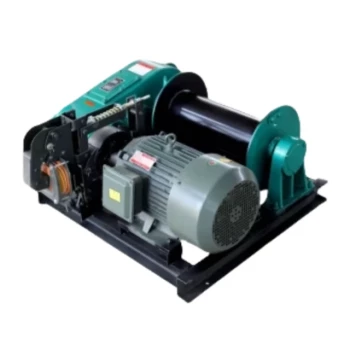
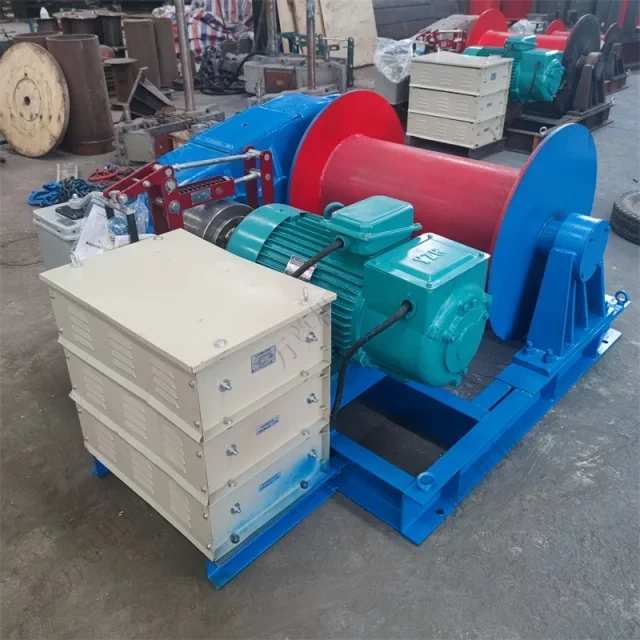
Navigating China’s large-tonnage winch market requires a keen understanding of technical standards, regulatory compliance, and manufacturer reliability. Whether you're sourcing winches for mining, construction, or heavy industrial applications, this guide provides actionable insights to evaluate Chinese suppliers against global benchmarks. We’ll break down key specifications, highlight success stories, and outline certification requirements to help you make informed decisions—without compromising on safety or performance.
Understanding Large-Tonnage Winches
Defining Capacity Ranges and Industrial Applications
Large-tonnage winches (typically 20+ tons) are engineered for extreme loads, commonly used in:
- Mining operations: Hauling extracted materials and equipment
- Marine/offshore: Anchoring, towing, and platform maintenance
- Construction: Heavy lifting for bridges, dams, and high-rise projects
Did you know? A 65-ton winch can lift the equivalent of 13 adult elephants—demanding precision engineering to avoid catastrophic failure.
Key Technical Specifications for Heavy-Duty Performance
-
Drive System: Hydraulic winches dominate heavy applications due to:
- High torque output and variable speed control
- Resilience in temperatures from -50°C to +100°C (referenced from industry data)
- No reliance on electrical grids (critical in remote mining sites)
-
Drum Capacity: Measured in rope length (meters) and diameter (mm). For example, a 65-ton winch may require a 40mm wire rope with a 500m drum capacity.
-
Safety Features: Overload protection, emergency brakes, and corrosion-resistant coatings.
Challenges in China’s Manufacturing Landscape
Regulatory Hurdles and Production Limitations
While China leads in cost-effective manufacturing, buyers must navigate:
- Inconsistent QC: Some factories bypass ISO 9001 audits, risking substandard materials.
- Export Compliance: CE marks are mandatory for EU markets but often falsified. Always request third-party test reports.
Case Study: Success Stories of 65-Ton Winch Deployments
A Mongolian mining company reduced downtime by 60% after switching to a Chinese hydraulic winch with:
- Dual-circuit braking for overload safety
- Modular design enabling on-site repairs
- Military-grade seals to withstand sandstorms
Ever wondered how a winch survives decade-long use in saltwater environments? The answer lies in galvanized components and regular maintenance protocols.
Selecting a Reliable Chinese Manufacturer
Quality Certifications and Compliance
Prioritize suppliers with:
- ISO 9001: Ensures consistent production quality
- CE/GS Mark: Validates EU safety standards
- MSHA Approval: Critical for mining applications (U.S. market)
Comparative Analysis of Top Domestic Suppliers
- Supplier A: Specializes in hydraulic systems with NATO-standard durability.
- Supplier B: Offers customizable drum configurations but lacks offshore certifications.
- Garlway: Known for integrated safety systems and post-sale technical support.
Pro Tip: Audit factories virtually via live video tours to inspect welding quality and assembly lines.
Conclusion & Actionable Steps
- Match specs to use-case: Hydraulic systems excel in harsh environments; electric winches suit controlled settings.
- Verify certifications: Cross-check with issuing bodies like TÜV or SGS.
- Start small: Order a prototype before committing to bulk purchases.
For projects demanding reliability, explore Garlway’s winch solutions, engineered for heavy industries with globally recognized safety features.
Related Products
- Electric and Hydraulic Winch for Heavy Duty Applications
- Heavy Duty Electric Boat Winch Windlass Anchor
- Warn Winch Windlass Boat Trailer Winch
- 12000 lb Heavy Duty Electric Boat Winch
- Best 18000 Pound Drum Anchor Trailer Winch
Related Articles
- How to Choose the Right Winch for Heavy-Duty Applications: A Scenario-Based Guide
- How to Maximize Electrical Winch Performance in Challenging Environments
- How to Choose Between Manual and Electric Winches for Your Project
- How to Choose Between Reversible and Friction Electric Winches: A Transmission Guide
- Beyond Brute Force: The Calculated Power of the Electric Winch