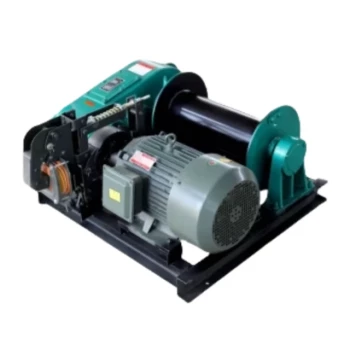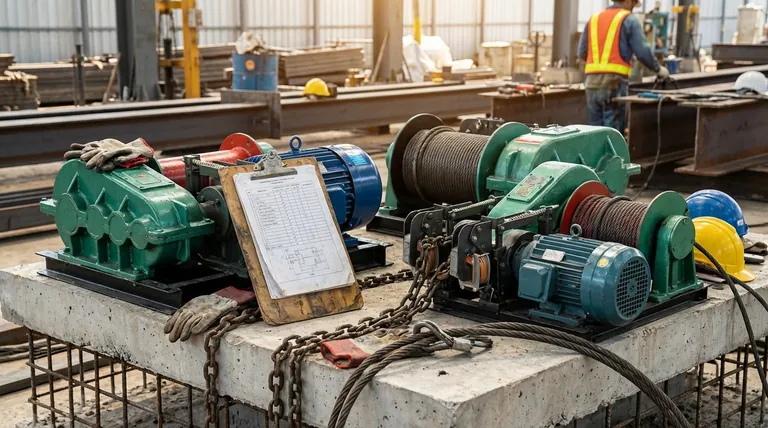
Industrial hand winches are indispensable tools for lifting and pulling heavy loads, but their power comes with inherent risks. A single safety oversight can lead to equipment failure, workplace injuries, or catastrophic accidents. This guide breaks down the three pillars of hand winch safety—mechanical safeguards, operational protocols, and compliance standards—to help you create a multi-layered defense system against failures.
Hand Winch Safety Fundamentals
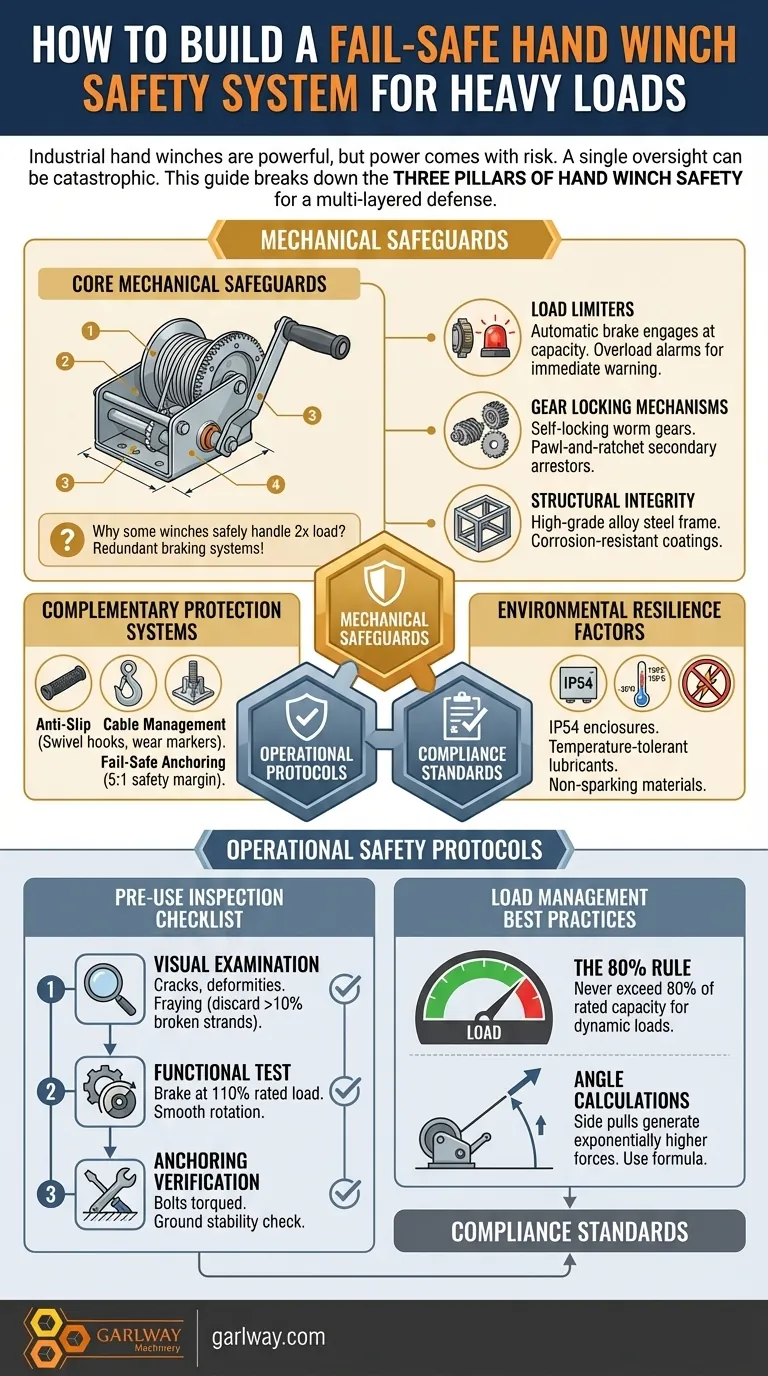
Core Mechanical Safeguards
Every reliable hand winch integrates these non-negotiable safety components:
-
Load Limiters:
- Automatic brake systems (e.g., dynamic braking) engage when exceeding rated capacity
- Overload indicators (audible alarms or visual flags) for immediate warning
-
Gear Locking Mechanisms:
- Self-locking worm gears prevent uncontrolled descent
- Pawl-and-ratchet systems as secondary arrestors
-
Structural Integrity:
- High-grade alloy steel frames resist deformation under stress
- Corrosion-resistant coatings for longevity
Ever wondered why some winches handle 2x their rated load safely? The secret lies in redundant braking systems.
Complementary Protection Systems
- Anti-Slip Handles: Ergonomically designed to prevent operator fatigue and slippage during prolonged use
-
Cable Management:
- Swivel hooks with safety latches
- Abrasion-resistant wire ropes with wear markers
- Fail-Safe Anchoring: Bolt-down points engineered for 5:1 safety margin versus load weight
Environmental Resilience Factors
Winches used in harsh conditions require:
- IP54-rated enclosures (dust/water resistance)
- Temperature-tolerant lubricants (-20°C to 120°C operational range)
- Non-sparking materials for explosive atmospheres
Operational Safety Protocols
Pre-Use Inspection Checklist
Conduct these 5 critical checks before each operation:
-
Visual Examination:
- Cracks or deformities in frame/hook
- Fraying wires (discard if >10% strands are broken)
-
Functional Test:
- Brake engagement at 110% rated load
- Smooth gear rotation without binding
-
Anchoring Verification:
- Base mounting bolts torqued to manufacturer specs
- Ground stability assessment (e.g., no subsidence risks)
Load Management Best Practices
- The 80% Rule: Never exceed 80% of rated capacity for dynamic loads
- Angle Calculations: Side pulls generate exponentially higher forces—use this formula:
Visual Guide
Related Products
- Portable Small Trailer Winch
- Quick Windlass Portable Winch for Truck and Boat Best Boat Winch
- Electric and Hydraulic Winch for Heavy Duty Applications
- Warn Winch Windlass Boat Trailer Winch
- Electric Hoist Winch Boat Anchor Windlass for Marine Applications
Related Articles
- Beyond the Bumper: The Critical System Choice in Powering Your Trailer Winch
- The Calculated Pull: A Systems Approach to Winch Selection
- How Quick Winch Rope Speed Transforms Industrial Efficiency
- How to Match Winch Specifications to Your Operational Needs
- The Gravity of the Situation: Why Vehicle Weight is the Least of Your Winch's Worries