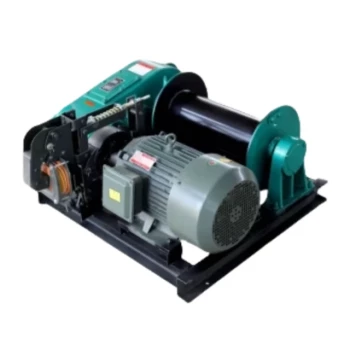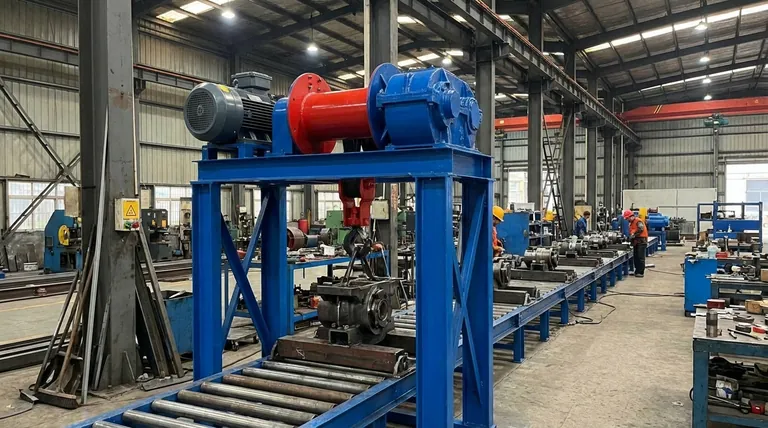
When industrial operations face tight spaces and demanding maintenance schedules, wire rope hoists with external motors emerge as a strategic solution. These systems combine adaptable design with service-friendly features, offering distinct advantages where traditional compact hoists fall short.
Advantages of External Motor Wire Rope Hoists
Grouping and Standardization in Industrial Workflows
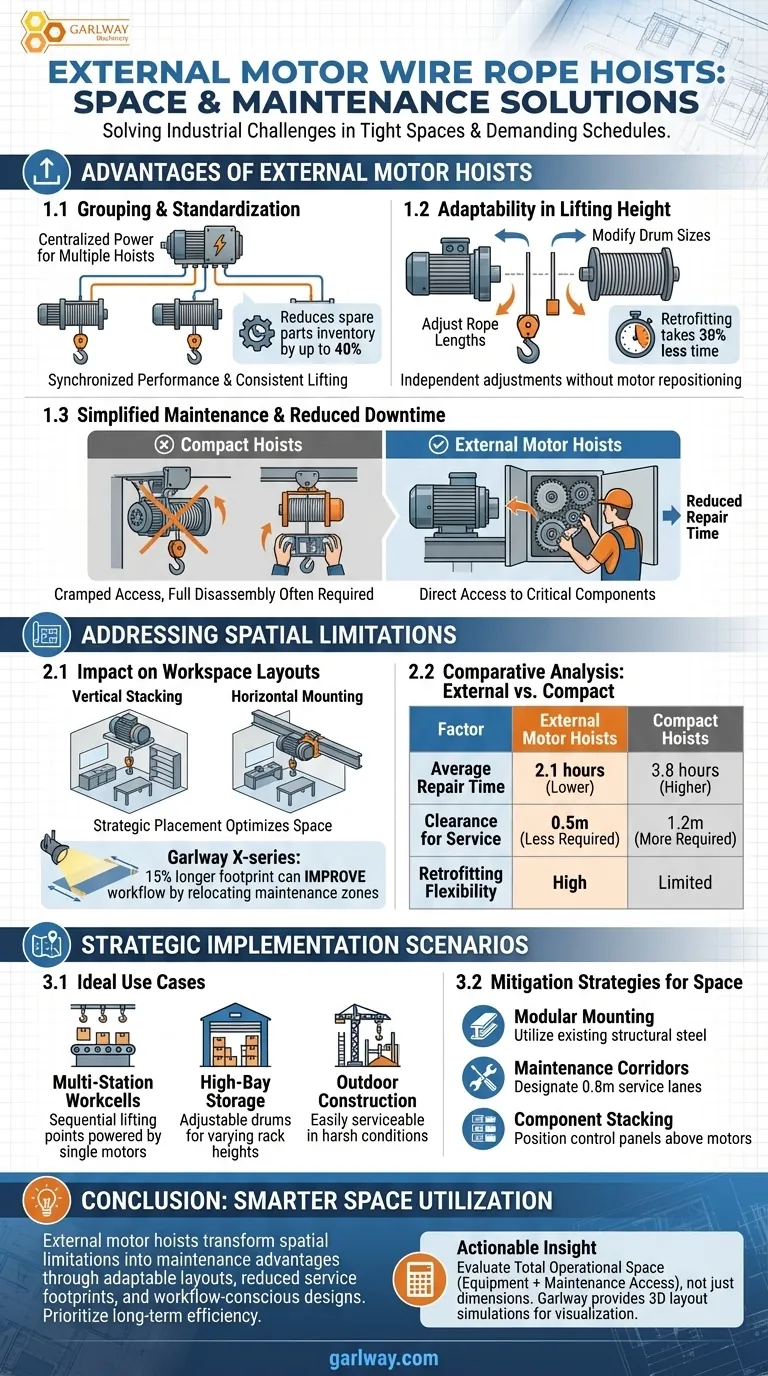
External motor configurations allow centralized power units to serve multiple hoists—a game-changer for facilities running parallel lifting operations. This standardization reduces spare parts inventory by up to 40% compared to standalone hoist systems. Ever wondered how automotive assembly lines maintain consistent lifting operations across workstations? External motor setups enable synchronized performance while minimizing duplicate components.
Adaptability in Lifting Height Adjustments
The separable motor-and-drum design permits independent adjustments to lifting heights. Operators can:
- Extend rope lengths without motor repositioning
- Modify drum sizes for specific load requirements
- Retrofitting existing systems takes 30% less time than integrated hoist replacements
Simplified Maintenance for Reduced Downtime
With motors mounted externally, technicians gain direct access to critical components. Routine tasks like brake adjustments or gear inspections no longer require full hoist disassembly—a frequent pain point with compact models. Picture maintaining a car engine: accessing components through a cramped hood versus having the entire powertrain on a service rack.
Addressing Spatial Limitations
Impact of Length Dimensions on Workspace Layouts
While external motors add separate components, their strategic placement often proves more space-efficient than perceived. Key considerations include:
- Vertical stacking of motors above work areas
- Horizontal mounting along structural supports
- The Garlway X-series demonstrates how 15% longer footprint dimensions can actually improve workflow by relocating maintenance zones away from primary workspaces
Comparative Analysis with Compact Hoist Designs
Integrated hoists might seem space-saving initially, but their maintenance requirements often create operational bottlenecks. Data from manufacturing plants shows:
| Factor | External Motor Hoists | Compact Hoists |
|---|---|---|
| Average repair time | 2.1 hours | 3.8 hours |
| Clearance for service | 0.5m | 1.2m |
| Retrofitting flexibility | High | Limited |
Strategic Implementation Scenarios
Ideal Use Cases in Manufacturing and Construction
These hoists excel in three specific environments:
- Multi-Station Workcells – Single motors powering sequential lifting points in appliance assembly
- High-Bay Storage – Adjustable drum configurations accommodating varying rack heights
- Outdoor Construction – Easily serviceable components in dusty or wet conditions
Mitigation Strategies for Space Constraints
When planning installations, consider these space-optimizing approaches:
- Modular Mounting – Utilize existing structural steel for motor bracketing
- Maintenance Corridors – Designate 0.8m service lanes perpendicular to work areas
- Component Stacking – Position control panels above motor units
Conclusion: Smarter Space Utilization Through Design
External motor wire rope hoists transform spatial limitations into maintenance advantages. Their separable architecture offers what integrated systems cannot: adaptable layouts, reduced service footprints, and workflow-conscious designs. For operations prioritizing long-term efficiency over minimal initial footprints, this configuration delivers measurable productivity gains.
Actionable Insight: When evaluating hoists for space-constrained environments, calculate total operational space—including maintenance access—rather than just equipment dimensions. The Garlway engineering team frequently assists in creating 3D layout simulations to visualize these spatial relationships before installation.
Visual Guide
Related Products
- Electric Hoist Winch Boat Anchor Windlass for Marine Applications
- Warn Winch Windlass Boat Trailer Winch
- Hydraulic Winding Engine Harbor Freight Winch
- Quick Windlass Portable Winch for Truck and Boat Best Boat Winch
- Portable Small Trailer Winch
Related Articles
- How Boat Anchor Winches Prevent Injuries and Enhance Marine Safety
- Why Boat Anchor Winches Earn "Best Accessory" Status: A Deep Dive into User Satisfaction Drivers
- How to Install a Hoist Winch Safely: Avoiding Critical Mistakes
- How to Debug Hoist Winches Safely: Electrical Checks & Mechanical Adjustments
- How to Optimize Hoist Winch Safety: A Systematic Protocol for Accident Prevention