Introduction
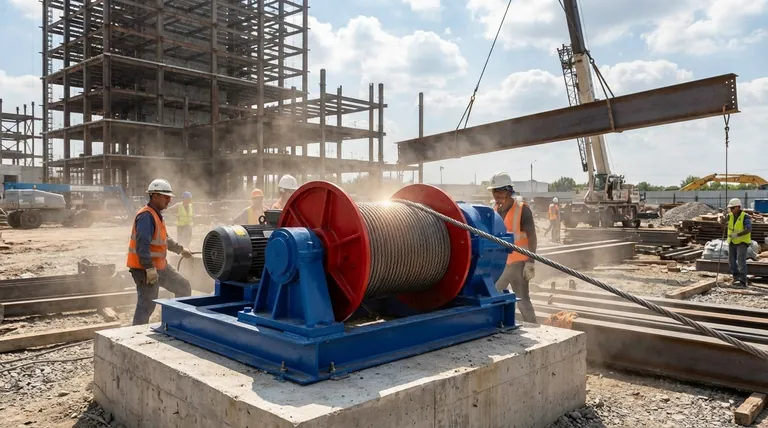
When lifting or pulling multi-ton loads, every component in an electrically driven winch must work in perfect harmony. From construction sites to marine operations, these machines combine precision engineering with fail-safe mechanisms to handle extreme weights reliably. This article breaks down how drum assemblies, electromagnetic brakes, and motor systems collectively prevent catastrophic failures while maximizing productivity—helping you make informed decisions whether purchasing or maintaining equipment.
Electrically Driven Winch Core Components and Their Roles
How the Drum and Reducer Balance Load Capacity and Speed
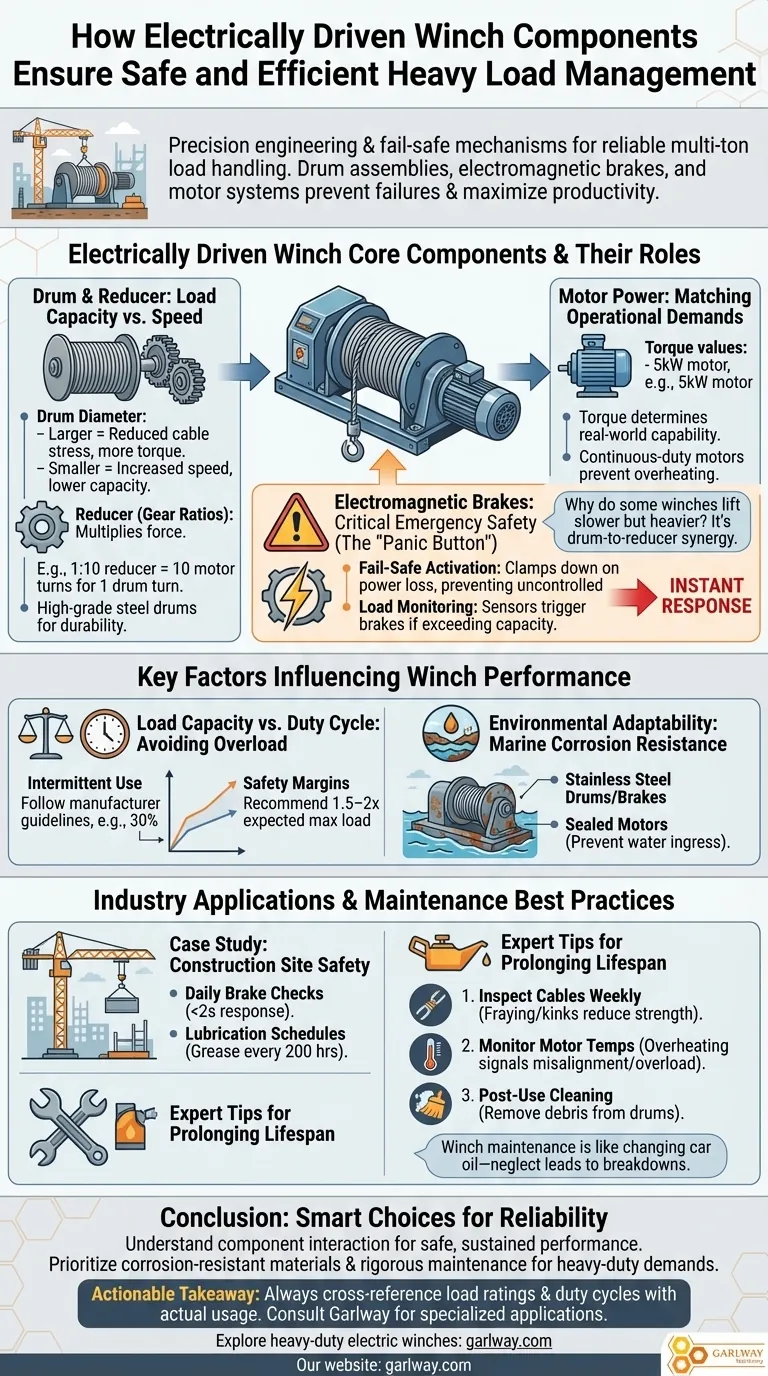
The drum isn’t just a spool for cables; its diameter directly impacts lifting mechanics. A larger drum reduces cable stress per rotation but requires more torque, while a smaller one increases speed at the expense of capacity. Reducers bridge this gap:
- Gear Ratios: A 1:10 reducer means 10 motor rotations turn the drum once, multiplying force for heavier loads (as referenced in gear mechanics studies).
- Material Durability: High-grade steel drums resist deformation under load, critical for repetitive heavy lifting.
Ever wondered why some winches lift slower but handle heavier loads? It’s all about the drum-to-reducer synergy.
The Critical Role of Electromagnetic Brakes in Emergency Safety
Electromagnetic brakes act as the winch’s "panic button," engaging automatically during power loss or overload. Key safety features include:
- Fail-Safe Activation: Brakes clamp down if voltage drops, preventing uncontrolled load descent.
- Load Monitoring: Integrated sensors trigger brakes when exceeding rated capacity (per industrial safety standards).
Matching Motor Power to Operational Demands
Motor torque determines real-world capability. For example:
- A 5kW motor with a 1:15 reducer can lift ~3 tons efficiently, but the same motor at 1:5 ratios might struggle beyond 1 ton.
- Continuous-duty motors prevent overheating in prolonged operations, common in shipping or manufacturing.
Key Factors Influencing Winch Performance
Load Capacity vs. Duty Cycle: Avoiding Overload Failures
Winches rated for 2-ton loads might fail prematurely if used at 90% capacity nonstop. Best practices:
- Intermittent Use: Follow manufacturer guidelines (e.g., 30% duty cycle for heavy loads).
- Safety Margins: Industry standards recommend winches rated 1.5–2x the expected max load.
Environmental Adaptability: Corrosion Resistance in Marine Applications
Saltwater accelerates wear. Marine-grade winches use:
- Stainless Steel Drums/Brakes: Resist pitting and rust.
- Sealed Motors: Prevent water ingress, a common failure point.
Industry Applications and Maintenance Best Practices
Case Study: Construction Site Winch Safety Protocols
A high-rise project using winches for steel beam placement implemented:
- Daily Brake Checks: Ensuring electromagnetic response times under 2 seconds.
- Lubrication Schedules: Reducer grease replenished every 200 operating hours.
Expert Tips for Prolonging Winch Lifespan
- Inspect Cables Weekly: Fraying or kinks reduce strength by up to 40%.
- Monitor Motor Temps: Overheating signals reducer misalignment or overload.
- Post-Use Cleaning: Remove debris from drums to prevent groove damage.
Think of winch maintenance like changing your car’s oil—neglect it, and costly breakdowns follow.
Conclusion: Smart Choices for Heavy-Duty Reliability
Electrically driven winches are marvels of mechanical teamwork. By understanding how components interact—from torque-optimized motors to instant-response brakes—you can select or maintain equipment that performs safely under pressure. For operations demanding durability (like marine or construction environments), prioritize corrosion-resistant materials and rigorous maintenance.
Actionable Takeaway: Always cross-reference load ratings and duty cycles with your actual usage. A winch isn’t just about power; it’s about sustained performance.
(Note: For specialized applications, consult Garlway’s range of heavy-duty winches designed for industrial and construction use.)
Products You Might Be Looking For:
Explore heavy-duty electric winches
Visual Guide
Related Products
- Electric and Hydraulic Winch for Heavy Duty Applications
- Electric 120V Boat Winch by Badlands
- 12000 lb Electric Boat Trailer Winch with Windlass Anchor Warn
- Heavy Duty Electric Boat Winch Windlass Anchor
- Electric Hoist Winch Boat Anchor Windlass for Marine Applications
Related Articles
- How to Choose the Right Winch for Heavy-Duty Applications: A Scenario-Based Guide
- How to Maximize Electrical Winch Performance in Challenging Environments
- How to Choose Between Manual and Electric Winches for Your Project
- How to Choose Between Reversible and Friction Electric Winches: A Transmission Guide
- Beyond Brute Force: The Calculated Power of the Electric Winch



