Using original spare parts is critical because they guarantee the exact fit, material quality, and performance specifications required for the demanding environment of a cement mixer. This directly translates to greater safety, reduced risk of catastrophic failure, and a longer operational life for the entire machine.
The choice between original and non-original spare parts is not merely about upfront cost. It is a strategic decision that directly impacts operational reliability, crew safety, and the total cost of ownership over the mixer's lifespan.

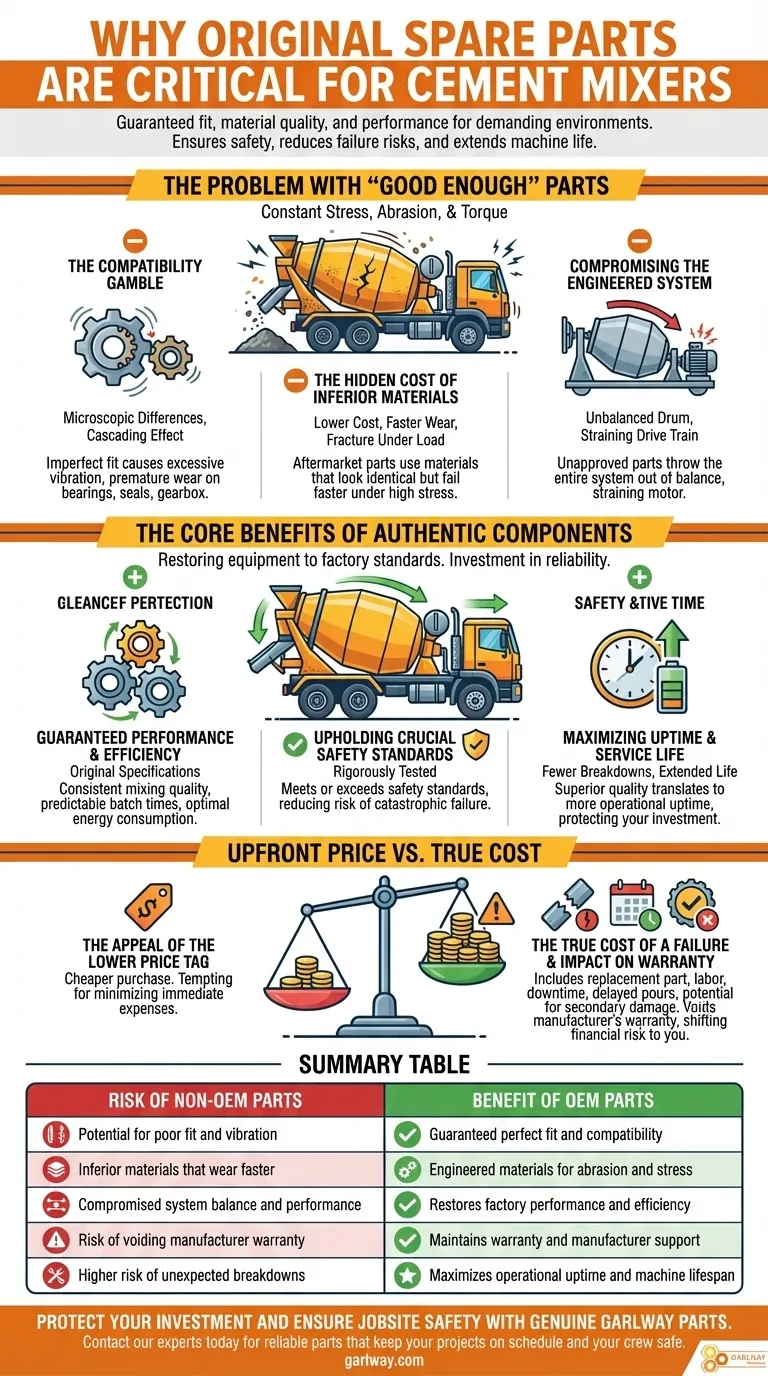
The Problem with "Good Enough" Parts
A cement mixer operates under constant high stress, abrasion, and torque. Using parts that are not designed by the original manufacturer introduces significant and often unseen risks into this precisely engineered system.
The Compatibility Gamble
Even microscopic differences in a part's dimensions or tolerances can have a cascading effect. A non-original part that isn't a perfect fit can cause excessive vibration, leading to premature wear on adjacent components like bearings, seals, and the gearbox.
The Hidden Cost of Inferior Materials
Original parts are made from specific alloys and materials engineered to withstand the highly abrasive nature of sand, aggregate, and cement. Aftermarket parts often prioritize lower cost, using materials that may look identical but wear faster or fracture under load.
Compromising the Engineered System
A cement mixer is more than a collection of components; it's a balanced system. Using an unapproved part, such as a mixing blade with a slightly different weight or angle, can throw the entire drum out of balance, straining the motor and drive train.
The Core Benefits of Authentic Components
Opting for Original Equipment Manufacturer (OEM) parts is an investment in restoring your equipment to its factory standards, ensuring it performs as intended.
Guaranteed Performance and Efficiency
OEM parts ensure the mixer operates at its original specifications. This means consistent mixing quality, predictable batch times, and optimal energy consumption, which are crucial for project timelines and quality control.
Upholding Crucial Safety Standards
Component failure on heavy machinery can be catastrophic. Original parts are rigorously tested to meet or exceed safety standards, significantly reducing the risk of unexpected breakdowns that could endanger operators.
Maximizing Uptime and Service Life
The superior quality and perfect fit of original parts lead to fewer breakdowns. This reliability translates directly into more operational uptime and extends the overall service life of the mixer, protecting your initial investment.
Understanding the Trade-offs: Upfront Price vs. True Cost
The most common argument for non-original parts is their lower initial price. However, this perspective often overlooks the much larger financial risks involved.
The Appeal of the Lower Price Tag
Non-original parts are almost always cheaper to purchase. This can be tempting for managers focused on minimizing immediate maintenance expenses.
Calculating the True Cost of a Failure
Consider the cost of a single critical failure caused by a substandard part. This includes not only the replacement part and labor but also the cost of project downtime, a delayed concrete pour, and the potential for secondary damage to more expensive components.
The Impact on Warranty and Support
Installing non-original parts will almost certainly void the manufacturer's warranty on your cement mixer. This shifts the entire financial risk for any future major failures directly onto you, the owner.
Making the Right Choice for Your Operation
Your decision should be based on your operational priorities.
- If your primary focus is project reliability and uptime: Always choose original parts for critical components like blades, bearings, and drive systems to prevent schedule-derailing failures.
- If your primary focus is minimizing long-term costs: View original parts as an investment that lowers the total cost of ownership by maximizing the machine's life and preventing costly secondary damage.
- If your primary focus is crew safety: Never compromise. Original parts are the only way to guarantee that your machine continues to meet its certified safety standards.
Ultimately, investing in authentic parts is the most reliable way to ensure your equipment remains a productive and safe asset.
Summary Table:
| Risk of Non-OEM Parts | Benefit of OEM Parts |
|---|---|
| Potential for poor fit and vibration | Guaranteed perfect fit and compatibility |
| Inferior materials that wear faster | Engineered materials for abrasion and stress |
| Compromised system balance and performance | Restores factory performance and efficiency |
| Risk of voiding manufacturer warranty | Maintains warranty and manufacturer support |
| Higher risk of unexpected breakdowns | Maximizes operational uptime and machine lifespan |
Protect your investment and ensure jobsite safety with genuine GARLWAY parts.
As a specialist in construction machinery, GARLWAY provides OEM-grade spare parts—including durable mixing blades, bearings, and drive components—specifically engineered for the demanding conditions your cement mixers face. Using authentic GARLWAY parts guarantees optimal performance, extends your equipment's service life, and safeguards your operators.
Don't let a cheap part cause an expensive failure. Contact our experts today for reliable parts that keep your projects on schedule and your crew safe.
Visual Guide
Related Products
- HZS25 Best Cement Mixer for Quick Mix Concrete at Bunnings
- JDC350 Small Cement Concrete Mortar Mixer
- Concrete Cement Mixer Machine Drum Mixer for Construction
- JW1000 Mobile Cement Mixer Concrete Mixer Truck and Batching Plant
- JZC500 Large Cement Mixer Machine Price for Concrete Mix
People Also Ask
- How do cement mixers enhance safety on construction sites? Reduce Strain, Hazards, and Accidents
- What are the main components of a cement mixer? A Guide to Core Parts & Functions
- What are some tips for using a cement mixer effectively? Maximize Your Mixer's Performance & Concrete Quality
- How does cleaning a cement mixer after use benefit its performance? Maximize Lifespan and Mix Quality
- Why is it important to clean the cement mixer after use? Prevent Costly Damage and Ensure Quality Concrete