The short answer is that a tree strap is essential for protecting both the anchor point (the tree) and your expensive winch line from damage. A winch damper is a non-negotiable safety device that drastically reduces the risk of serious injury or death if the winch line were to snap under its immense load.
The core principle is simple: A tree strap preserves your anchor and equipment, while a winch line damper protects people. Using both is a fundamental requirement for any safe and responsible vehicle recovery operation.
Why Your Anchor Point Matters: The Role of the Tree Strap
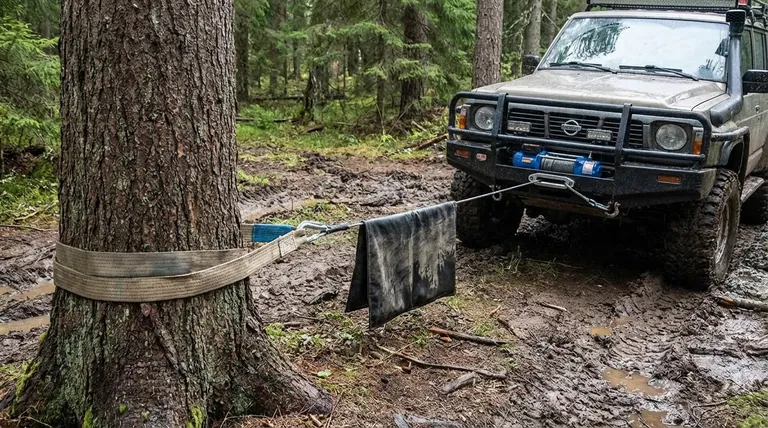
A successful winching operation begins with a secure anchor. Using a tree as an anchor without the proper equipment creates two significant problems that a tree strap is specifically designed to solve.
Protecting the Tree
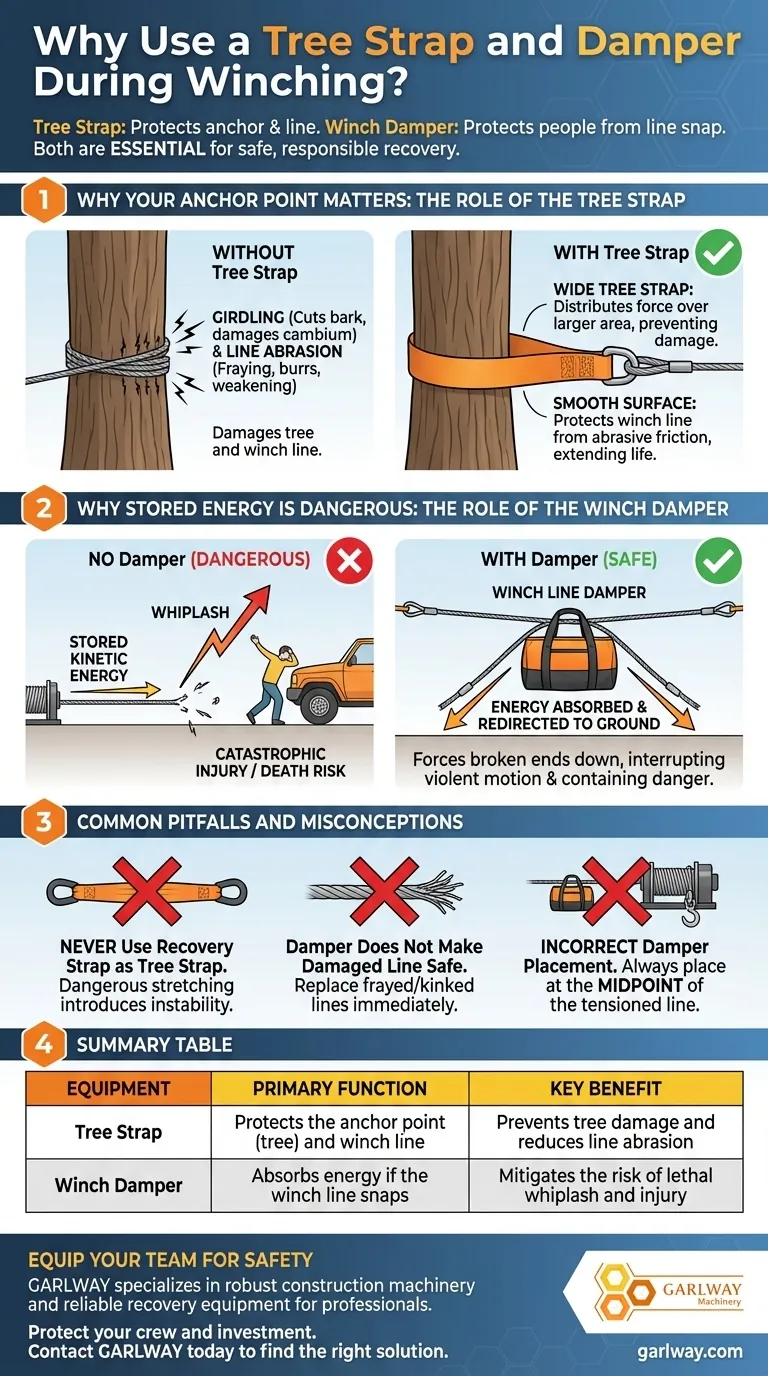
Wrapping a steel cable or synthetic rope directly around a tree trunk concentrates immense force onto a very narrow area. This action, known as girdling, cuts through the bark and damages the cambium layer beneath it, which is vital for transporting nutrients.
This damage can permanently scar or even kill the tree. A wide tree strap distributes the winching force over a much larger surface area, preventing this damage and preserving the trail environment.
Protecting Your Winch Line
A tree's bark is rough and abrasive. When you pull a winch line directly against it under thousands of pounds of tension, the bark acts like coarse sandpaper, causing significant fraying and abrasion to the line.
For steel cables, this can create dangerous burrs and weaken individual strands. For synthetic ropes, it can chafe and severely compromise the rope's integrity. A tree strap provides a smooth, durable surface that protects your line from this destructive friction, extending its life.
Why Stored Energy is Dangerous: The Role of the Winch Damper
A winch line under load is like a giant, stretched rubber band, storing a tremendous amount of kinetic energy. The damper is your primary defense against the violent, unpredictable release of that energy.
The Physics of a Line Failure
If a winch line breaks, it doesn't just fall to the ground. The stored energy is released in an instant, causing the two broken ends of the line to whip back towards the vehicle and the anchor point at incredible speeds.
This "whiplash" effect can propel the heavy steel cable or synthetic rope through the air faster than the eye can see, easily smashing through windshields and causing catastrophic injury or death to anyone in its path.
How a Damper Mitigates the Risk
A winch line damper is essentially a weighted blanket or vinyl bag that you drape over the midpoint of the tensioned line. Its purpose is to absorb and redirect the energy of a break.
Should the line snap, the damper's weight forces the broken ends to fall directly to the ground instead of flying through the air. It interrupts the violent whipping motion, containing the danger and turning a potentially lethal event into a much less hazardous equipment failure.
Common Pitfalls and Misconceptions
Understanding what not to do is as important as knowing the correct procedure. Avoiding these common mistakes is critical for safety.
Never Use a Recovery Strap as a Tree Strap
Recovery or "snatch" straps are designed to stretch to aid in kinetic recoveries. This stretching property is extremely dangerous in a static winching scenario, as it introduces instability and unpredictable forces. Always use a non-stretch, dedicated tree trunk protector.
A Damper Does Not Make a Damaged Line "Safe"
A winch damper is a safety precaution for an unexpected line failure. It is not a license to use a frayed, kinked, or otherwise compromised winch line. If your line shows any signs of wear, it must be replaced immediately.
Incorrect Damper Placement
Placing the damper too close to the winch or the anchor point reduces its effectiveness. For optimal performance, the damper should always be placed at the midpoint of the tensioned section of the line to best control the recoil from either direction.
Making the Right Choice for a Safe Recovery
Every winching situation is a calculated risk. Using the correct equipment is how you manage that risk effectively.
- If your primary focus is safety: The winch line damper is the single most important piece of safety equipment you can use. Always place it on the line before tensioning.
- If your primary focus is equipment longevity and environmental responsibility: The tree strap is non-negotiable. It protects your winch line and preserves the natural anchor you are relying on.
Ultimately, these two items are not optional accessories; they are fundamental components of a safe and effective recovery system.
Summary Table:
| Equipment | Primary Function | Key Benefit |
|---|---|---|
| Tree Strap | Protects the anchor point (tree) and winch line | Prevents tree damage and reduces line abrasion |
| Winch Damper | Absorbs energy if the winch line snaps | Mitigates the risk of lethal whiplash and injury |
Ready to equip your team for the safest possible recoveries?
GARLWAY specializes in robust construction machinery and reliable recovery equipment for professionals who value safety and durability. Our range of winches and accessories are engineered for demanding conditions, helping construction companies and contractors globally complete jobs efficiently and without incident.
Protect your crew and your investment. Contact GARLWAY today to discuss your specific needs and find the right solution for your operations.
Visual Guide
Related Products
- Electric and Hydraulic Winch for Heavy Duty Applications
- Small Electric Winch 120V and 240V for Compact Applications
- Portable Small Trailer Winch
- Warn Winch Windlass Boat Trailer Winch
- Quick Windlass Portable Winch for Truck and Boat Best Boat Winch
People Also Ask
- What are the differences between electric and hydraulic winches? Choose the Right Winch for Your Job
- What are some common uses for a heavy-duty winch? Power Your Construction & Industrial Projects
- What are electro-hydraulic winches and their applications? The Integrated Power Solution for Heavy-Duty Operations
- How do winches assist in bridge launching? Accelerate Bridge Placement with Controlled Pulling Power
- What are the benefits of using heavy-duty winches for large projects? Boost Efficiency & Safety