The size of your anchor locker is critical because it dictates not just how much anchor rode you can carry, but whether your windlass will function reliably. It is a fundamental component of a safe and stress-free anchoring system, with its depth being the most important dimension for preventing jams.
The core issue is not storage capacity, but physics. A properly sized anchor locker, specifically its depth, allows gravity to pull the chain or rope away from the windlass, preventing the pile-ups that cause dangerous and frustrating system failures during retrieval.
Beyond Simple Storage: The Physics of Rode Management
Many boaters view the anchor locker as just a bucket for the chain. In reality, its design is an engineered solution that enables the smooth operation of a mechanical windlass.
The Obvious Role: Rode Capacity
The overall volume of the locker determines the maximum length of rode (the line or chain connecting the anchor to the boat) you can store. A larger locker allows for longer rode, which in turn enables you to anchor safely in deeper water.
The Critical Factor: Vertical Fall
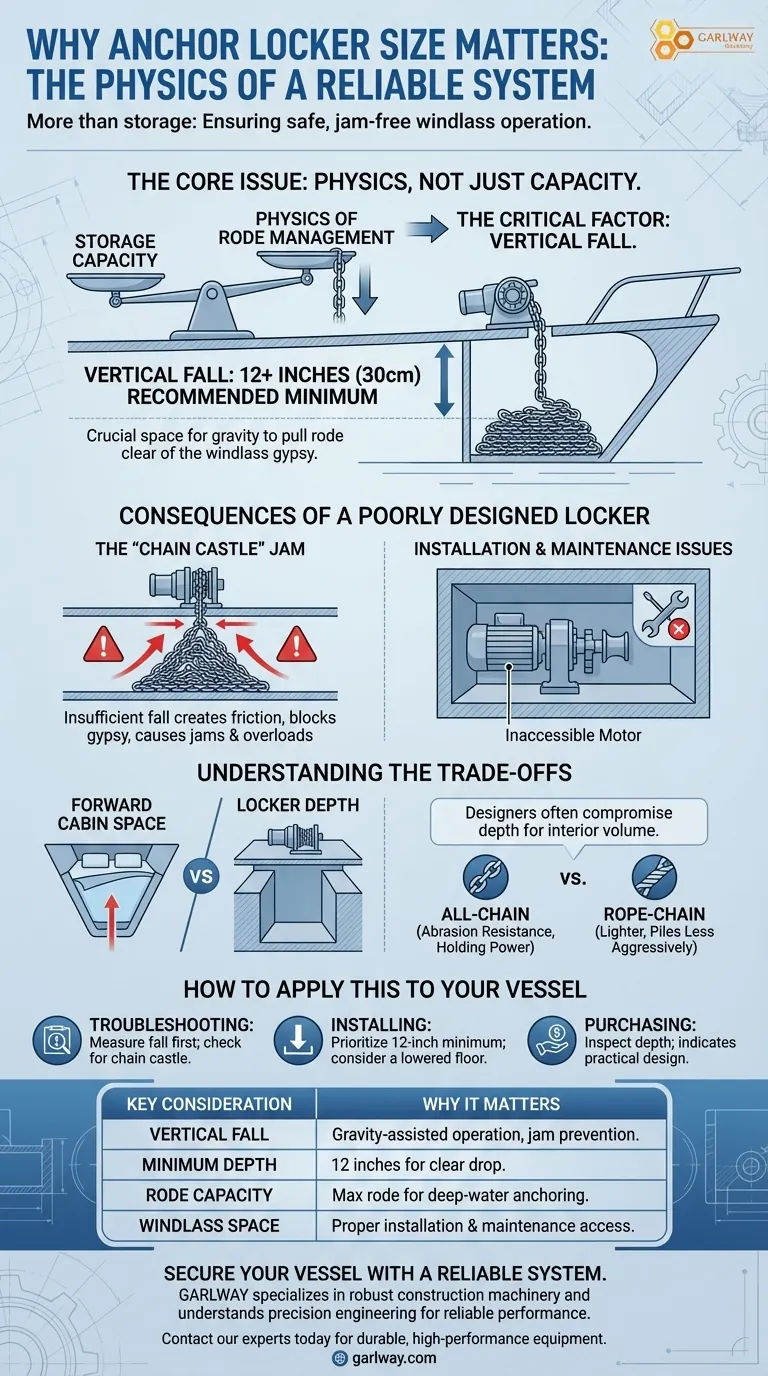
The single most important measurement for windlass operation is the vertical fall. This is the distance from the underside of the deck where the rode enters the locker to the top of the pile of rode already stored inside.
Without sufficient fall, the rode cannot feed into the locker via gravity. It will begin to pile up directly underneath the windlass.
Why 12 Inches (30cm) is the Recommended Minimum
A minimum fall of 12 inches (30 cm) is the industry standard. This distance provides enough space for the rode to drop clear of the windlass gypsy (the notched wheel that engages the chain) before the pile gets high enough to interfere with it.
The Consequences of a Poorly Designed Locker
When the anchor locker is too shallow or improperly shaped, it creates predictable and often severe problems that can compromise safety.
The "Chain Castle" Jam
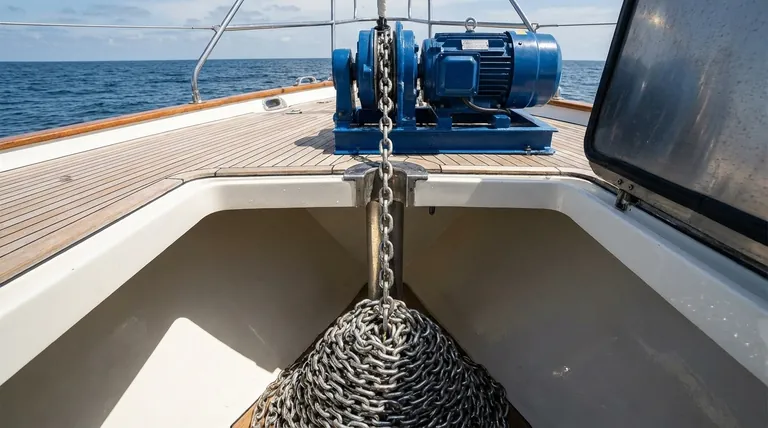
As the windlass retrieves the anchor, the chain begins to form a pyramid or "castle" in the locker. If the vertical fall is insufficient, this castle will quickly build up and press against the incoming chain.
This creates immense friction and physically blocks the chain from leaving the windlass gypsy, causing the system to jam or the motor to overload and trip its breaker.
Windlass Motor and Installation Space
The locker's size also affects the windlass itself. It must be large enough to accommodate the windlass motor and gearbox, which are typically mounted below deck.
Insufficient space makes installation difficult and, more importantly, makes essential maintenance like checking connections or servicing the motor nearly impossible.
Understanding the Trade-offs
Boat design is always a compromise, and the anchor locker is often at the center of a difficult decision for naval architects.
Forward Cabin Space vs. Locker Depth
The ideal deep anchor locker occupies the same space that designers want to use for a spacious forward V-berth. Consequently, many production boats are built with anchor lockers that are shallower than ideal to maximize interior volume.
All-Chain vs. Rope-Chain Rode
An all-chain rode is heavy and tends to form a very steep, rigid pyramid. A combination rode with a rope tail is lighter and more flexible, so it piles less aggressively. However, all-chain is superior for its abrasion resistance and holding power. A well-designed locker should be able to manage an all-chain rode.
How to Apply This to Your Vessel
Your approach should depend on whether you are troubleshooting, installing, or purchasing.
- If you are troubleshooting a jamming windlass: Before blaming the motor, measure the fall. Your first step should be to see if you can knock down the chain castle manually during retrieval to confirm if insufficient fall is the root cause.
- If you are installing a new windlass: Prioritize achieving that 12-inch minimum fall. This may involve fabricating a lowered floor or "drop-down box" within the locker to increase the depth directly under the windlass.
- If you are evaluating a boat for purchase: Inspect the anchor locker's depth. A deep, well-drained locker is a strong indicator of a vessel designed with serious cruising and practical seamanship in mind.
Ultimately, a correctly sized anchor locker is the foundation of a reliable anchoring system you can trust.
Summary Table:
| Key Consideration | Why It Matters |
|---|---|
| Vertical Fall | The distance from the windlass to the rode pile; critical for gravity to pull the rode away and prevent jams. |
| Minimum Depth | A minimum of 12 inches (30 cm) is recommended to allow the rode to drop clear of the windlass gypsy. |
| Rode Capacity | The overall volume determines the maximum length of anchor rode you can carry for deep-water anchoring. |
| Windlass Space | The locker must accommodate the windlass motor and gearbox for proper installation and maintenance. |
Secure Your Vessel with a Reliable Anchoring System
Don't let a poorly designed anchor locker compromise your safety. GARLWAY specializes in robust construction machinery and understands the importance of precision engineering for reliable performance. While our expertise lies in winches, concrete mixers, and batching plants for construction companies and contractors, the principle of designing for reliability is universal.
If you require durable, high-performance equipment built to handle demanding conditions, contact our experts today to discuss how GARLWAY's solutions can bring reliability and power to your projects.
Visual Guide