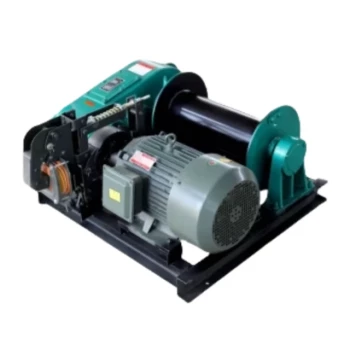
In warehousing, electric winches are specialized tools used for the vertical lifting and horizontal pulling of heavy, oversized, or awkwardly shaped inventory and equipment. They are not a replacement for forklifts but serve a critical role in enhancing safety and operational efficiency for tasks that fall outside standard material handling.
While forklifts and pallet jacks handle the daily flow of standardized goods, electric winches provide the raw power and control needed for the exceptions—the heavy machinery, bulky materials, and unique installation challenges that define a truly demanding warehouse environment.
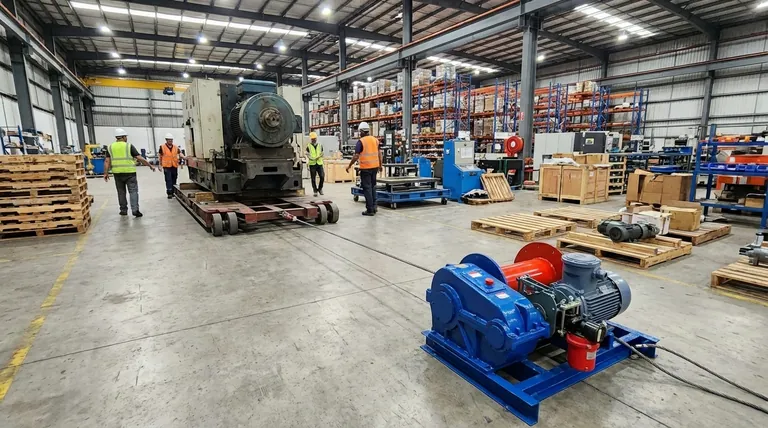
The Core Functions of Winches in a Warehouse Setting
Electric winches solve specific logistical problems by applying immense force in a controlled manner. Their applications are typically focused on tasks that are too heavy or too hazardous for manual labor or other standard equipment.
Vertical Lifting (Hoisting)
Specialized hoisting electric winches are indispensable for vertical movement. They are engineered with advanced braking systems to ensure loads do not slip and can be positioned with high precision.
Common uses include lifting heavy components to a mezzanine, raising machinery for maintenance, or positioning equipment during installation.
Horizontal Pulling (Dragging)
The most common application is pulling extremely heavy loads across the warehouse floor. This is ideal for moving large machinery, heavy dies, or fully loaded carts along a designated path.
This function is particularly valuable in areas with tight clearances where a forklift cannot maneuver safely or effectively.
Positioning and Installation
Winches offer the fine control needed to precisely position heavy equipment during setup. By managing tension and movement, a winch can guide a multi-ton piece of machinery into place with a level of accuracy that is difficult to achieve with other methods.
Why Choose a Winch Over Other Equipment?
A winch is a strategic asset, not a general-purpose tool. Its value becomes clear when you face challenges beyond the scope of everyday material handling equipment.
Handling Uniquely Heavy or Awkward Loads
Forklifts are designed for standardized pallets. A winch excels when dealing with non-palletized, oversized, or extremely heavy items like industrial motors, manufacturing molds, or large structural components.
Improving Operational Safety
Mechanizing the movement of exceptionally heavy loads is a primary safety benefit. Using a winch drastically reduces the risks associated with manual pushing, prying, and lifting, which can lead to severe musculoskeletal injuries.
Increasing Efficiency for Specific Tasks
For repetitive, fixed-path movements, a properly installed winch system can be more efficient than deploying a forklift. It creates a dedicated, powerful solution for a recurring logistical problem, freeing up more versatile equipment for other duties.
Cost-Effectiveness for Infrequent Needs
Purchasing a specialized crane or high-capacity forklift for an infrequent task can be prohibitively expensive. An electric winch offers a powerful, cost-effective alternative for occasional but essential heavy-duty moving or lifting.
Understanding the Trade-offs and Limitations
While powerful, winches are not a universal solution. Understanding their limitations is critical for proper application.
Limited Mobility
The primary trade-off is mobility. Most winches are fixed-point tools, anchored to a structural support like a column or the floor. Their operational range is limited by the length of their cable, unlike a forklift which can travel anywhere in the facility.
Slower for General Purpose Use
For moving standard goods across the warehouse, a winch is far too slow and cumbersome. Its strength is in power and control for specific tasks, not speed for general logistics.
Requires Proper Anchorage and Infrastructure
A winch is only as strong as its mounting point. Safe operation demands a professional assessment of the building's structure to ensure the anchor point can withstand the massive forces being applied. This installation is a critical, and often overlooked, part of the process.
Making the Right Choice for Your Warehouse
Integrating an electric winch into your operations depends entirely on the specific problems you need to solve.
- If your primary focus is moving standardized pallets: A forklift or pallet jack is the correct and most efficient tool for the job.
- If your primary focus is lifting heavy machinery for maintenance: A dedicated hoisting electric winch with a precision braking system is the ideal and safest solution.
- If your primary focus is moving non-standard, bulky items across a fixed path: A horizontal pulling winch offers a safe, powerful, and cost-effective method.
- If your primary focus is improving safety for infrequent but hazardous heavy moves: An electric winch provides controlled power that eliminates the risks of manual handling.
Ultimately, incorporating an electric winch is about choosing the right tool for the specific challenge, enhancing both the safety and capability of your warehouse operations.
Summary Table:
| Application | Key Function | Ideal For |
|---|---|---|
| Vertical Lifting (Hoisting) | Precise, safe lifting to mezzanines or for maintenance. | Heavy machinery, large components. |
| Horizontal Pulling (Dragging) | Moving heavy loads along a fixed path. | Large machinery, heavy dies, loaded carts. |
| Positioning & Installation | Fine control for accurate equipment placement. | Setting up multi-ton machinery. |
Ready to solve your toughest warehouse lifting challenges?
GARLWAY specializes in providing robust and reliable electric winches for construction companies and contractors globally. Whether you need a hoisting winch for maintenance or a pulling winch for moving heavy equipment, our solutions are engineered for safety and power.
Contact GARLWAY today to discuss how our winches can enhance your operational safety and efficiency.
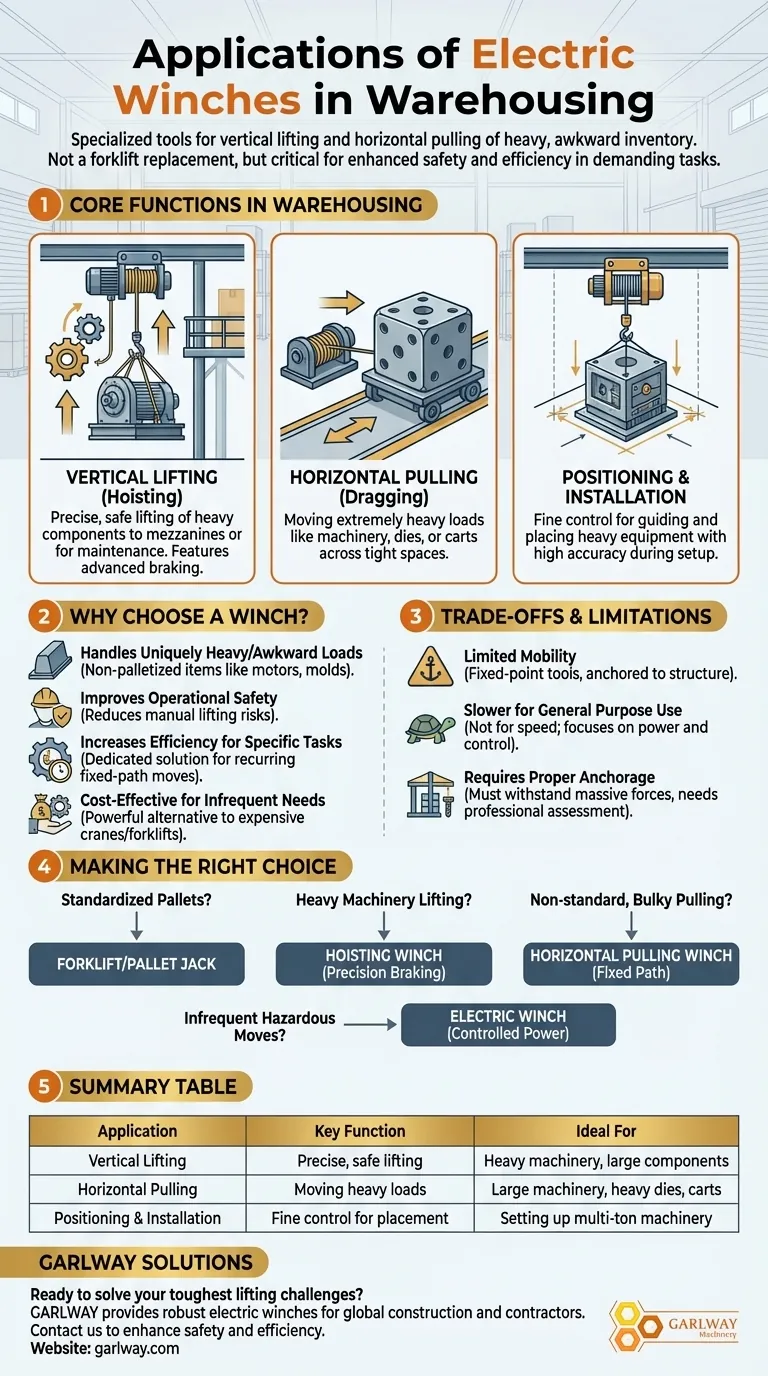
Visual Guide
Related Products
- Electric 120V Boat Winch by Badlands
- Electric and Hydraulic Winch for Heavy Duty Applications
- Small Electric Winch 120V and 240V for Compact Applications
- 12000 lb Electric Boat Trailer Winch with Windlass Anchor Warn
- Electric Hoist Winch Boat Anchor Windlass for Marine Applications
People Also Ask
- How do electric boat winches work? Unlock Effortless Launching & Retrieval
- How much current does an electric boat winch draw? Plan Your Electrical System for Peak Performance
- Can I run a winch straight from a battery? Essential Power Setup for Safe Operation
- What are the types of electric winches available? Choose the Right Winch for Your Job
- What are the uses of electric winches in mining and tunneling? Enhance Safety and Efficiency Underground